Jerry likes to play with numbers. One day, he wrote all the integers from 1 to 2024 on the whiteboard. Then he repeatedly chose four numbers on the whiteboard, erased them, and replaced them by either their sum or their product. (For example, Jerry's first step might have been to erase 1, 2, 3, and 5, and then write either 11, their sum, or 30, their product, on the whiteboard.) After repeatedly performing this operation, Jerry noticed that all the remaining numbers on the whiteboard were odd. What is the maximum possible number of integers on the whiteboard at that time?
Since only the parity (odd or even) of the numbers matters, we can consider everything modulo 2.
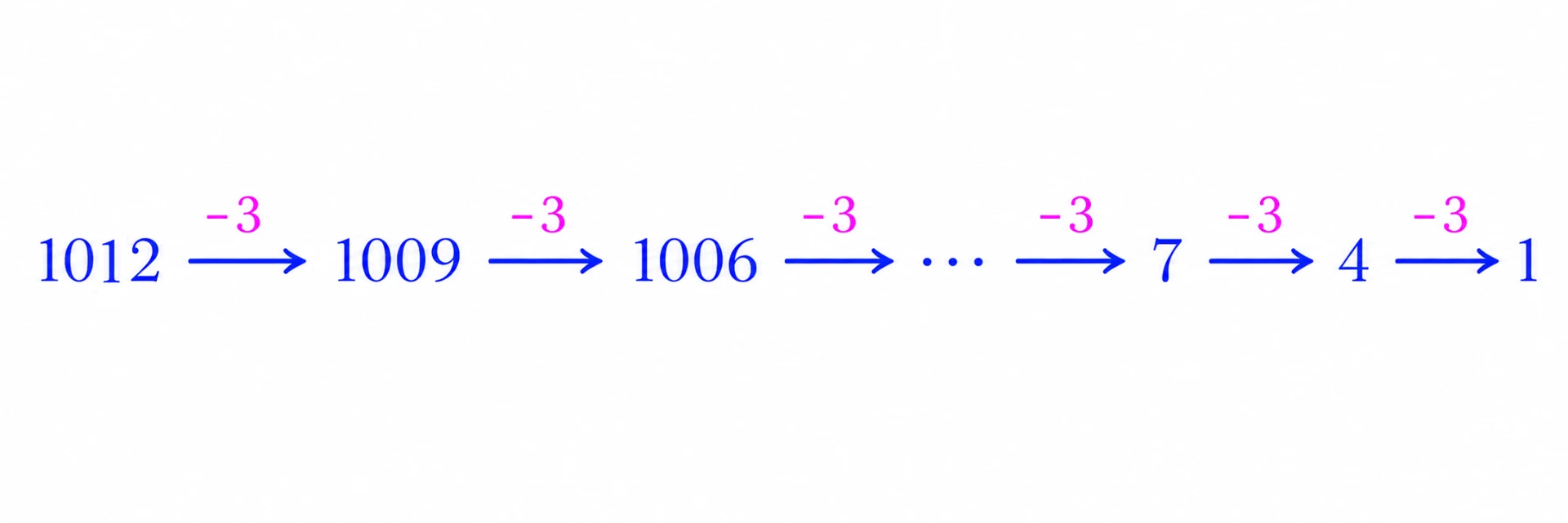
There are 1012 zeros and 1012 ones. At each step, we can replace four zeros with their sum, which is zero. Thus, at each step, we can remove three zeros.
We can proceed as follows:Since 1012≡1(mod3), we eventually reach exactly one zero.
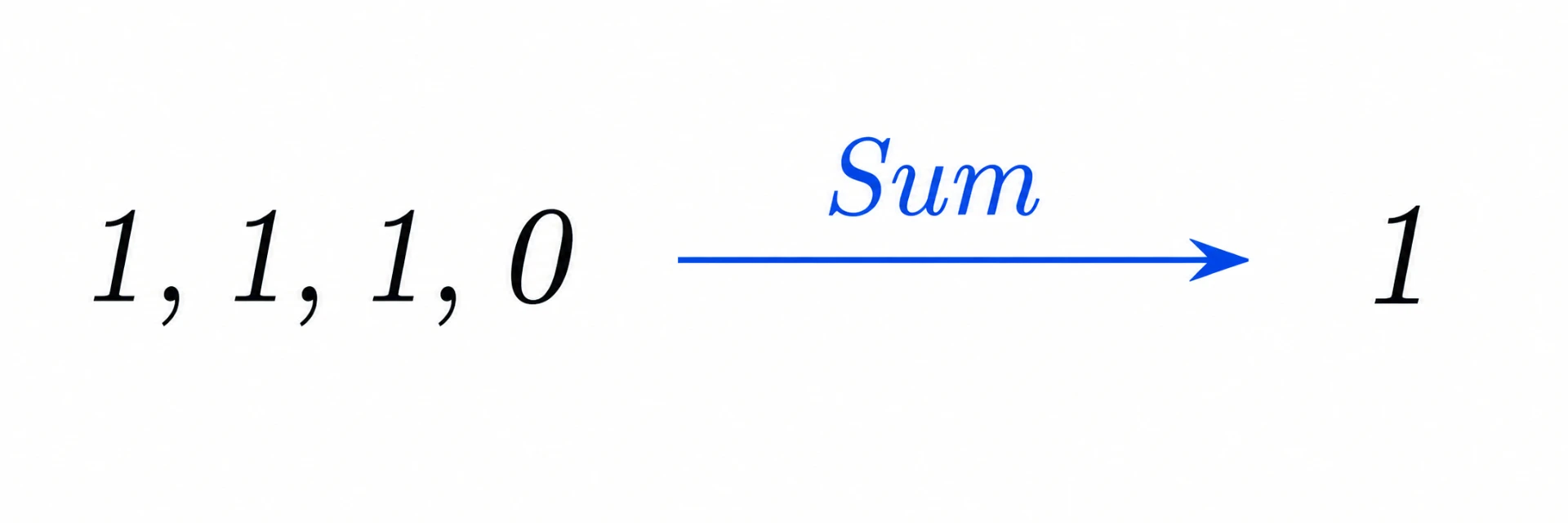
Now we can replace the remaining zero and three ones with their sum, which is one.The first 337 operations remove 1011 zeros, and the final operation removes the last zero.
Therefore, after 338 operations, all remaining numbers are odd, and their number is 2024−3⋅338=1010. Hence, Answer≥1010. However, we have only constructed an example with 1010 remaining numbers. We still need to prove that a larger answer is impossible. The remaining hints establish this upper bound.
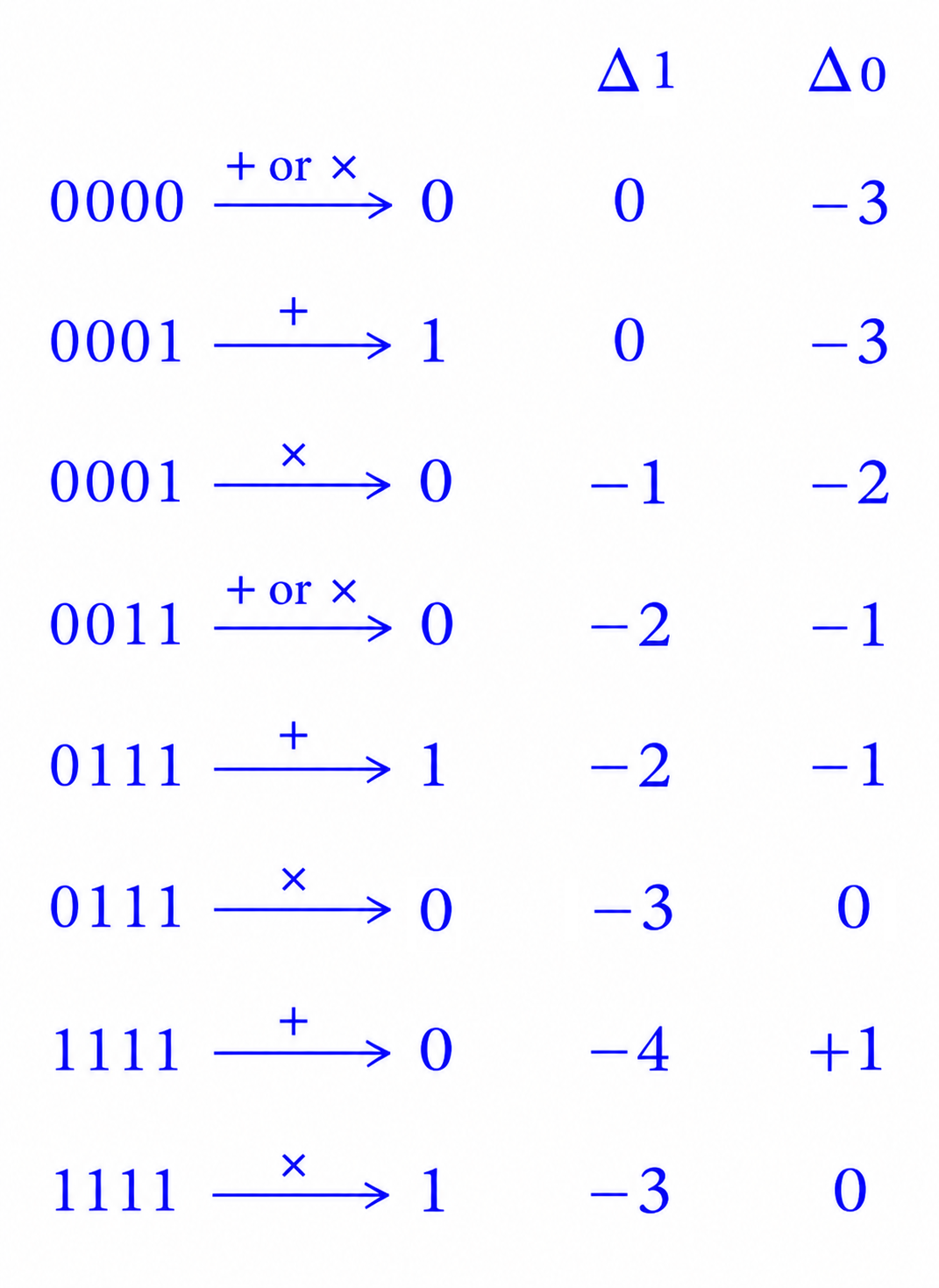
Assume, for the sake of contradiction, that Answer≥1011. Let Δ1 and Δ0 denote the changes in the numbers of ones and zeros, respectively, in a single operation.
We consider all possible parity patterns of the four chosen numbers.Correction to the table: For 0,1,1,1, multiplication gives 0, not 1. In this case, Δ1=−3,Δ0=0. Also, the sum of four ones is zero modulo 2, whereas their product is one.
Since we assumed that at least 1011 numbers remain and all of them are odd, the number of ones can decrease by at most one from its initial value of 1012.
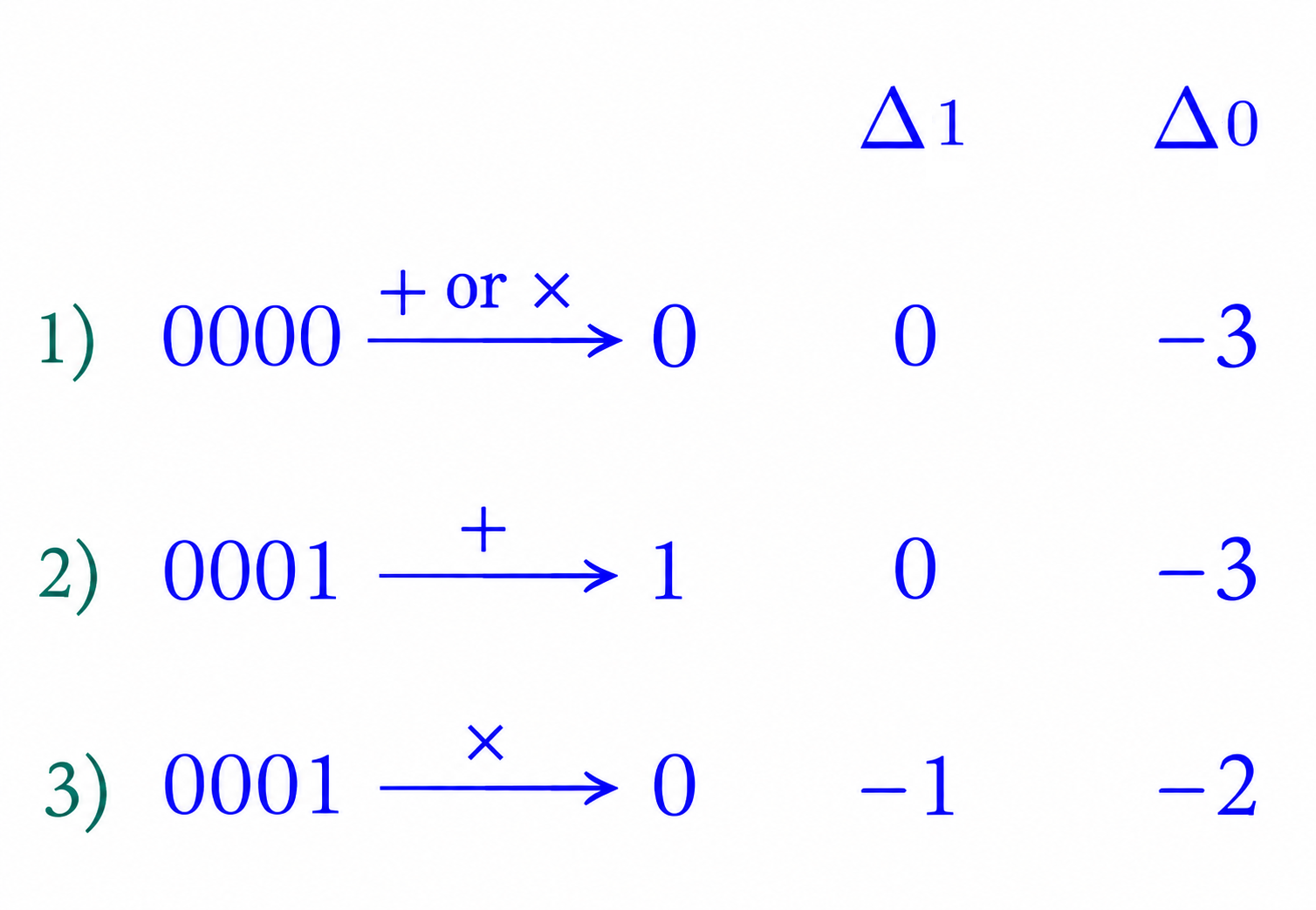
No operation can increase the number of ones. Therefore, only the following three types of operations are possible:The first two types of operations do not change the number of ones and decrease the number of zeros by 3.
The third type decreases the number of ones by 1 and the number of zeros by 2. Therefore, it can be used at most once.
Initially, the number of zeros is 1012≡1(mod3). If the third type is never used, the number of zeros remains congruent to 1 modulo 3.
If the third type is used exactly once, the number of zeros becomes congruent to 1012−2≡−1≡2(mod3). In either case, the number of zeros cannot be 0, contradicting the requirement that all remaining numbers are odd.
Thus, our assumption is false, and Answer≤1010. Combining this with the construction in Hint 3, we obtain Answer=1010.