Incenter of a Triangle
Idea · Beginner
Geometry
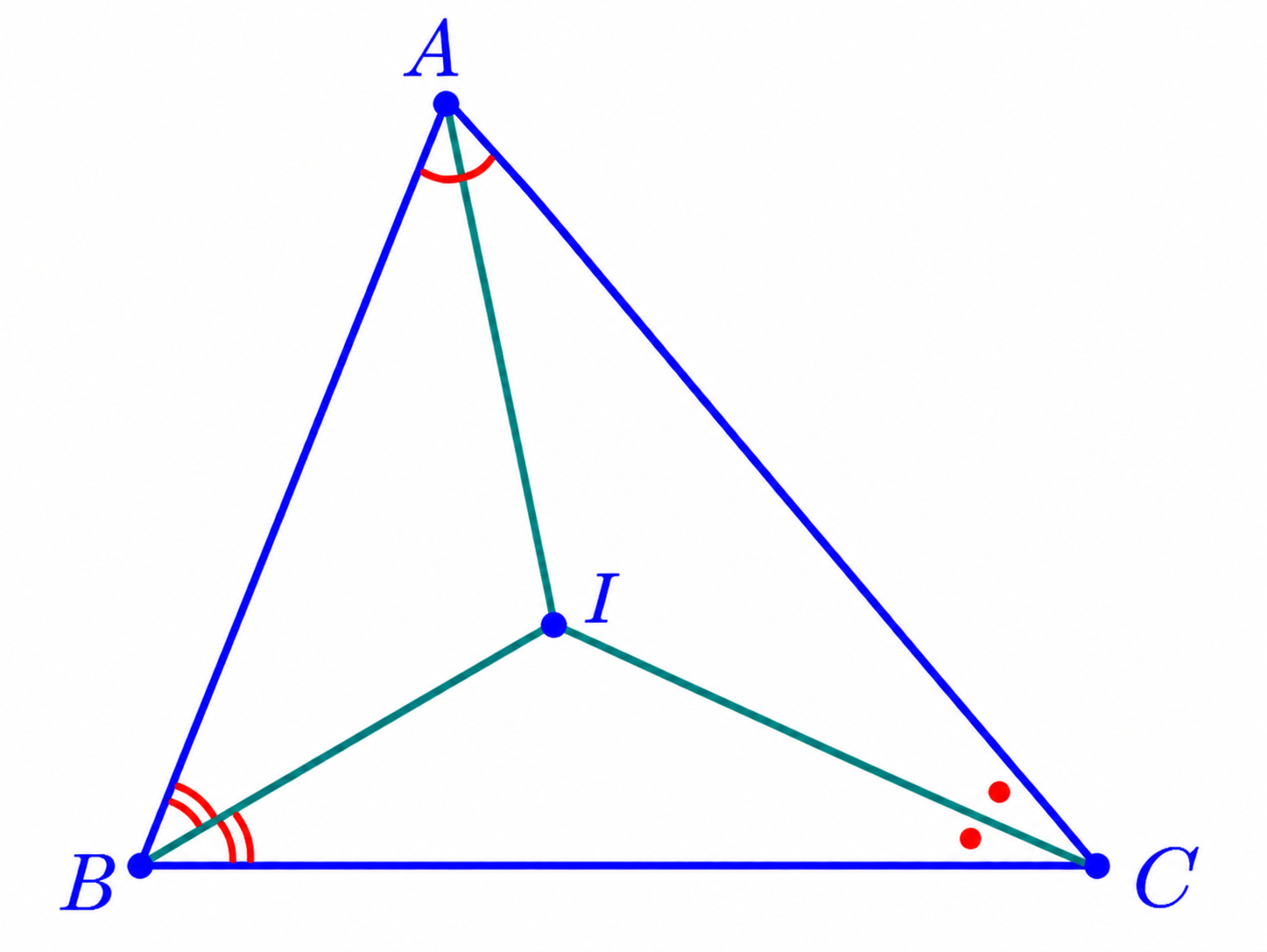
The incenter I of a triangle is the intersection of its three internal angle bisectors.
The incenter is equidistant from the three sides of the triangle.
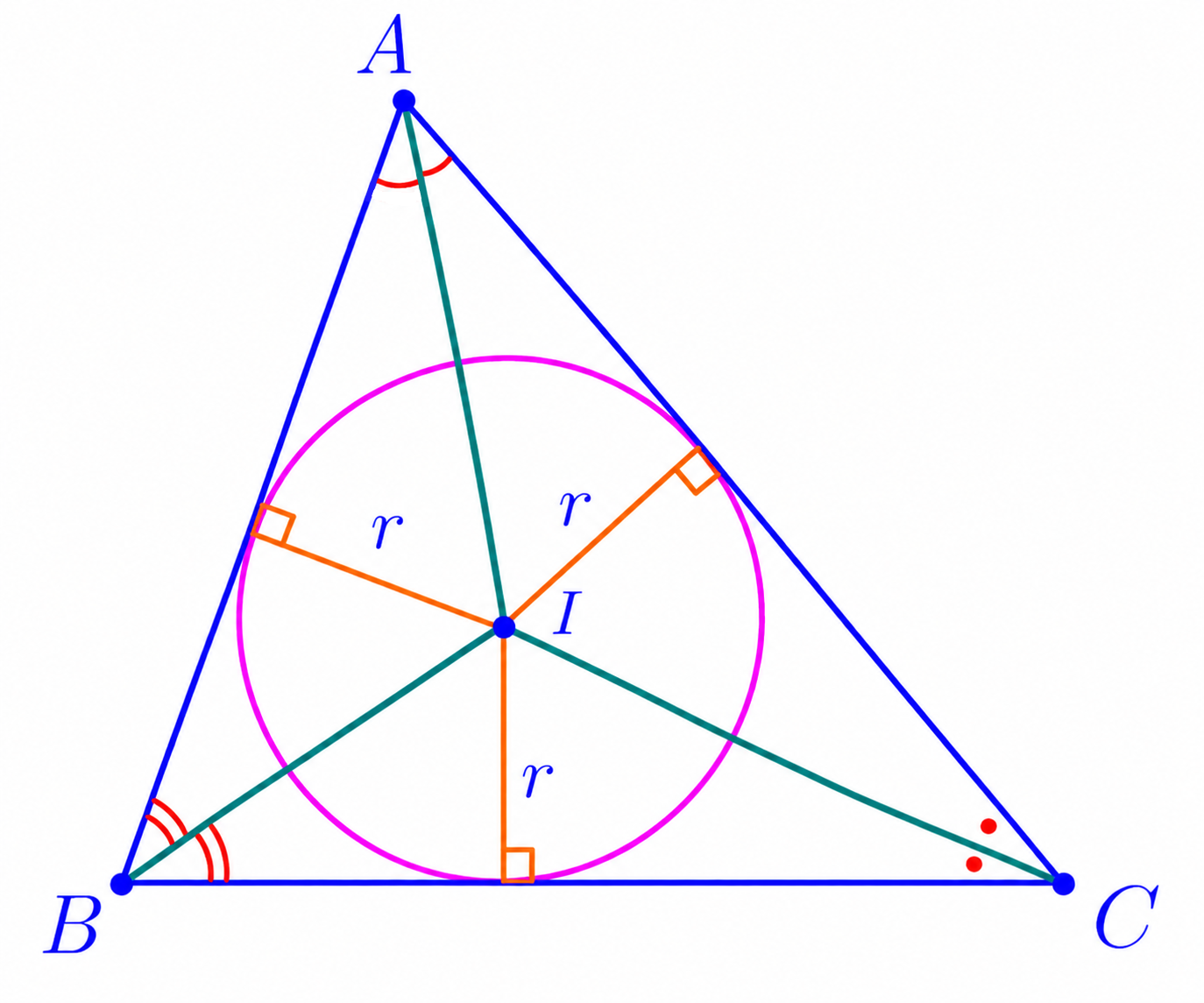
The common distance r is called the inradius.
The circle centered at I with radius r is tangent to all three sides and is called the incircle.
Concurrency of the Angle Bisectors
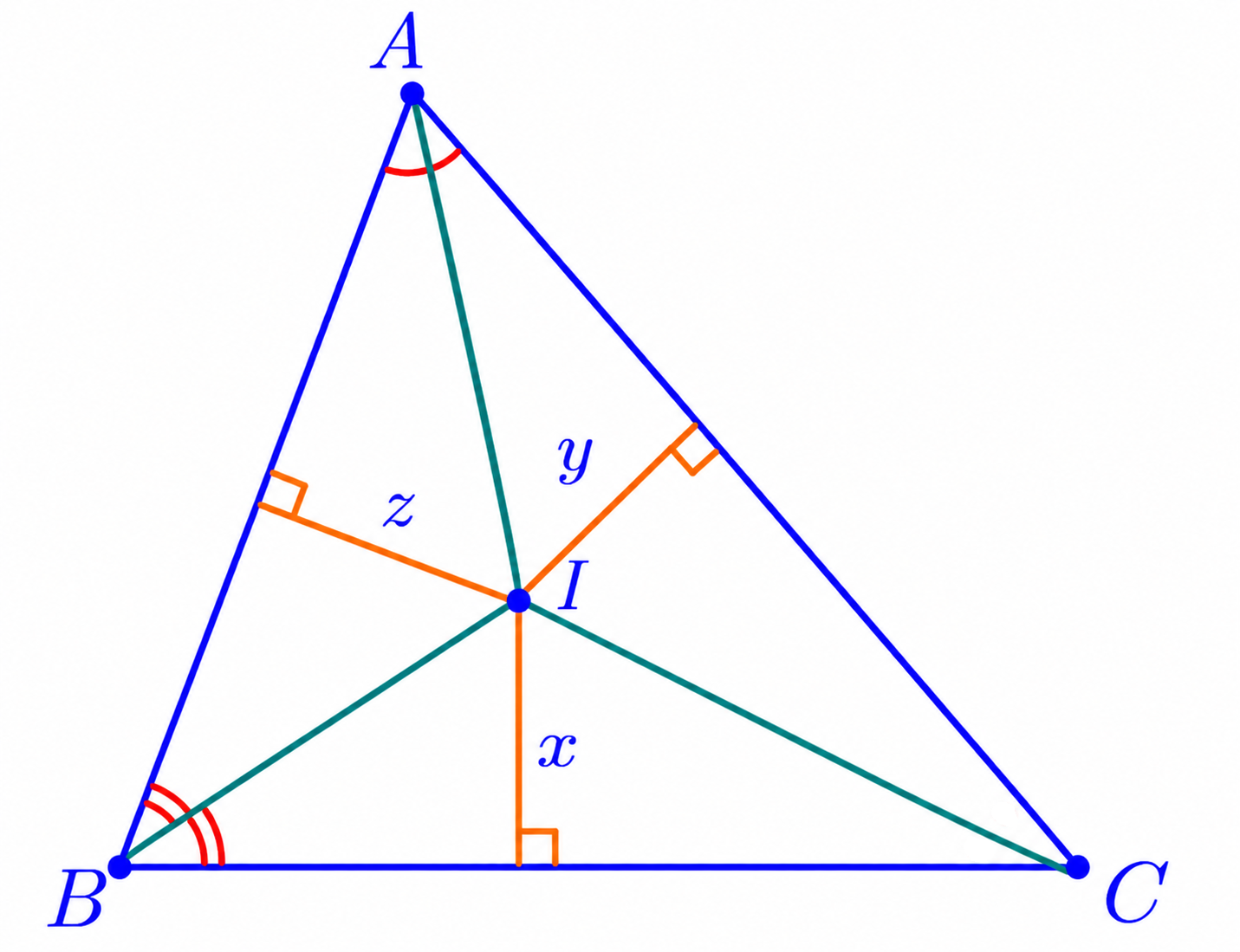
Draw the internal angle bisectors of A and B, and let their intersection be I.
We need to prove that I also lies on the internal angle bisector of C.
Since I lies on the angle bisector of A, its perpendicular distances to AB and AC are equal. Thus,
Since I lies on the angle bisector of B, its perpendicular distances to BA and BC are equal. Thus,
Therefore,
Hence, I is equidistant from the sides CA and CB, so I also lies on the internal angle bisector of C.
Thus, the three internal angle bisectors are concurrent at I.
where [ABC] and s are the area and semiperimeter of triangle ABC, respectively.
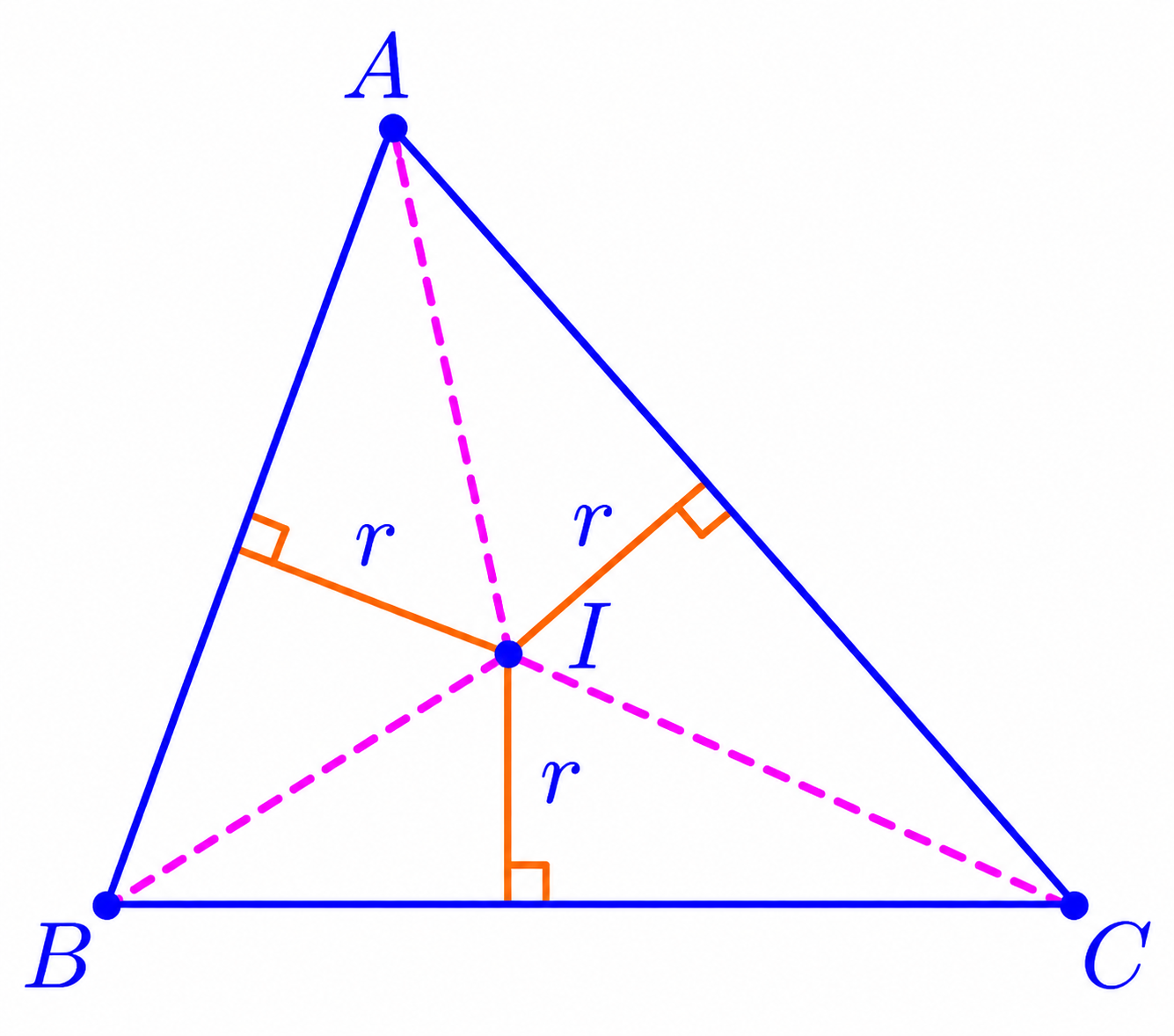
Therefore,
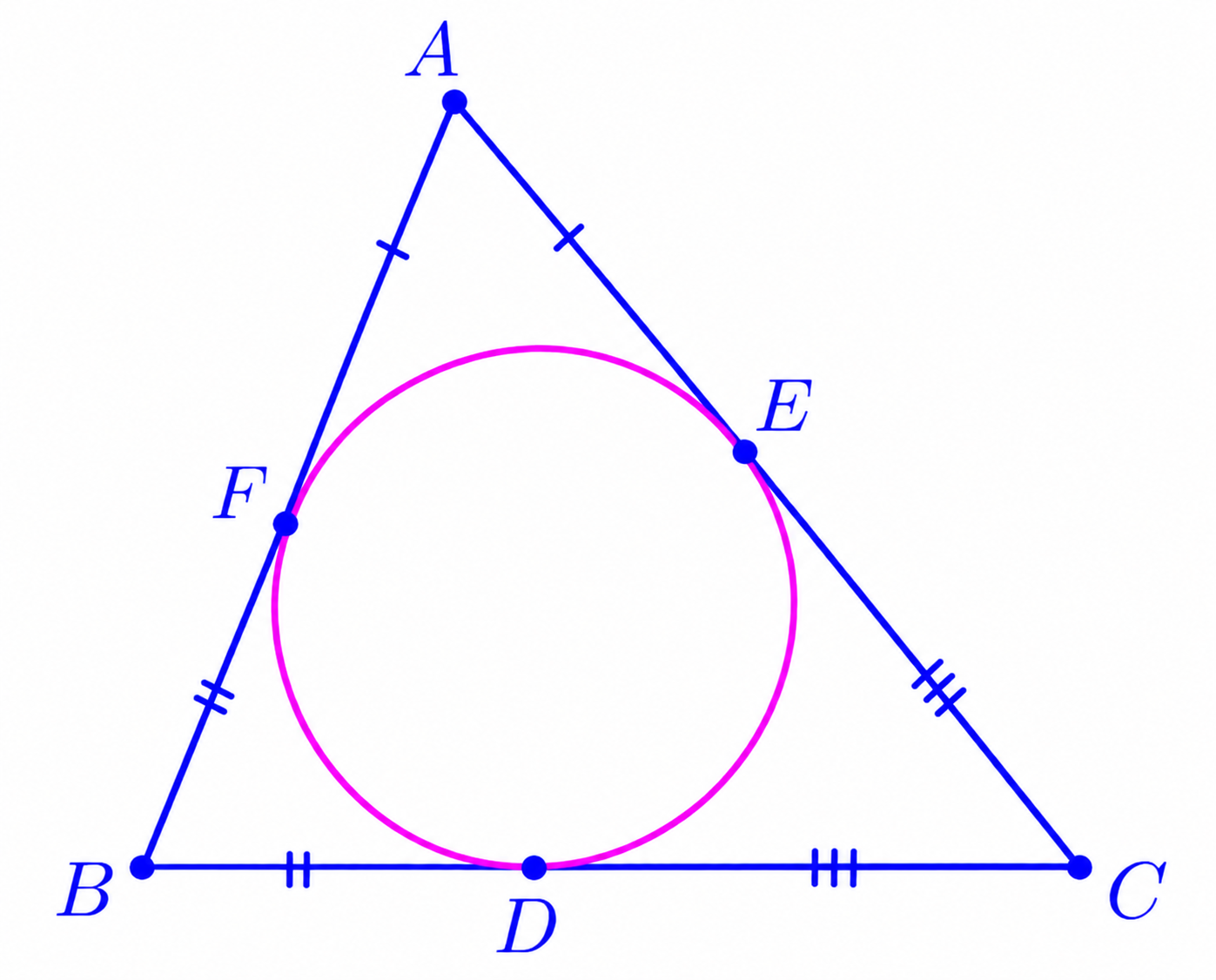
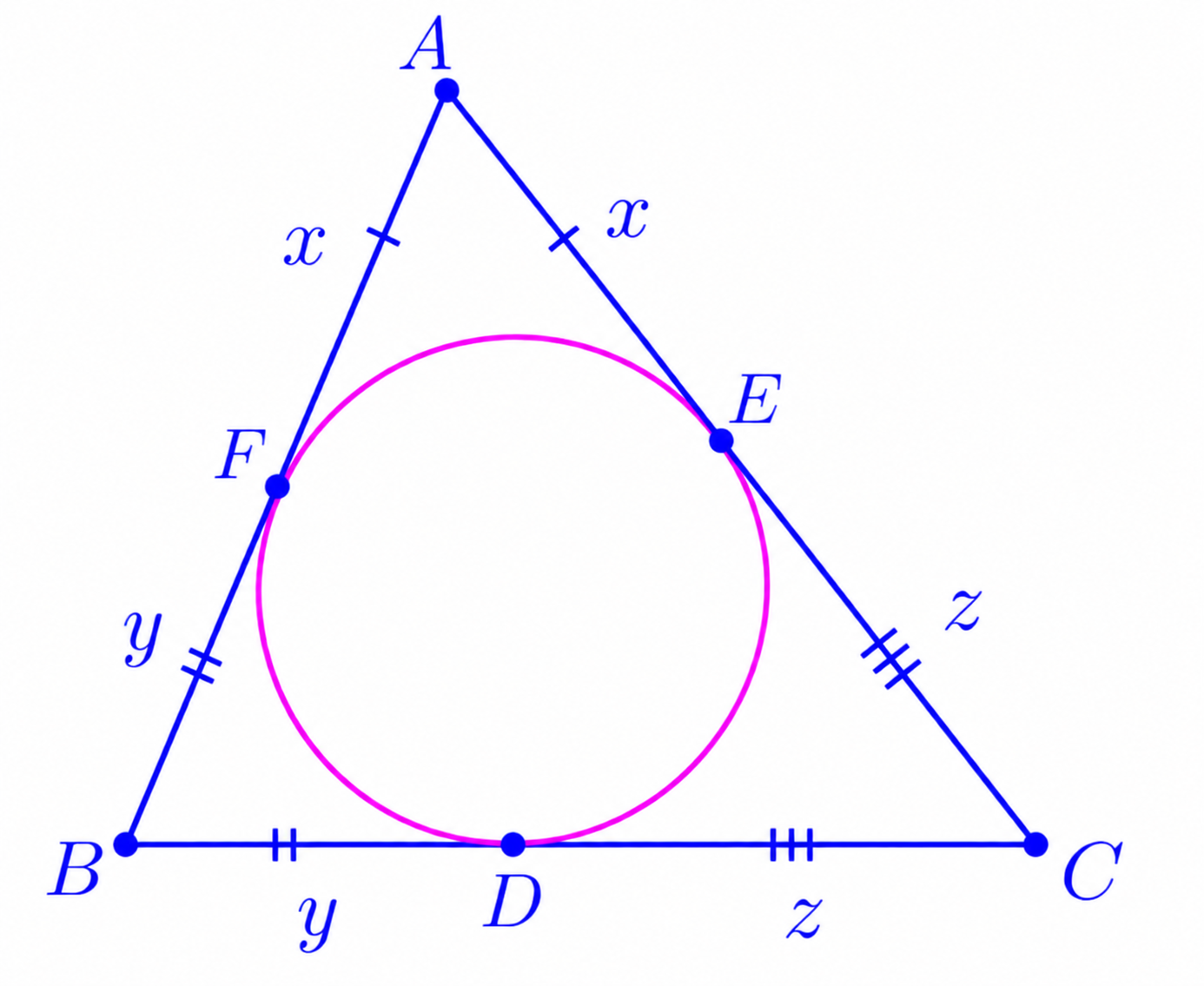
Tangent segments drawn from the same external point to a circle have equal lengths. Let
Then
Hence,
Therefore,
Similarly,
Thus,
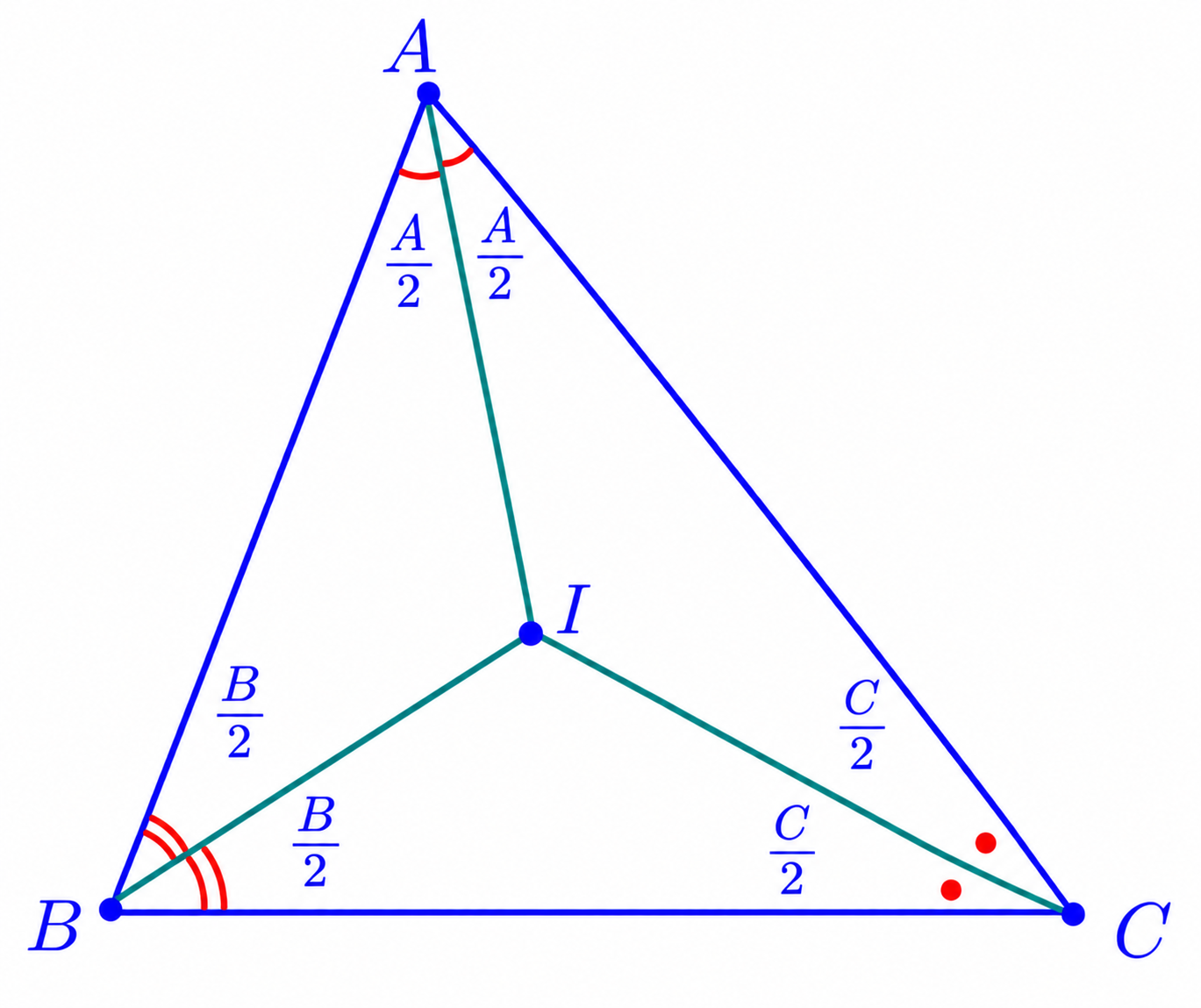
In triangle BIC,
Since
we obtain
Similarly,
If , , and are the three altitudes, then
Since
we have
A triangle has side lengths
Find its inradius.
By Heron's formula,
Therefore,
For a right triangle with legs a and b and hypotenuse c, prove that
Since the triangle is right-angled,
Using the inradius formula,
Multiplying the numerator and denominator by a+b-c,
By the Pythagorean theorem,
Therefore,
If a polyhedron has an insphere of radius r tangent to all its faces, total surface area S, and volume V, then
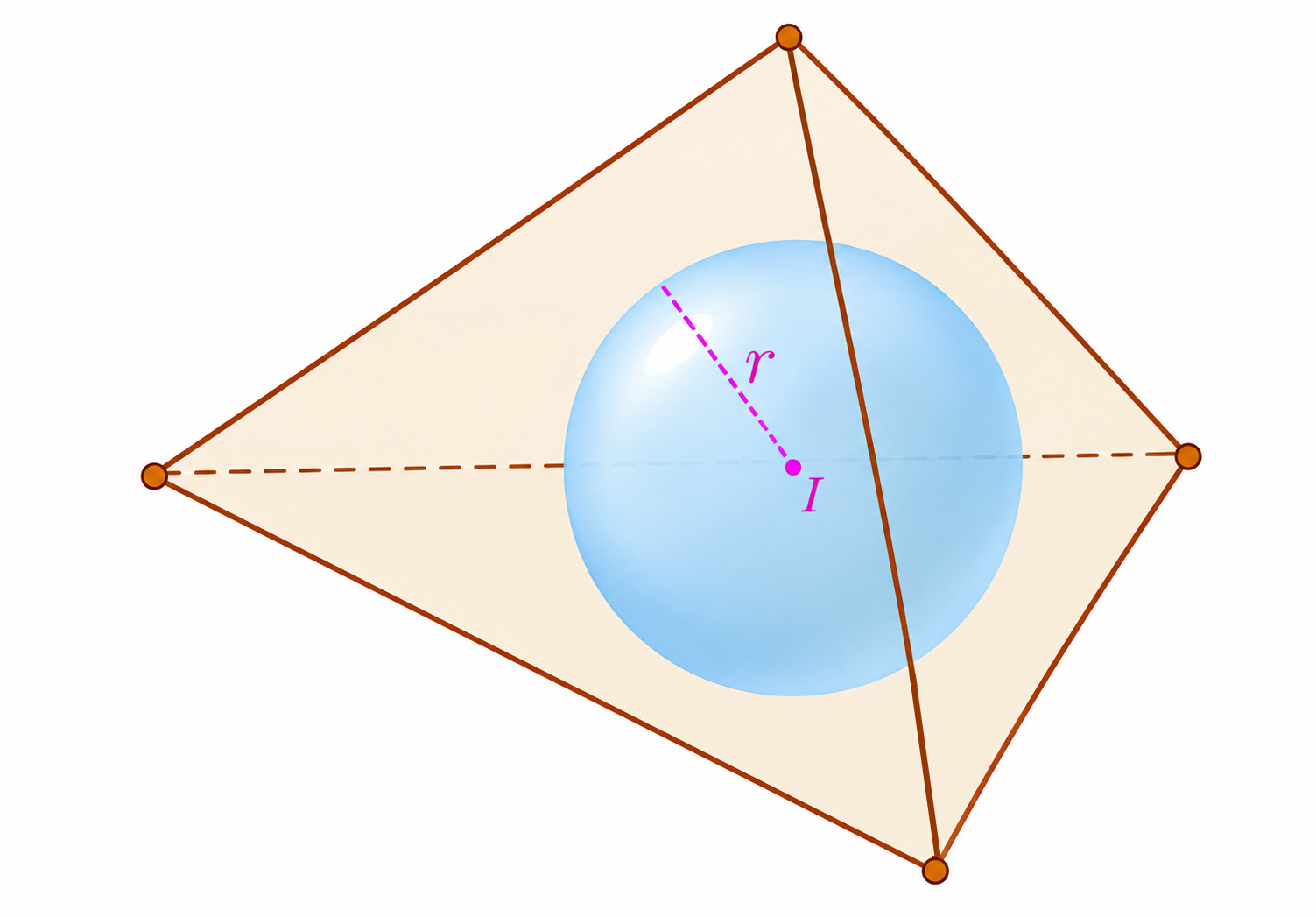
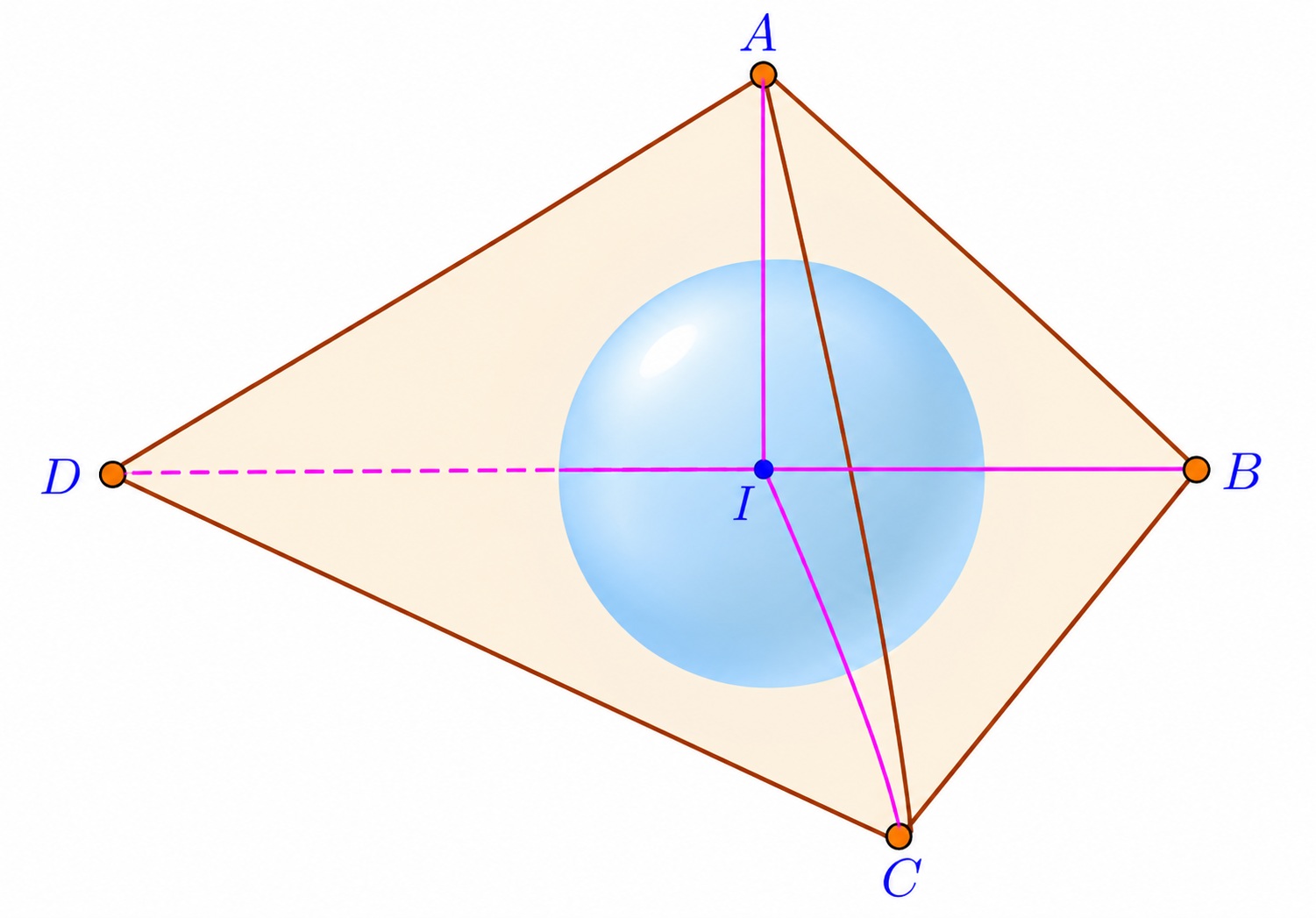
For tetrahedron ABCD, connect the incenter I to its four vertices.
The tetrahedron is divided into four smaller tetrahedra:
Since the perpendicular distance from I to each face is r,
The sum of the four face areas is the total surface area S. Therefore,
The same argument applies to any polyhedron with an insphere tangent to all its faces.