Menelaus' Theorem
Lesson · Intermediate
Geometry: Plane Geometry
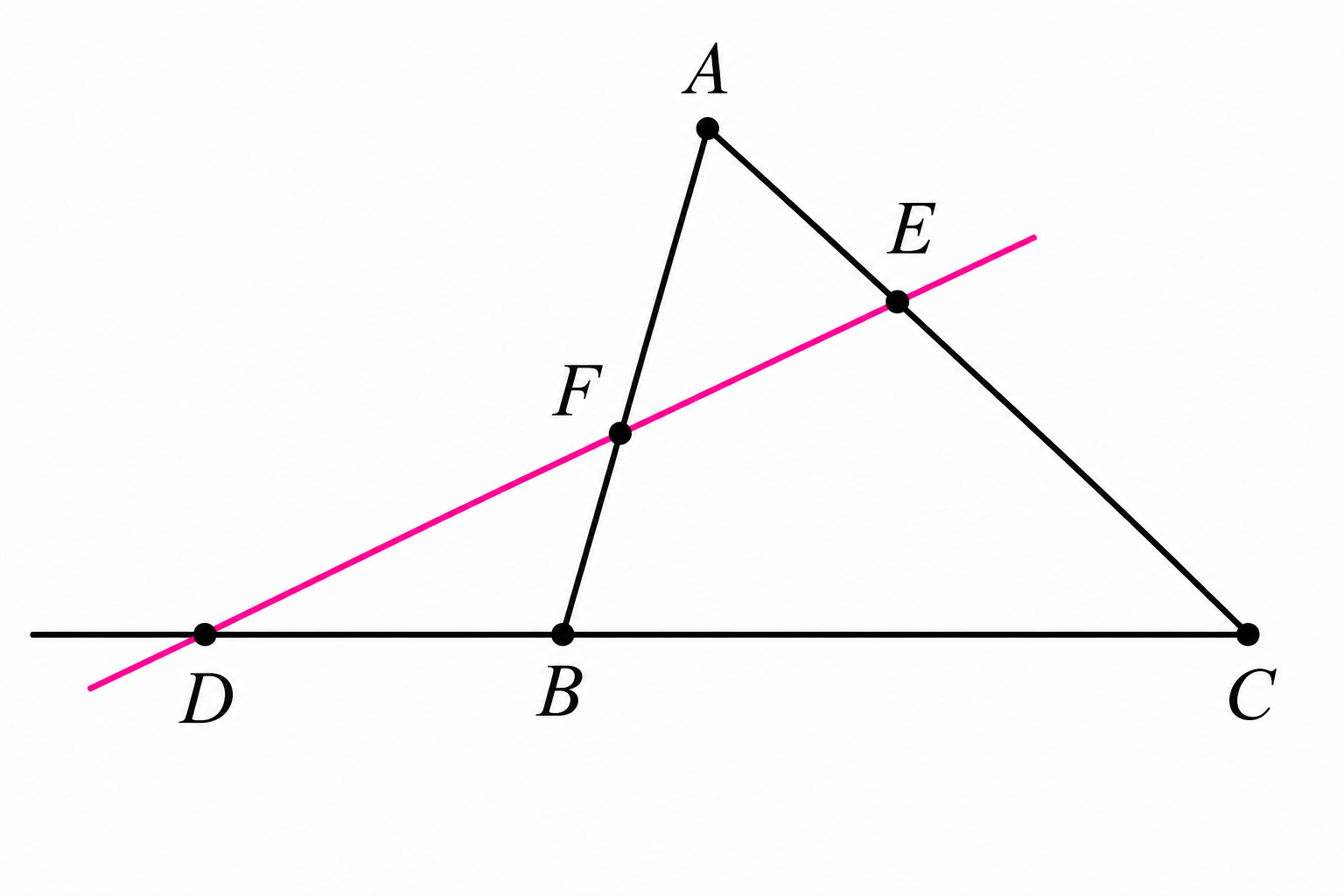
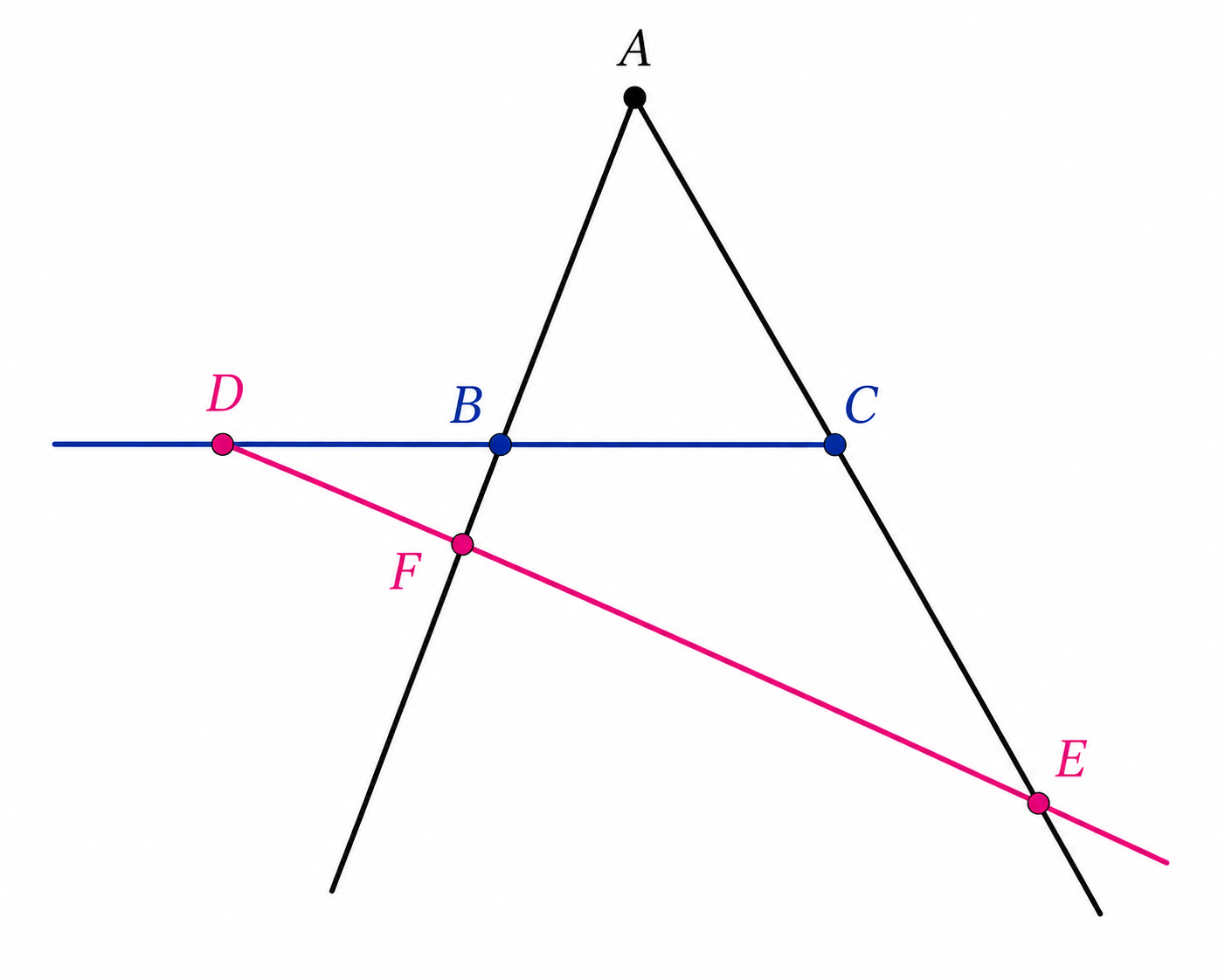
if and only if D, E, F are collinear.
Draw a line through B parallel to AC to intersect DE at L.
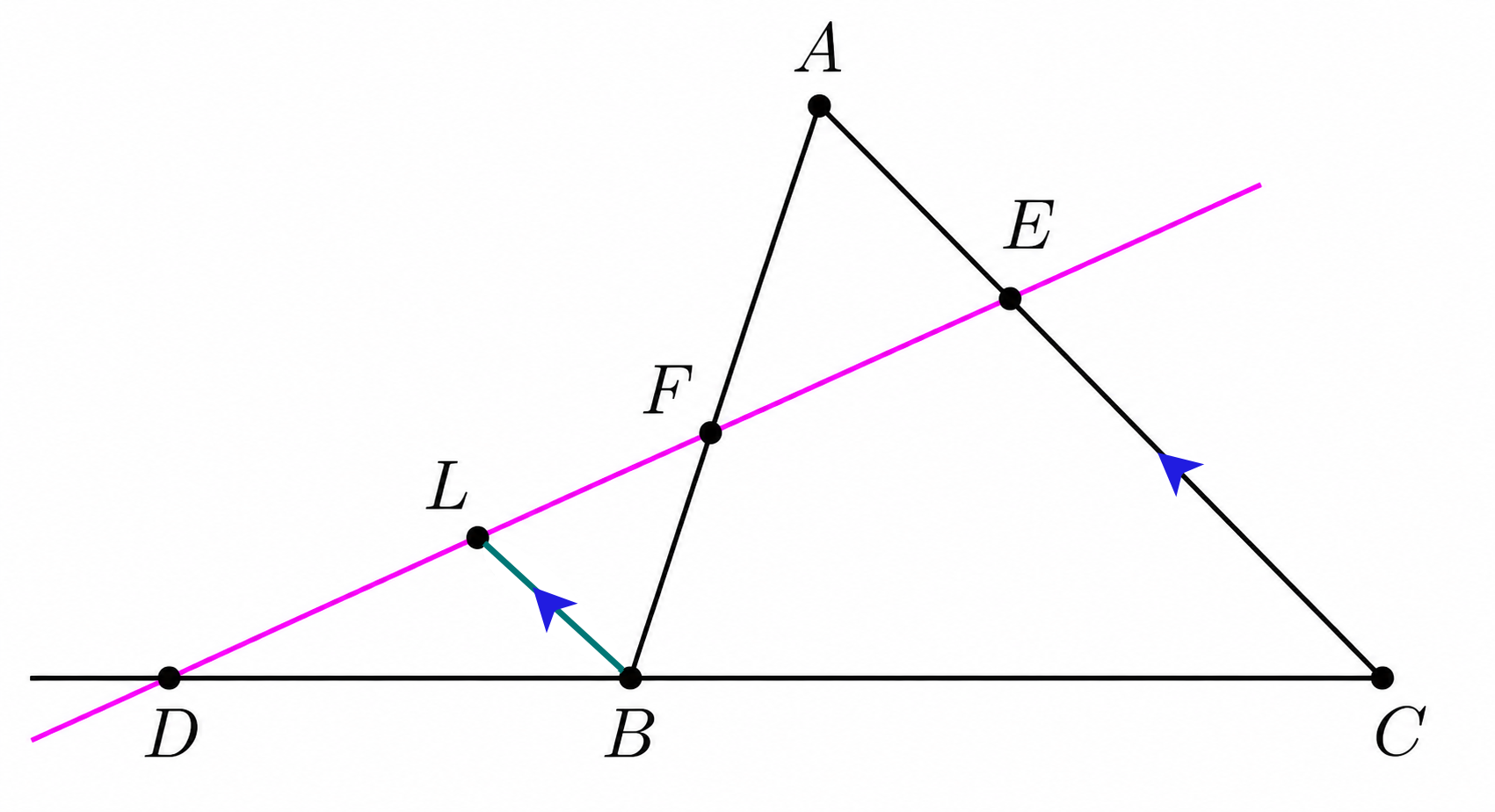
Triangles DLB and DEC are similar, so
Triangles LBF and EAF are similar, so
By (1) and (2),
For the converse, assume
Suppose, for contradiction, that D, E, and F are not collinear, and let EF intersect BC at D'.
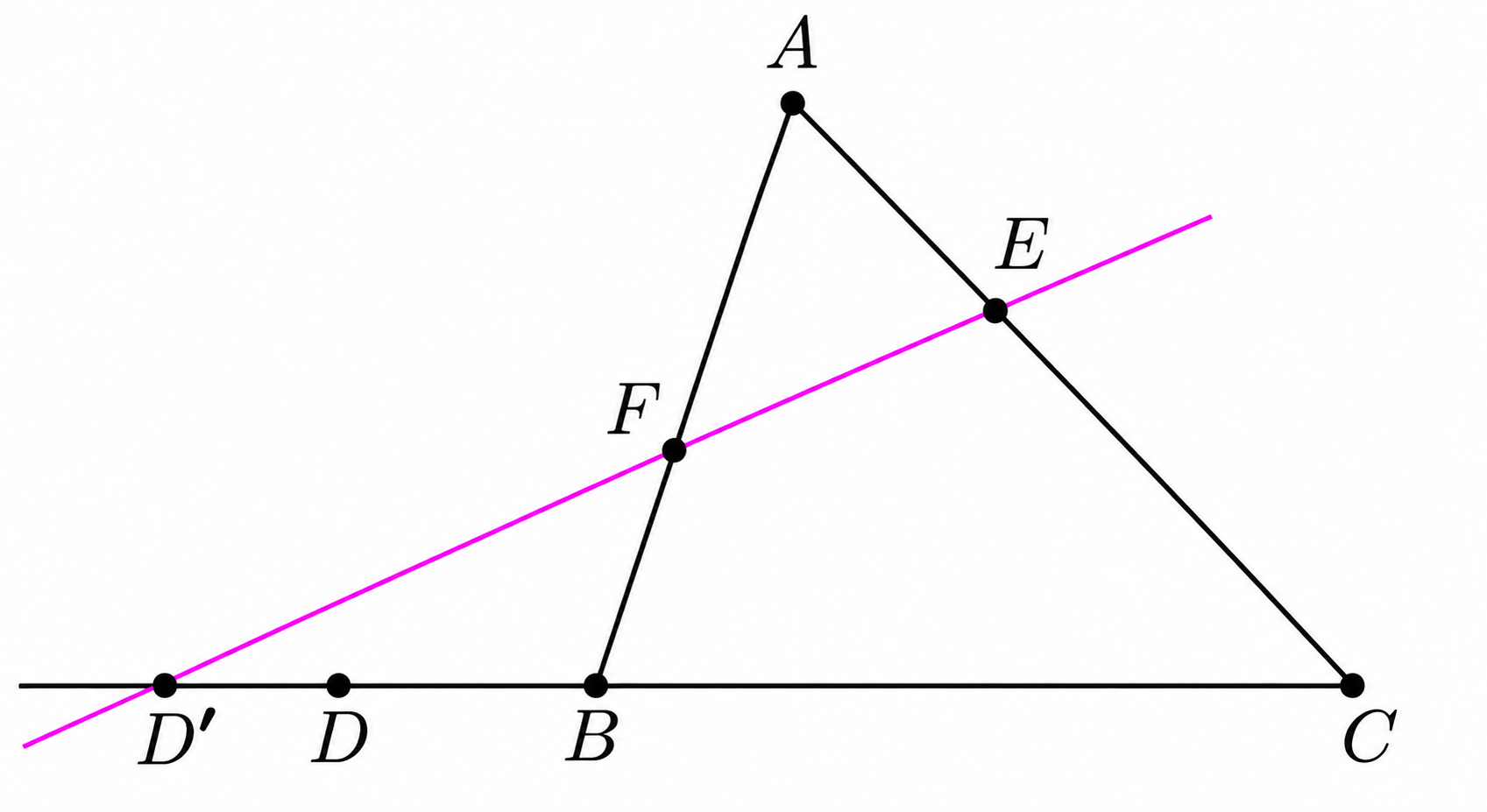
Since D', E, F are collinear,
We know
Therefore,
Since D and D' lie on the same extension of BC,
Cross-multiplying gives
Hence
so D' = D, which gives a contradiction.
In triangle ABC, AF bisects angle A, where F lies on BC.
A line through F meets AB at D and AC at E.
Suppose
and
Find AE : EC.
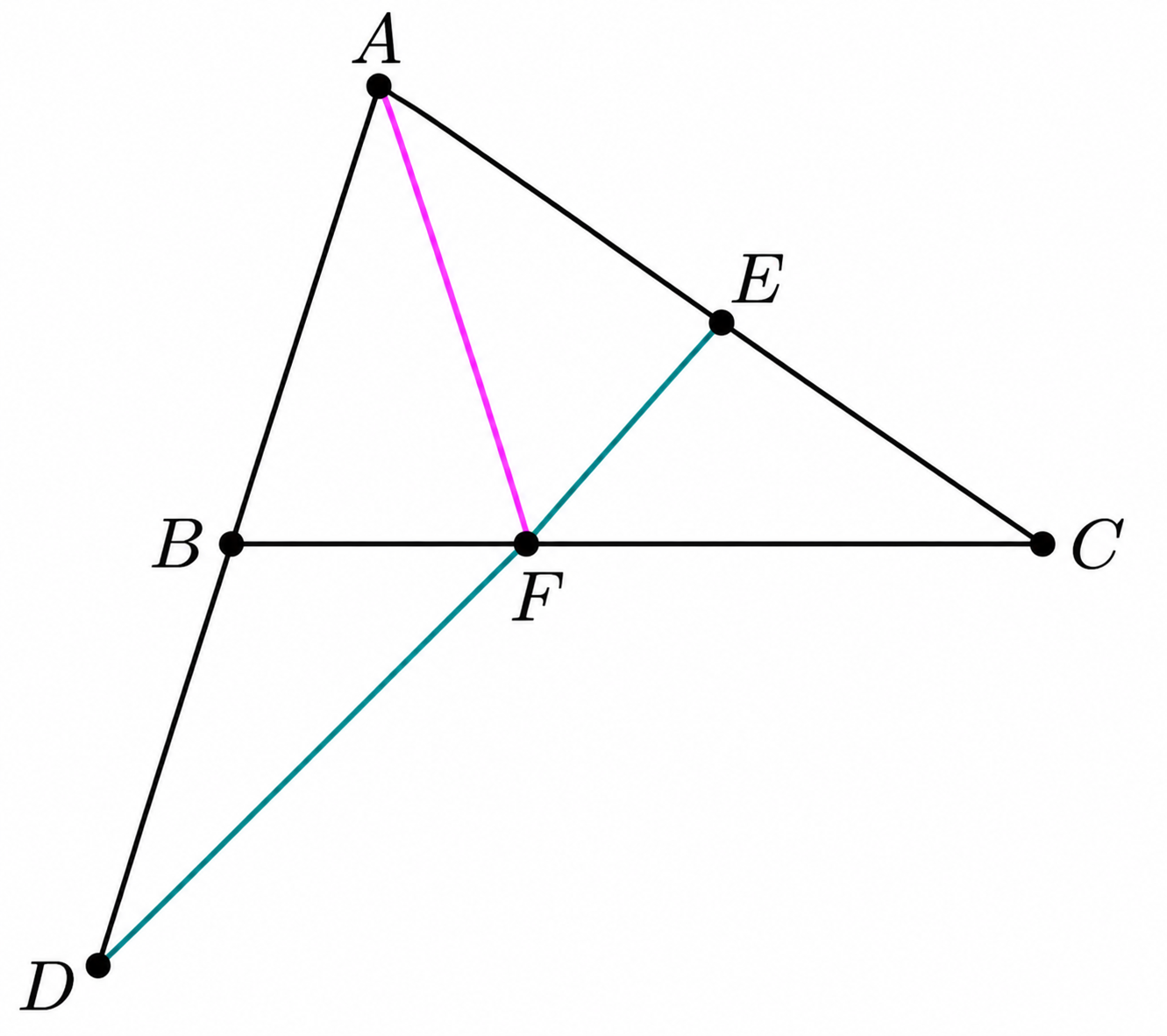
By the Angle Bisector Theorem,
Now apply Menelaus' Theorem to triangle ABC with collinear points D, F, E:
Therefore,
so
Hence
Find
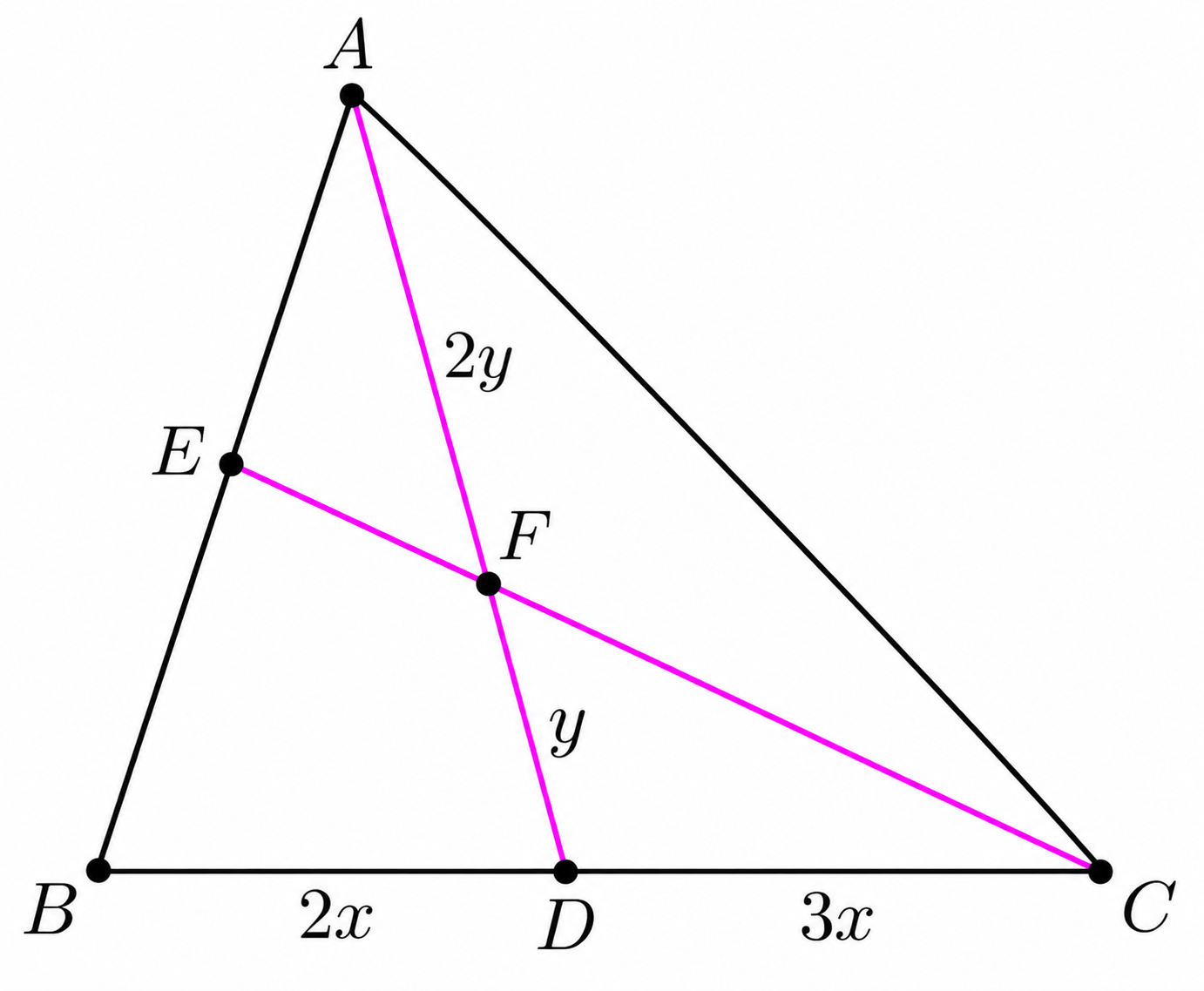
By Menelaus' Theorem in triangle ABD with collinear points E, F, C,
so
Therefore, we can write EB = 5z and EA = 6z, so AB = 11z.
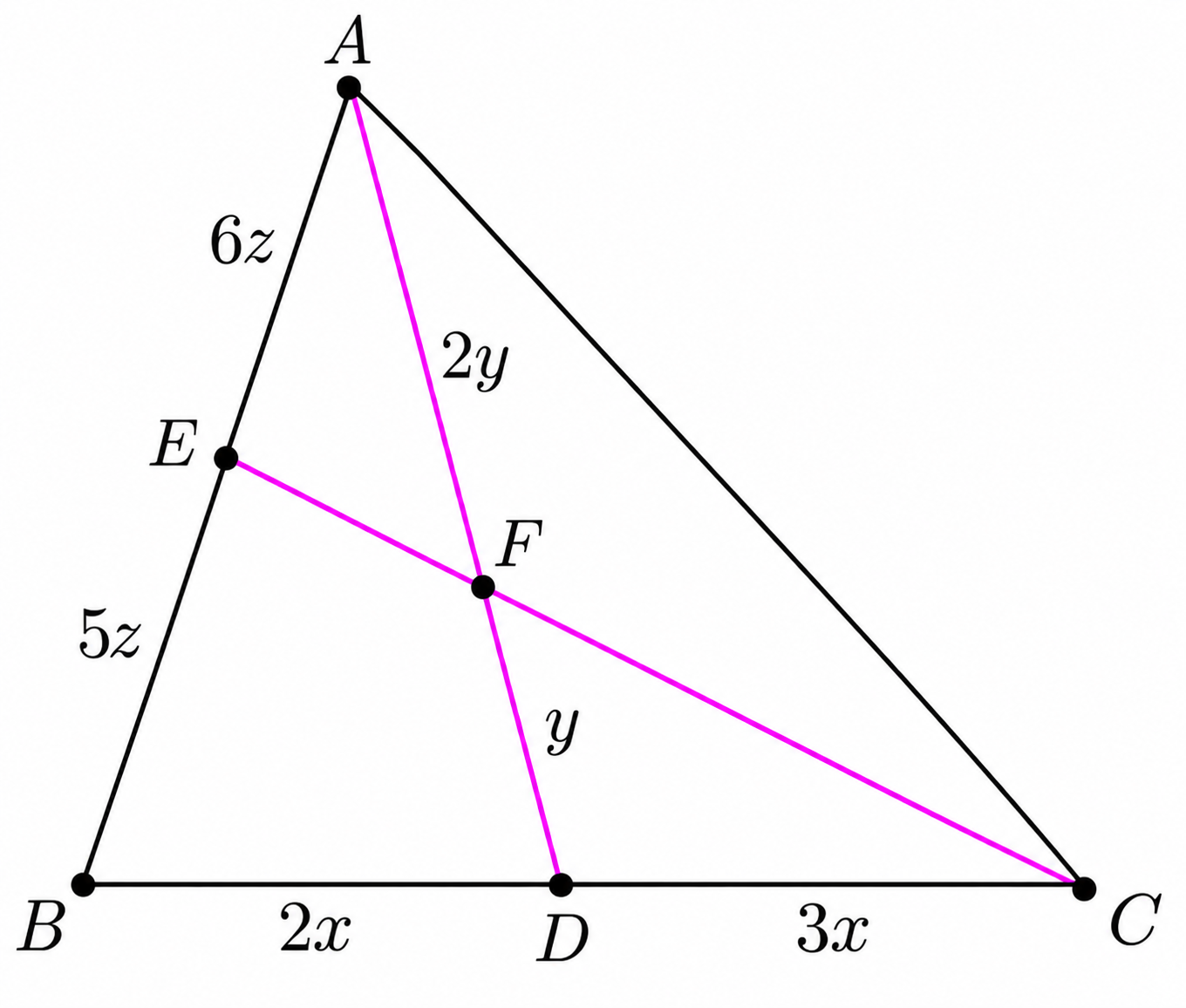
By Menelaus' Theorem in triangle BCE with collinear points A, F, D,
Therefore,
Hence