Square-Root Long-Division Algorithm
Lesson · Beginner
Algebra
Step 1 — Separate the Digits into Pairs
Starting from the right, separate the digits into pairs, moving from right to left.
At the left end, one or two digits will remain.
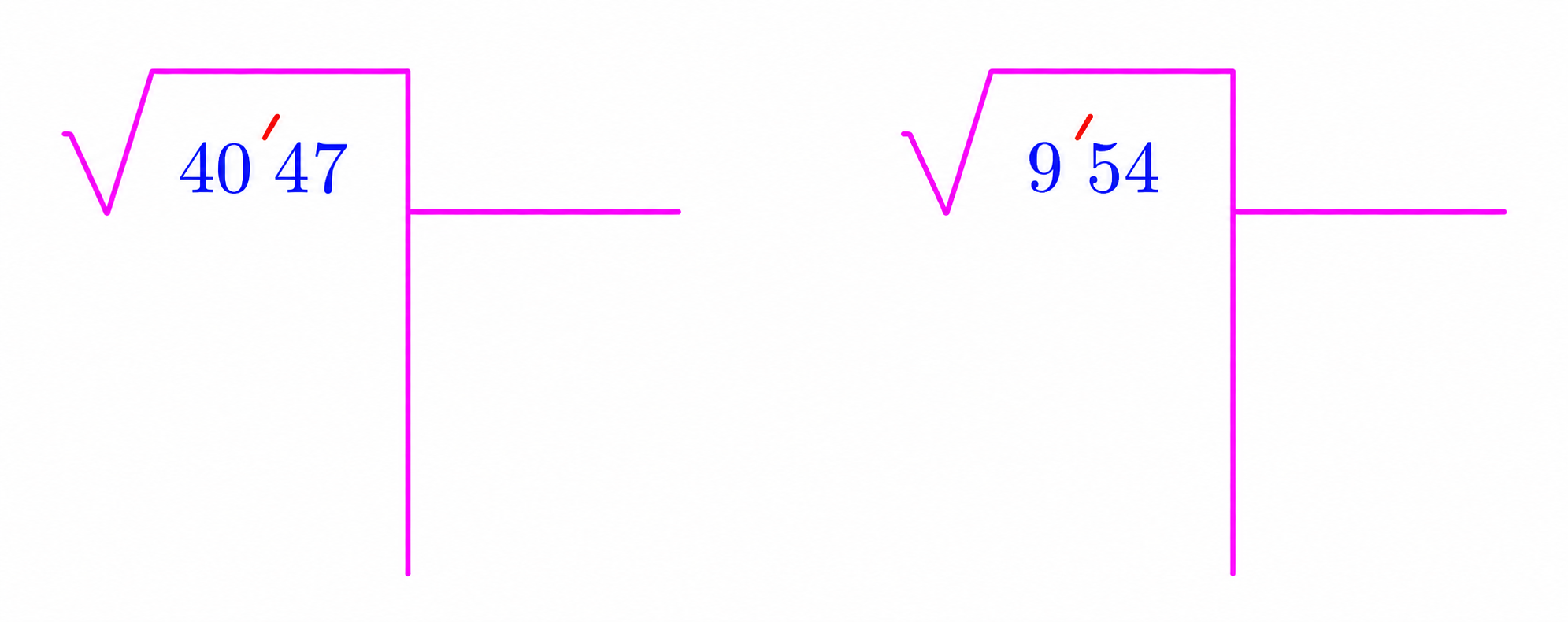
Step 2 — Find the First Digit
Look at the leftmost group.
Find the largest digit whose square is less than or equal to that group.
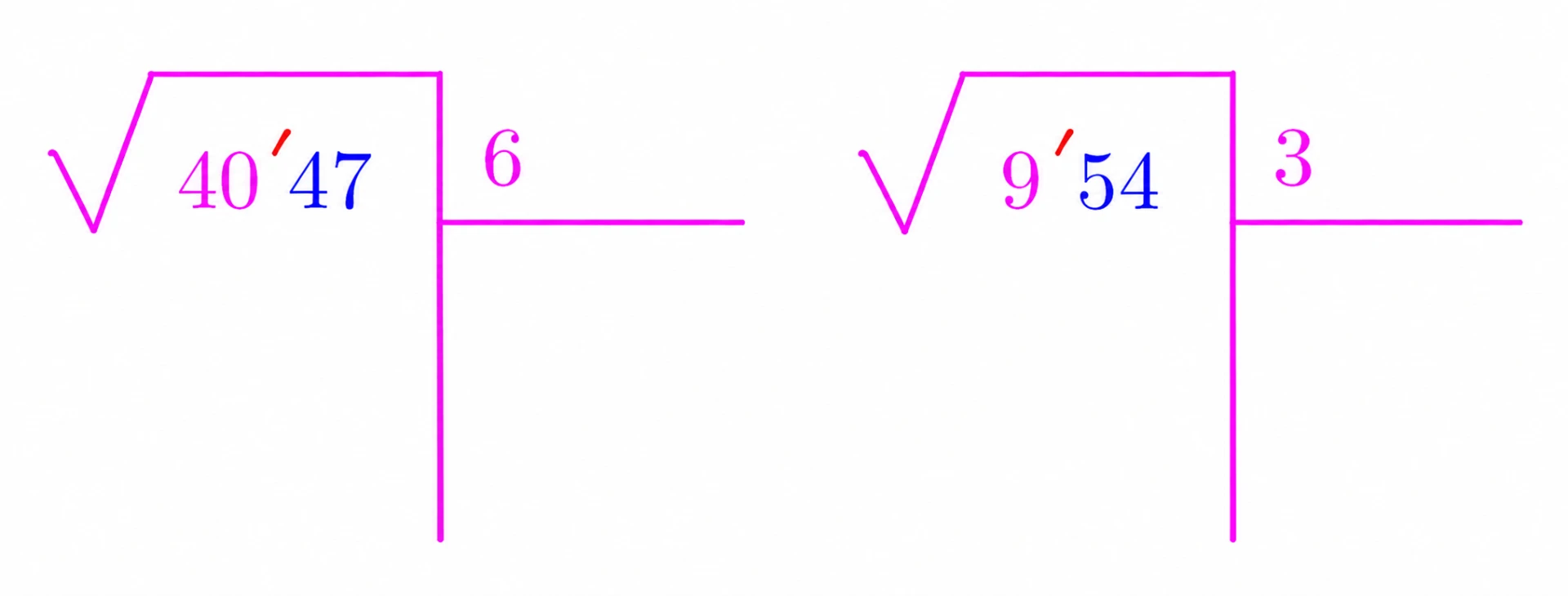
Step 3 — Square and Subtract
Square the digit you just wrote and subtract its square from the leftmost group. Then bring down the next pair of digits and place it to the right of the remainder.
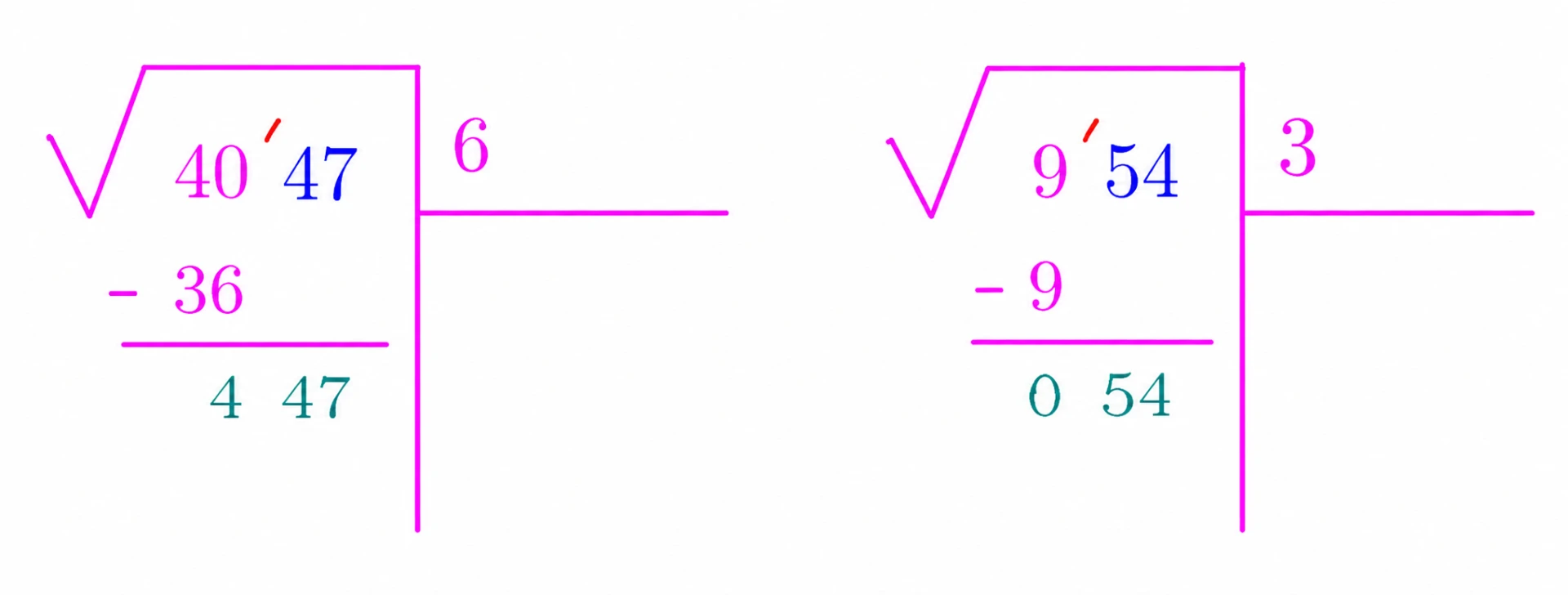
Step 4 — Find the Next Digit
Multiply the part of the square root found so far by 2.
Then append an empty digit position to the result and multiply by the digit placed in that position:
The same digit must be placed in both circles.
Choose the largest digit from 0 to 9 such that the resulting product is less than or equal to the current number.
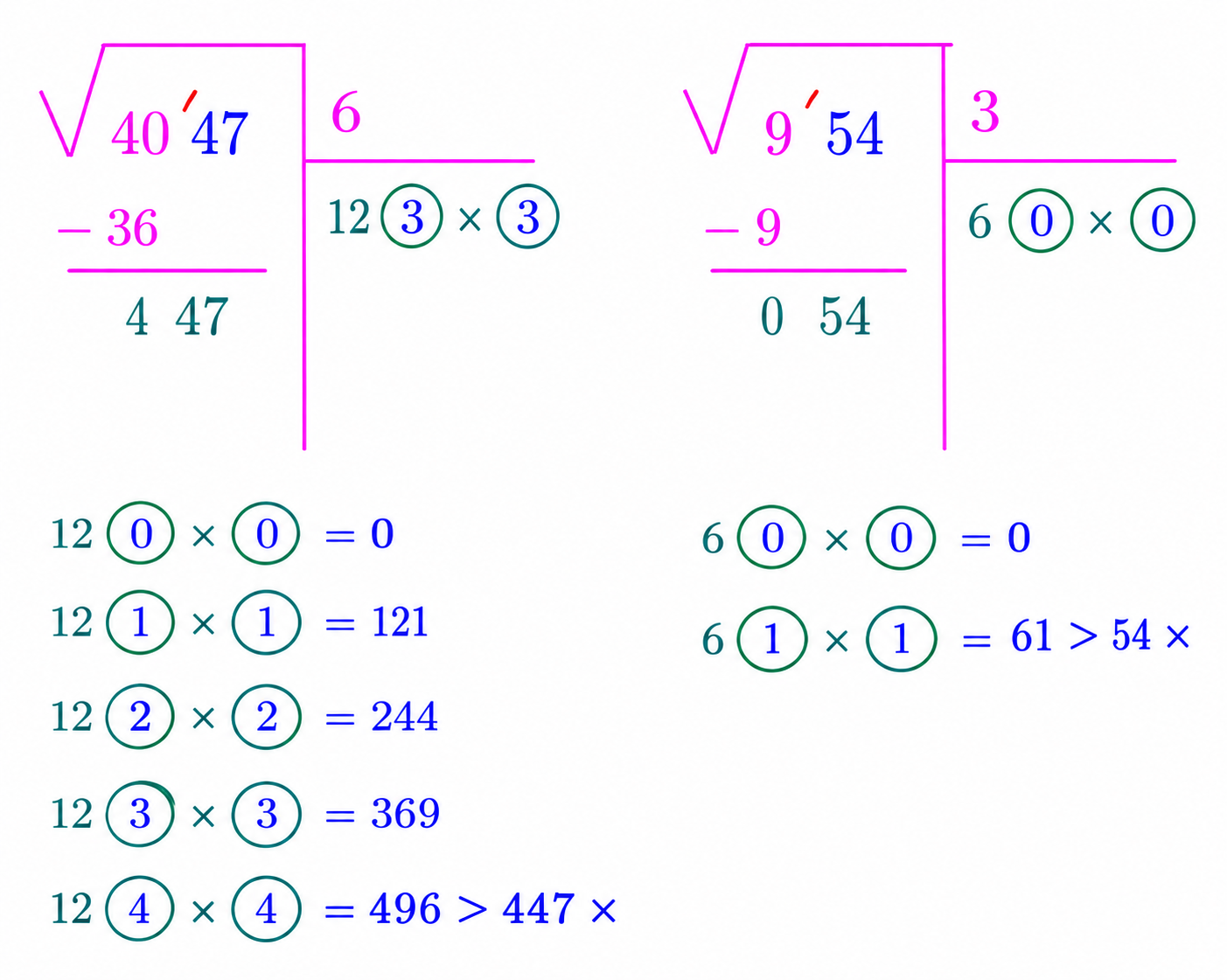
Step 5 — Multiply and Subtract
Move the chosen digit into the next position of the square root. Then multiply and subtract the product from the current number.
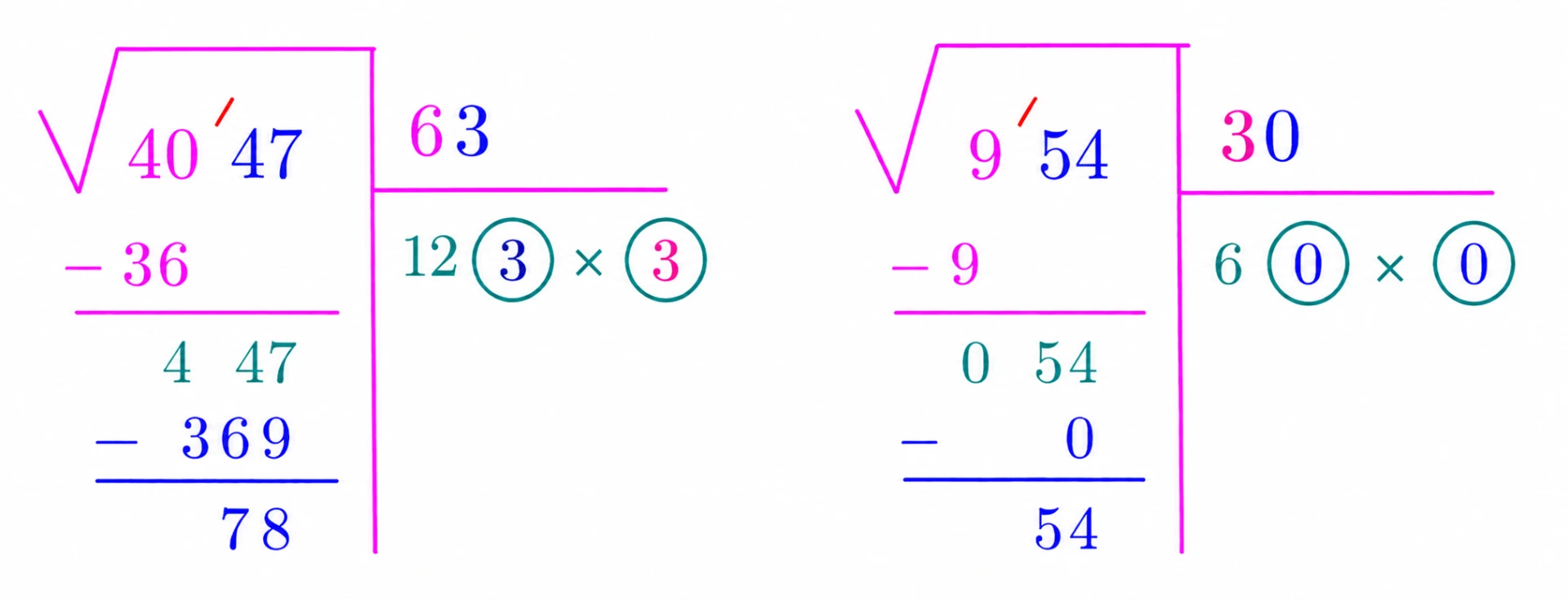
Therefore,
Find .
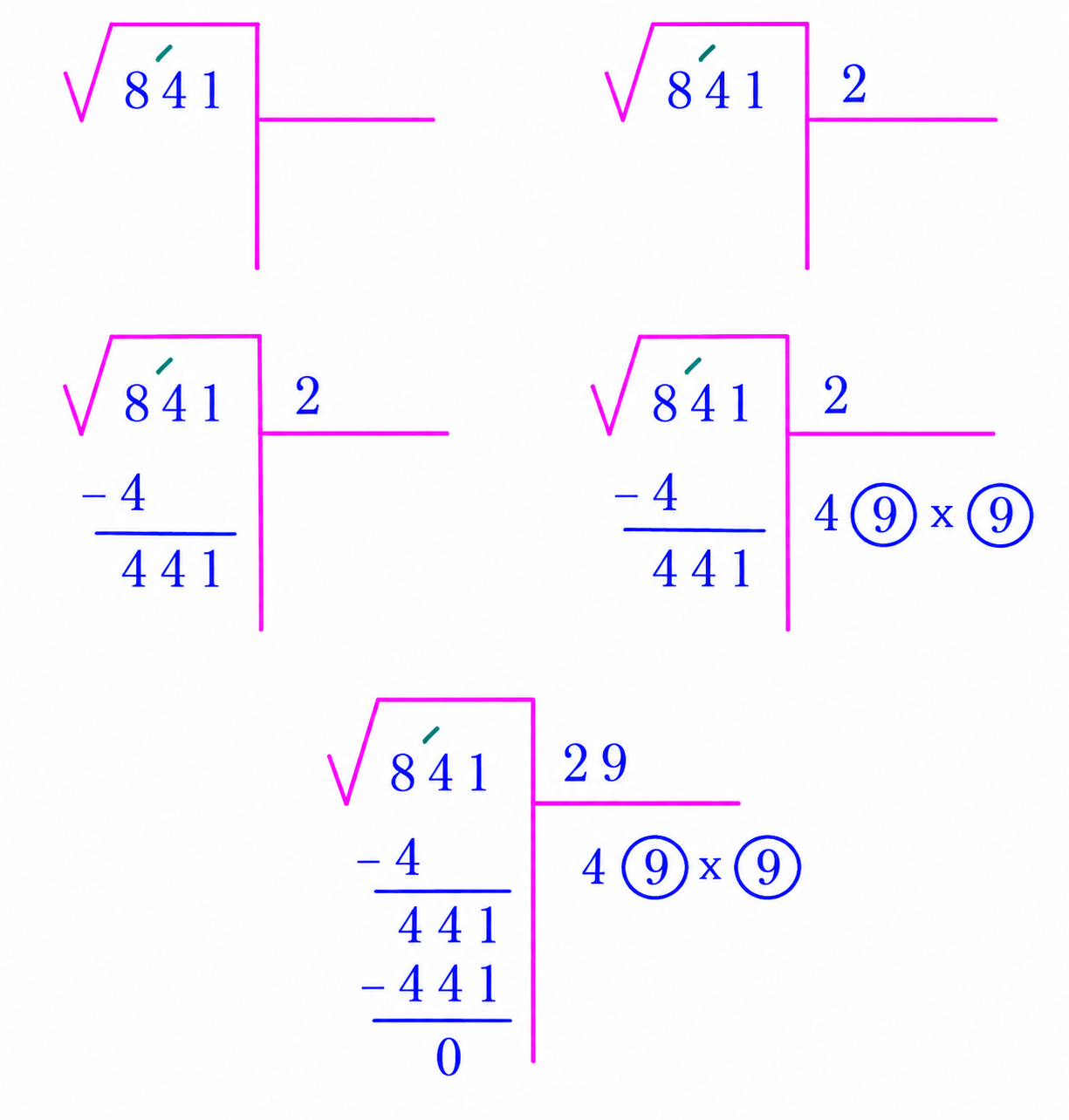
Therefore,
Find .
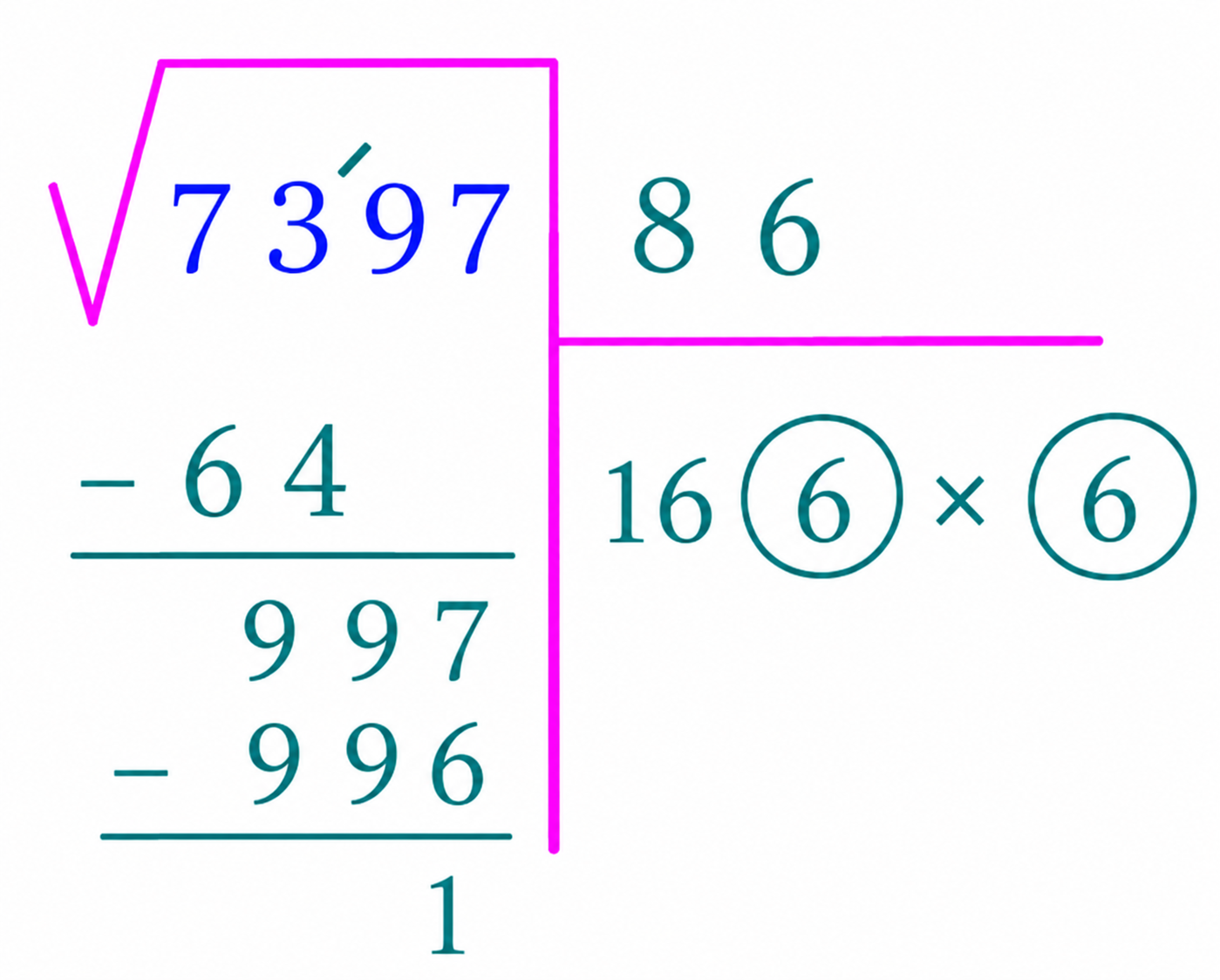
Therefore,
Find .
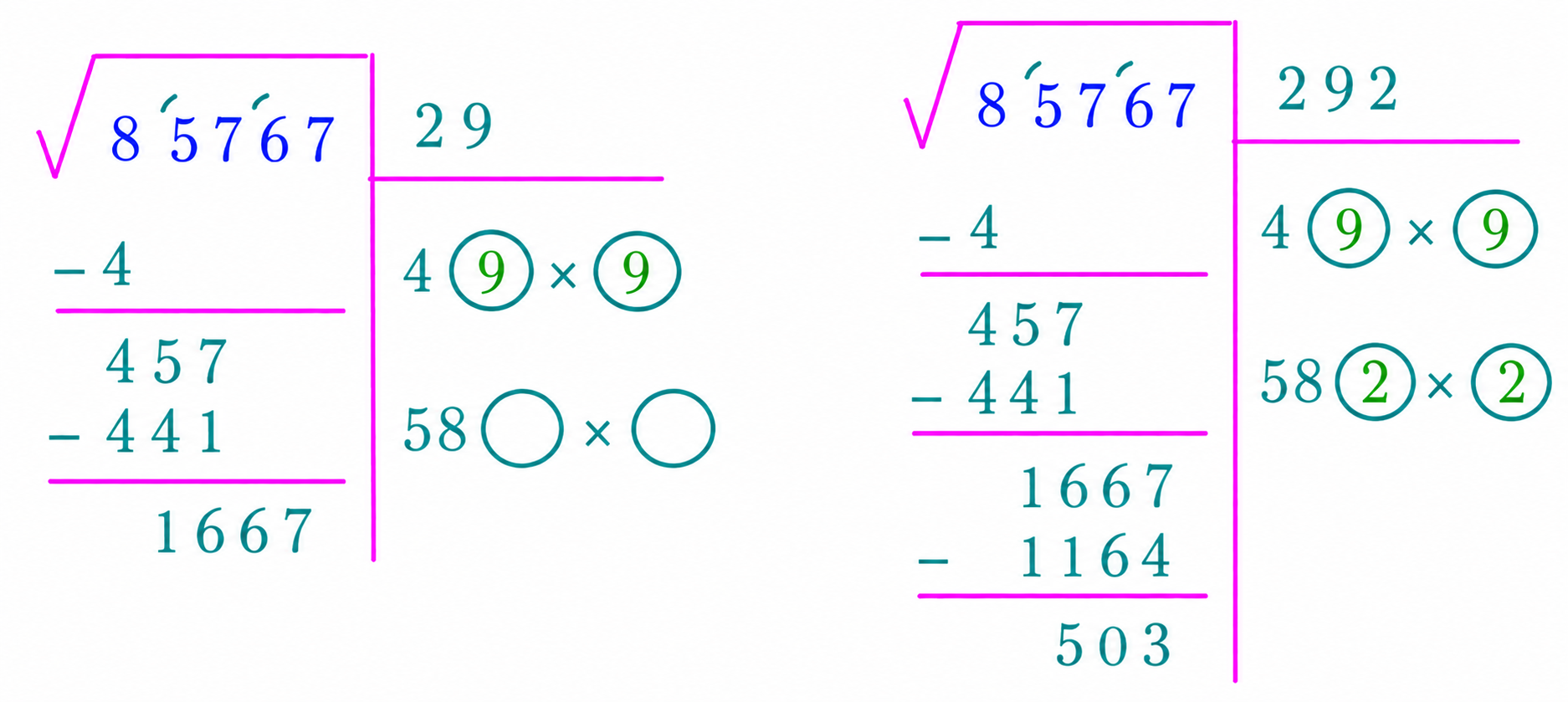
Therefore,
Find .
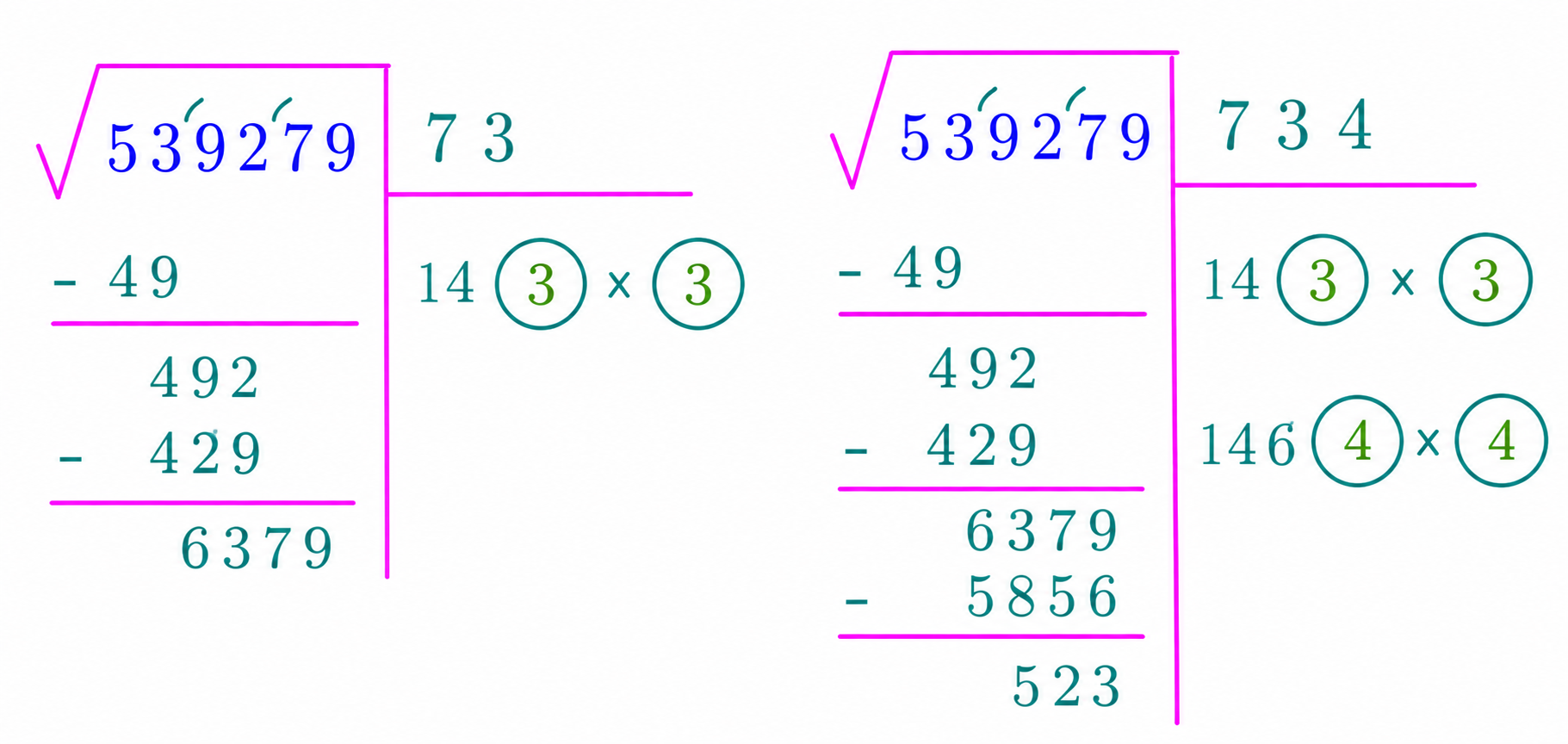
Therefore,
If the square root is not an integer, the algorithm can be continued to find decimal digits.
After all the original digit pairs have been used, bring down pairs of zeros:
and continue the same process.
Each new pair of zeros allows us to find one additional decimal digit of the square root.
For example, finding to one decimal place:
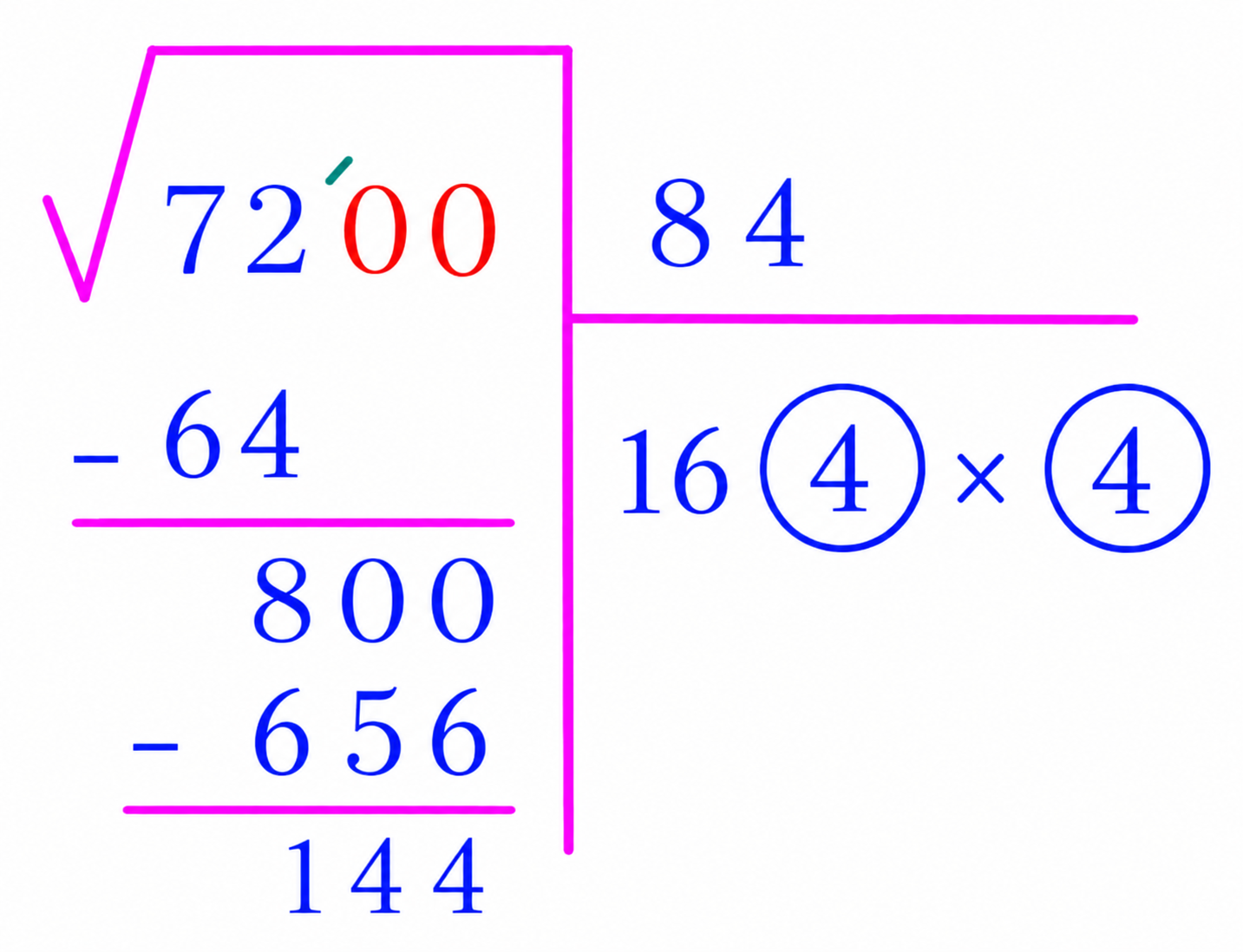
Therefore,
Find to two decimal places.
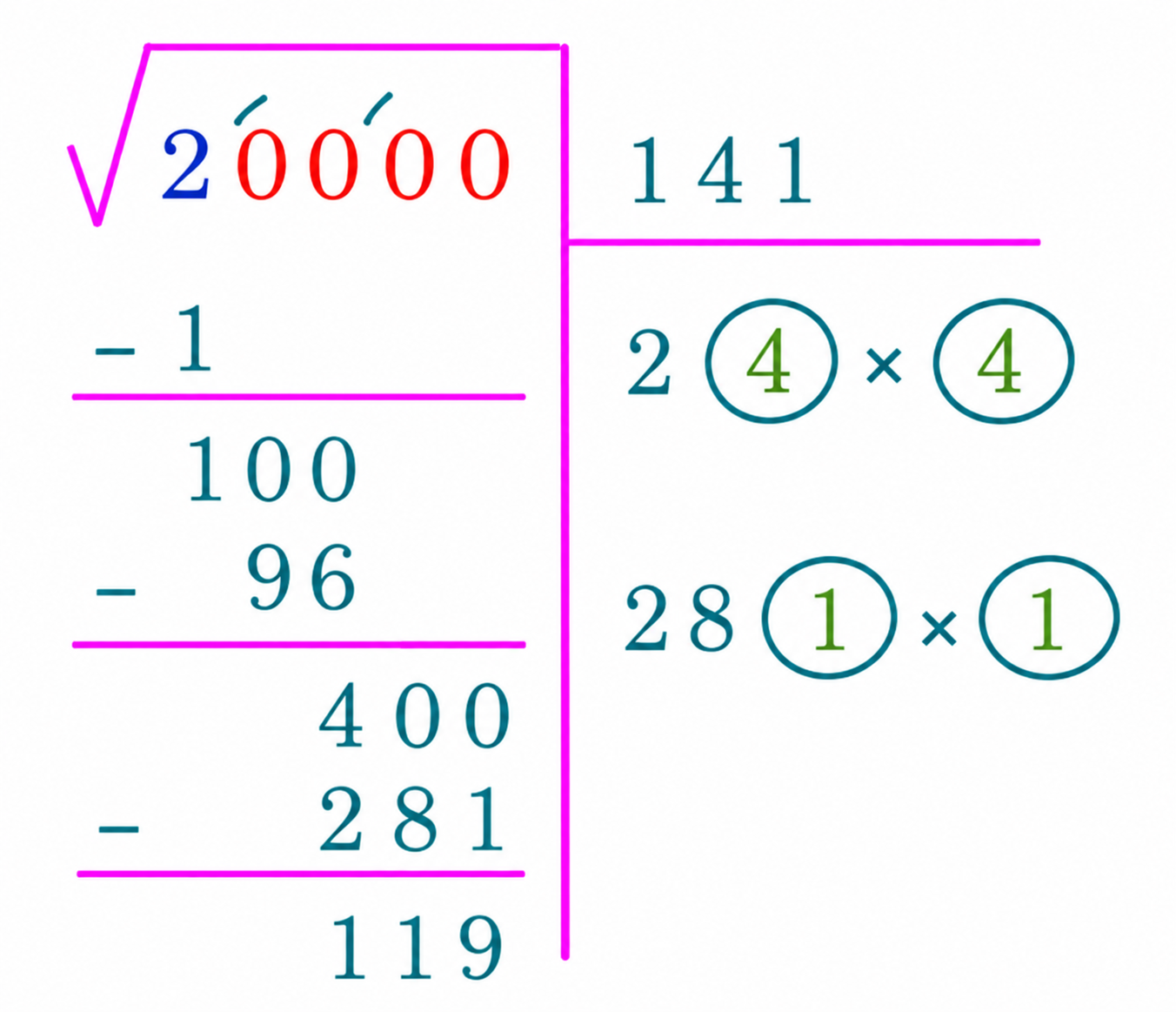
Therefore,
If the remainder becomes 0 after all the original digit pairs have been used, the number is a perfect square.
For example,
For integers, separate the digits into pairs from right to left.
not
Before finding the next digit, multiply the part of the square root already found by 2.
The same digit must be placed in both circles.
For example,
not
If 1 is already too large, use 0. Do not skip that position in the square root.
Always bring down the next pair of digits.