Cross Product
Lesson · Intermediate
Geometry: Coordinate Geometry
For
define
A convenient determinant form is
Geometric Meaning
If is the angle between and , then
Right-Hand Rule
To find the direction of , point the fingers of your right hand in the direction of and curl them toward . Your thumb points in the direction of .
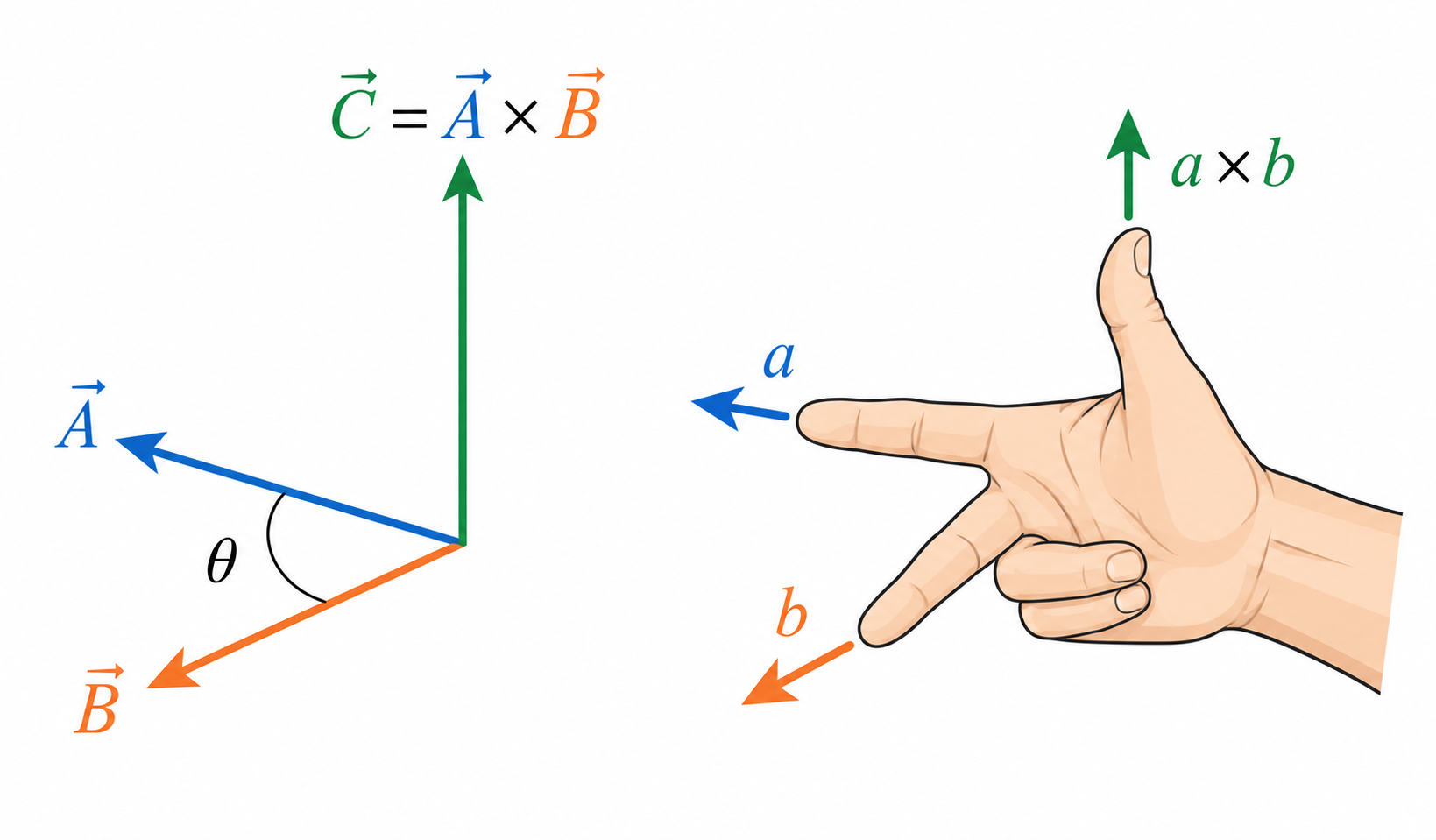
For vectors
We have
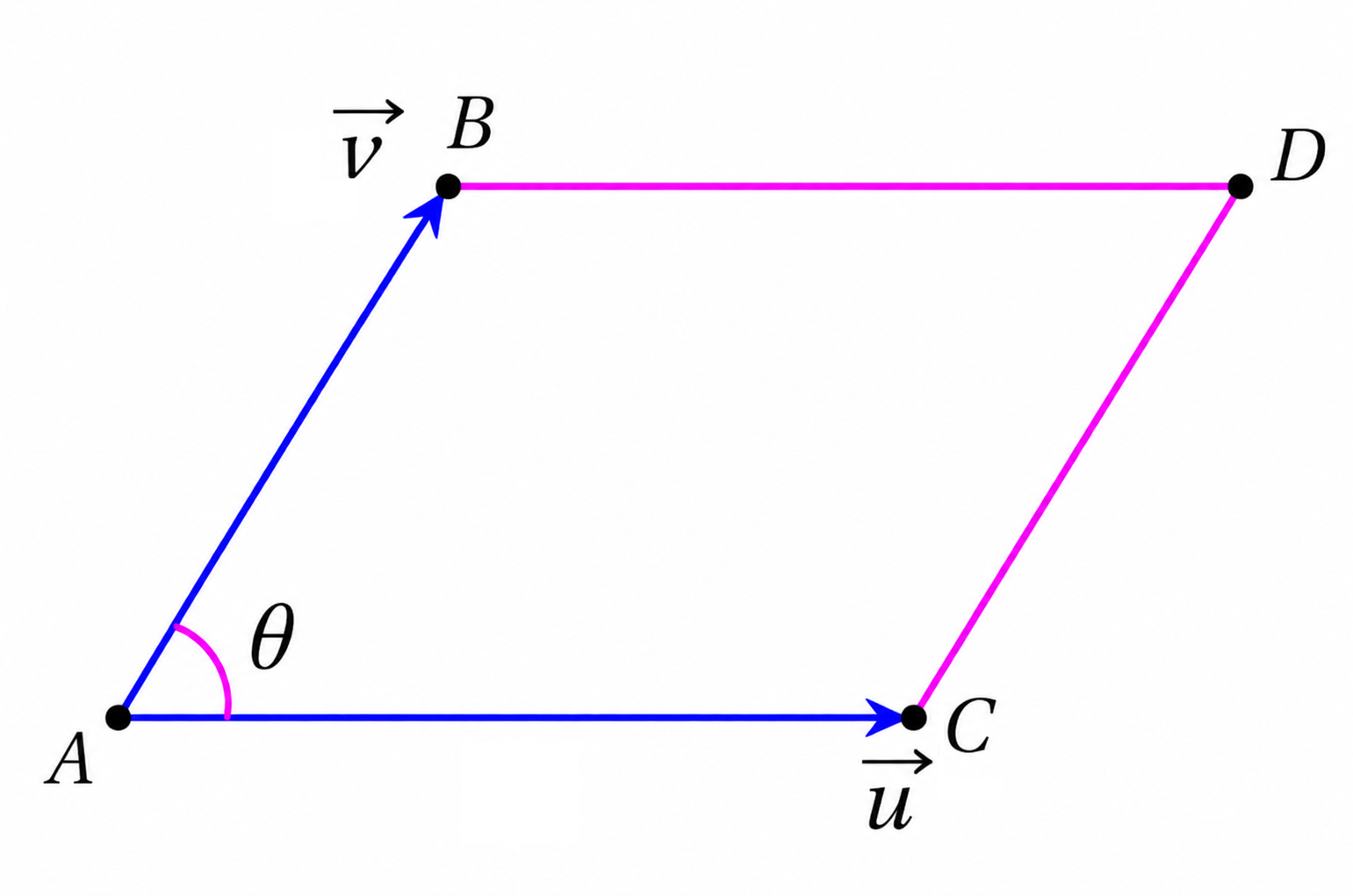
For the triangle formed by the two vectors,
The parallelogram has twice the area of the triangle, so
Since the angle between and is or ,
Its absolute value gives the volume of the parallelepiped formed by the three vectors.
Find the area of the triangle with vertices
Determine k so that
are collinear.
Find the volume of the tetrahedron with vertices