Quadratic Functions
Lesson · Beginner
Algebra: Functions
where a, b, and c are constants.
The graph of a quadratic function is called a parabola.
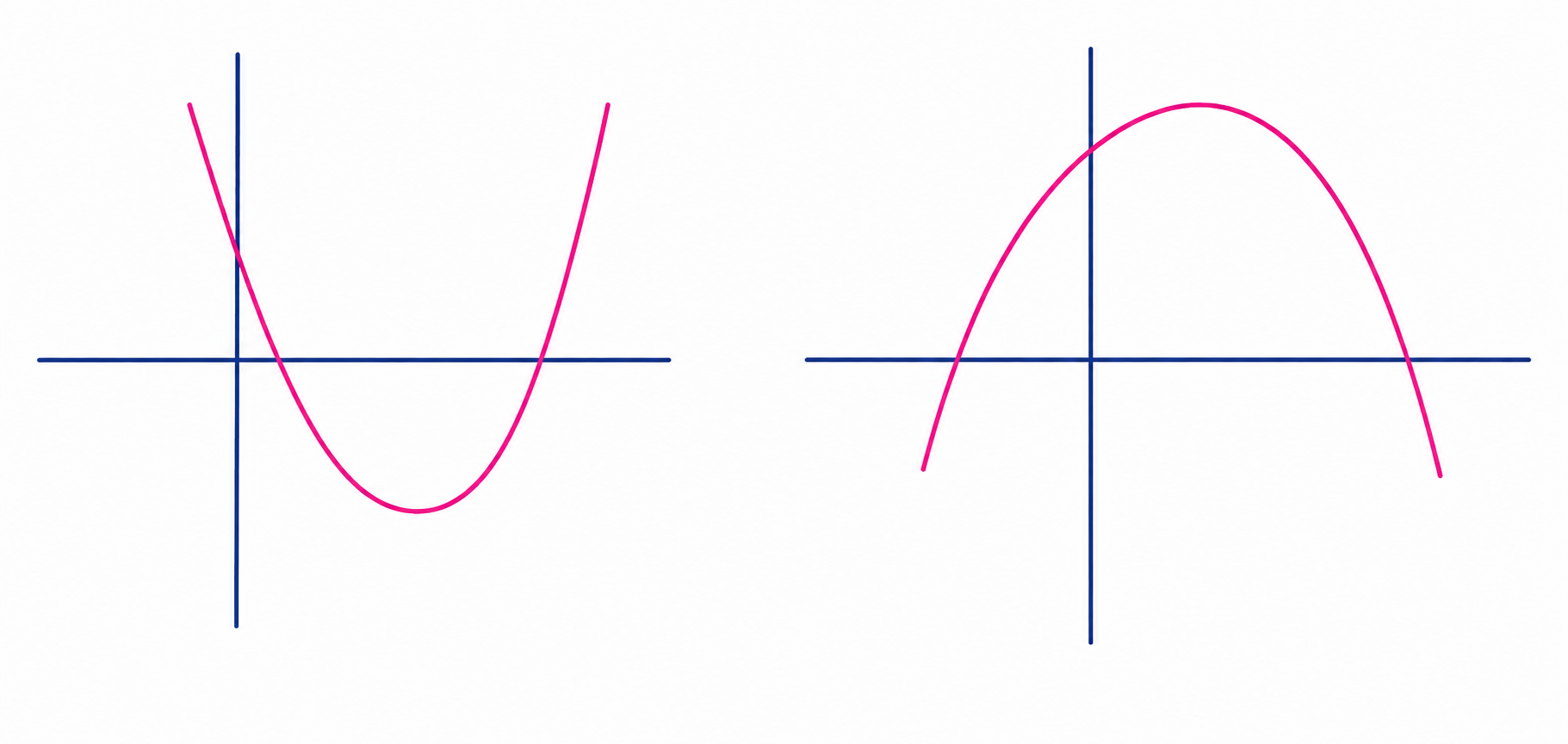
The standard form of a quadratic function is
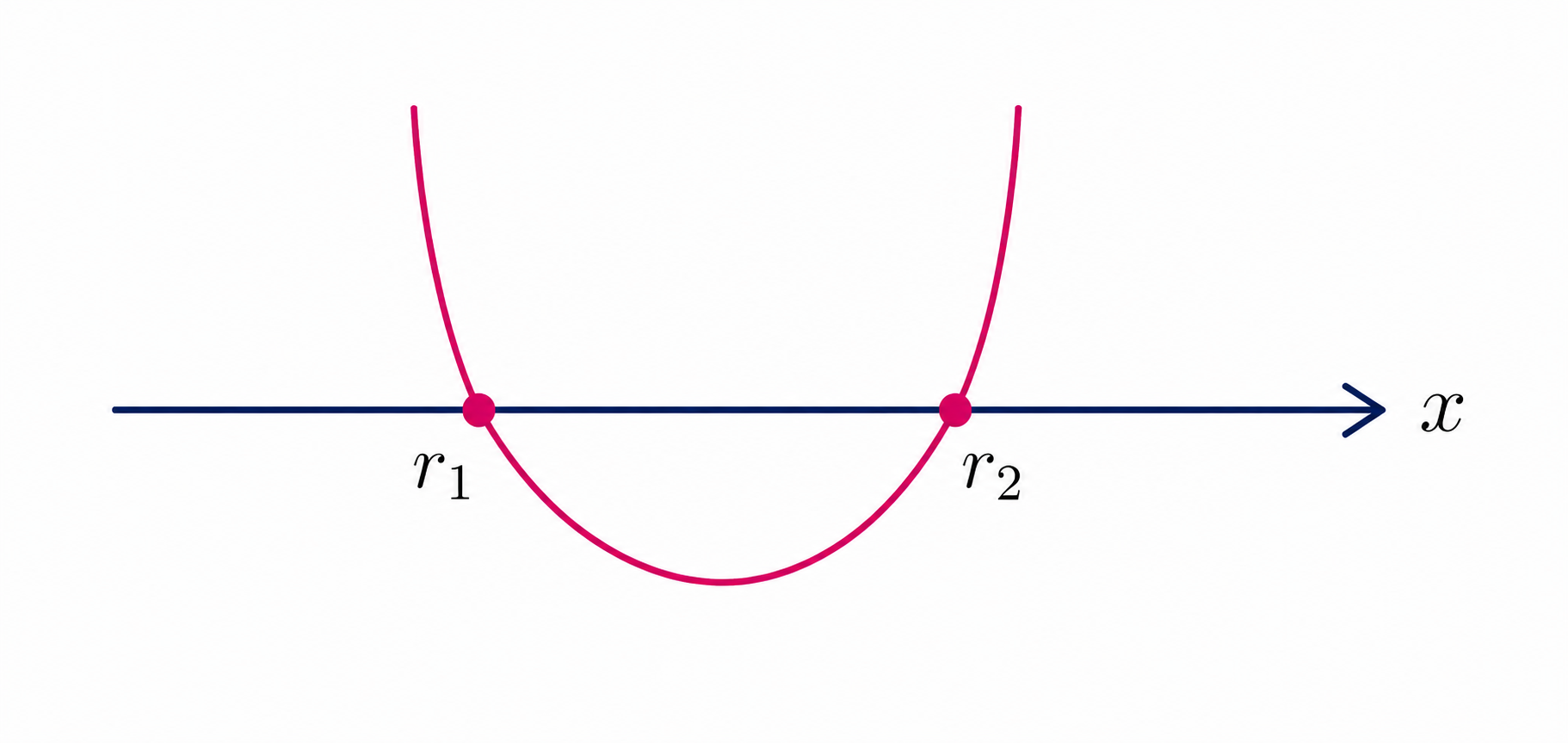
If the quadratic has roots r₁ and r₂, it can be written as
The x-intercepts can immediately be identified:
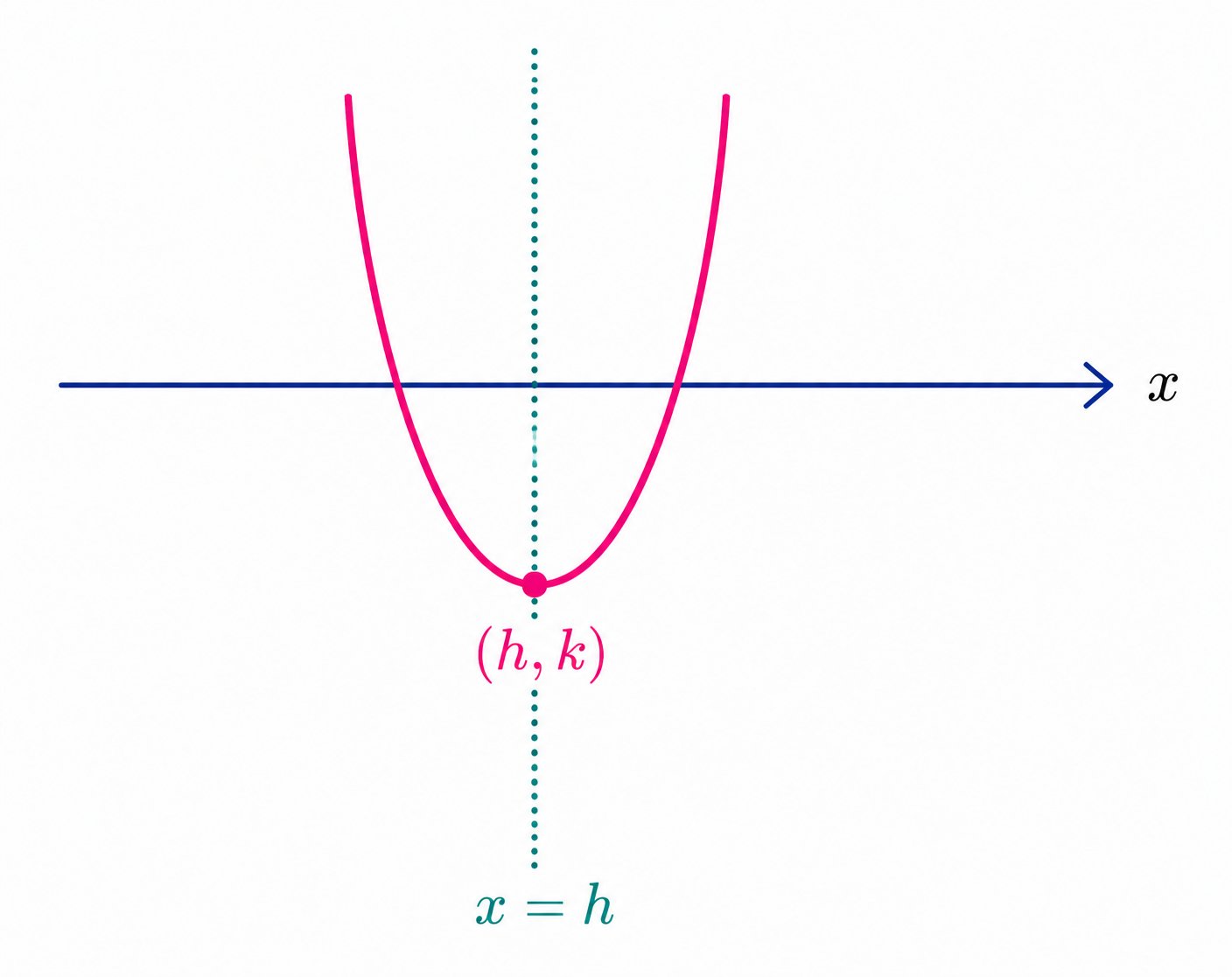
A quadratic function can also be written as
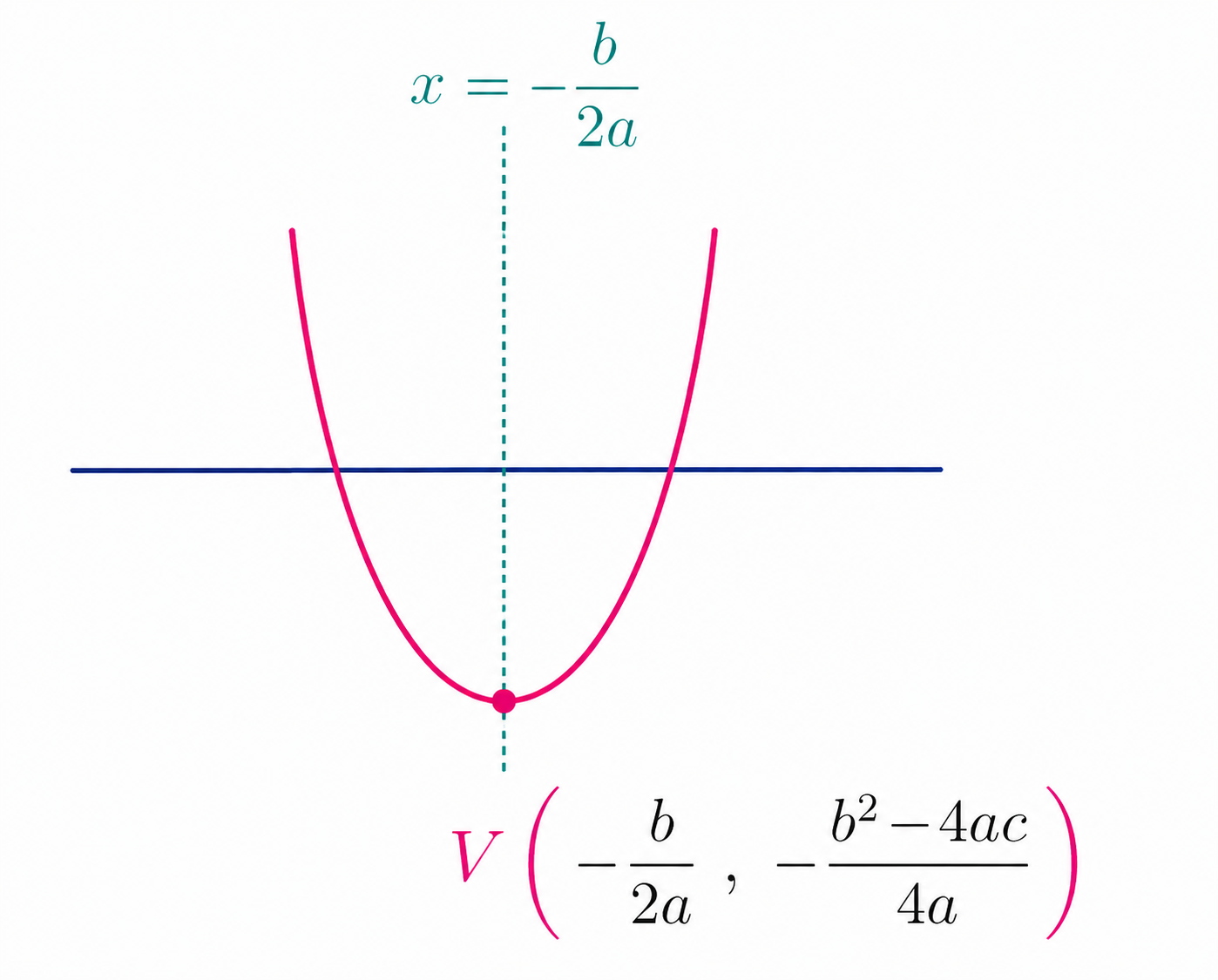
where the vertex is
and the axis of symmetry is
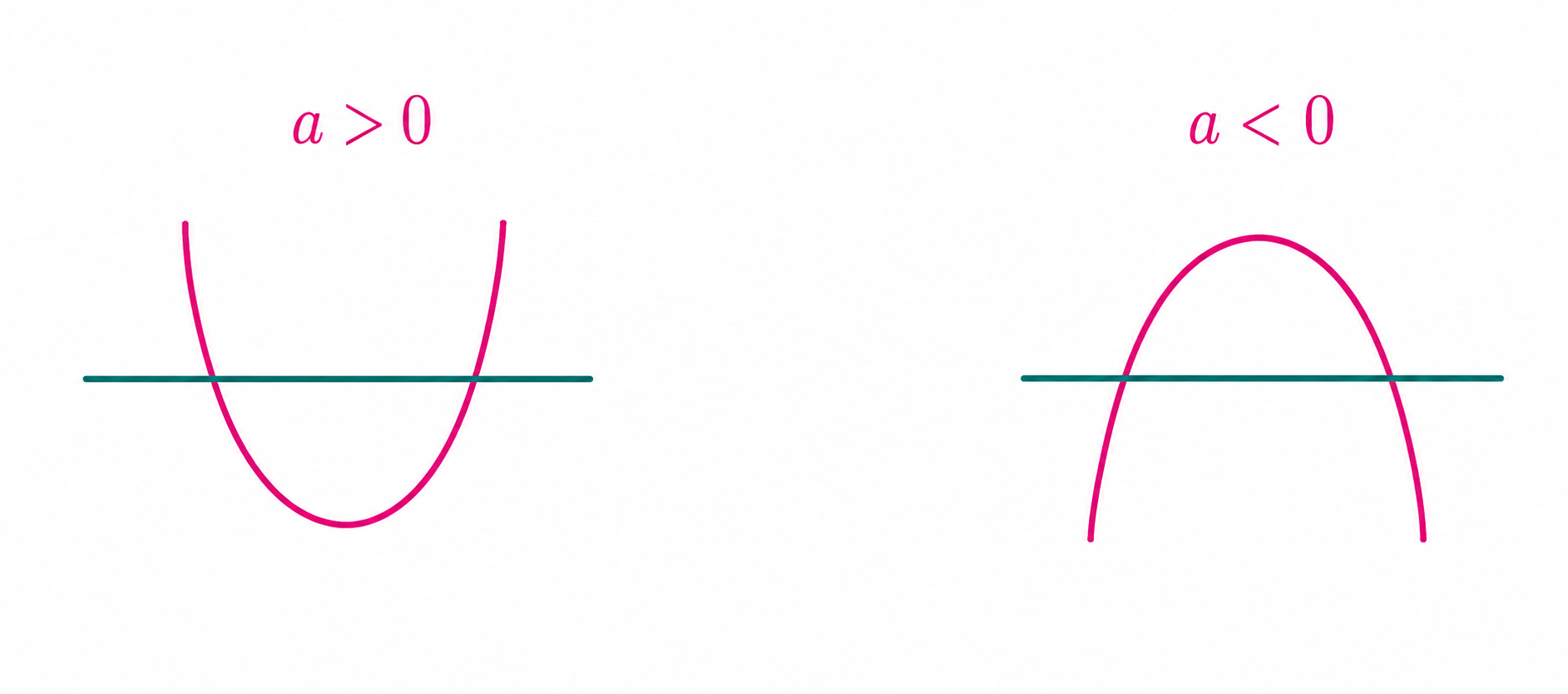
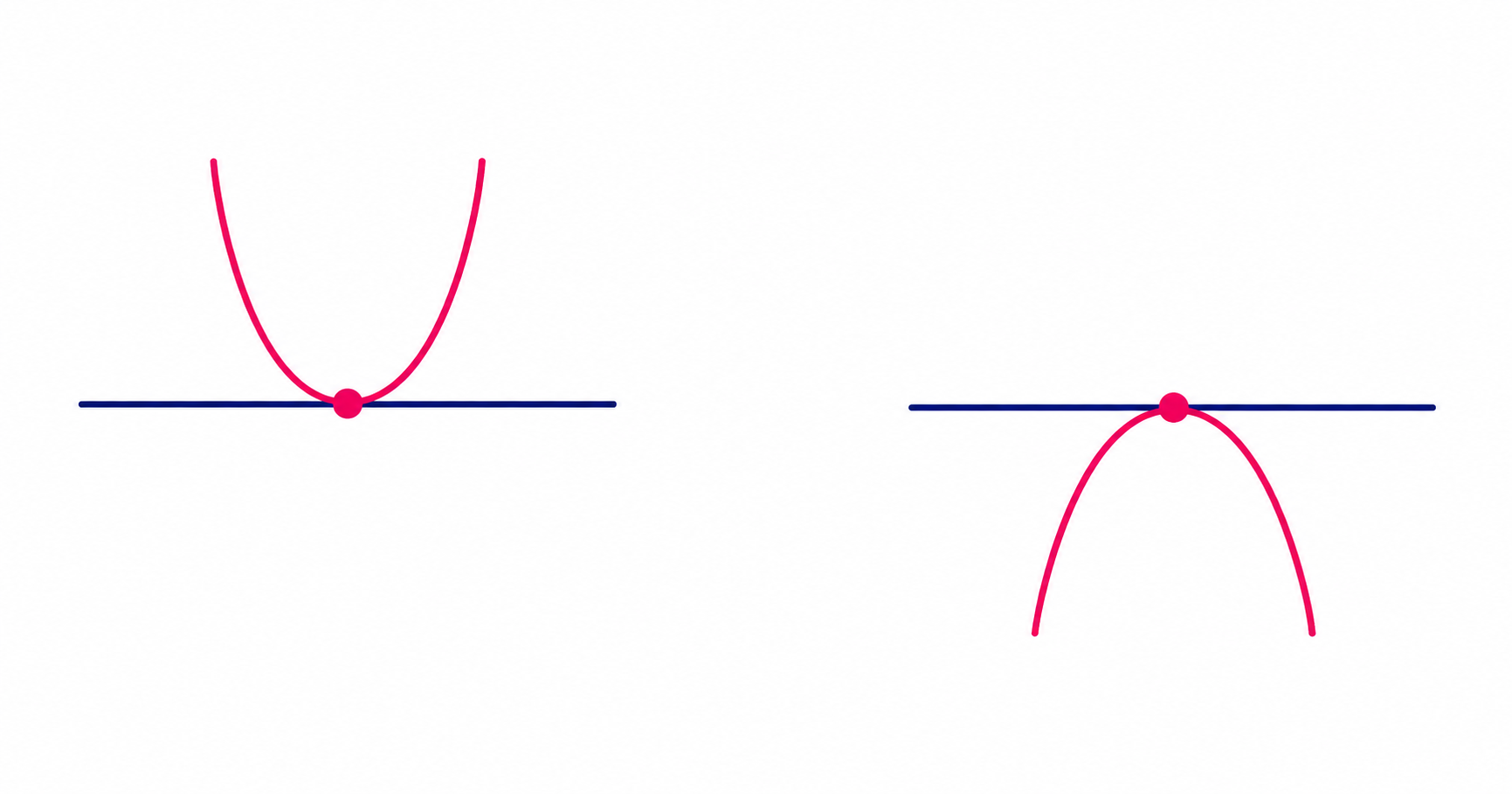
The sign of a determines the direction in which the parabola opens.
If
the parabola opens upward and has a minimum.
If
the parabola opens downward and has a maximum.
The magnitude of a also affects the shape of the parabola. Larger values of |a| produce a narrower parabola, while smaller positive values of |a| produce a wider parabola.
For a quadratic equation
the solutions are
The expression
is called the discriminant.
Consider
Divide both sides by a:
Move the constant term to the other side:
Complete the square by adding
to both sides:
Therefore,
Taking square roots gives
Therefore,
If
there are two distinct real roots.
This means that the parabola intersects the x-axis at two points.

If
there is one repeated real root.
This means that the parabola touches the x-axis at exactly one point.
If
there are no real roots.
This means that the parabola does not intersect the x-axis.

Start with
Factor a from the first two terms:
Complete the square:
Therefore,
Thus,
This immediately shows that the vertex is
Find the vertex of
The x-coordinate of the vertex is
Then
Therefore, the vertex is
Solve
Here,
Using the quadratic formula,
Thus,
Therefore,
Find all values of k such that
has exactly one real solution.
For exactly one real solution, the discriminant must equal zero:
Therefore,
Hence,
So
which gives
Find the minimum value of
Complete the square:
Since
we have
Therefore,
The minimum occurs when
Find the range of
Complete the square:
Since
we have
Therefore,
Hence, the range is
In particular, the monic quadratic with roots r and s is
Consider
and the line
At an intersection,
Therefore,
The discriminant
determines the number of intersection points.
If it is positive, there are two intersections.
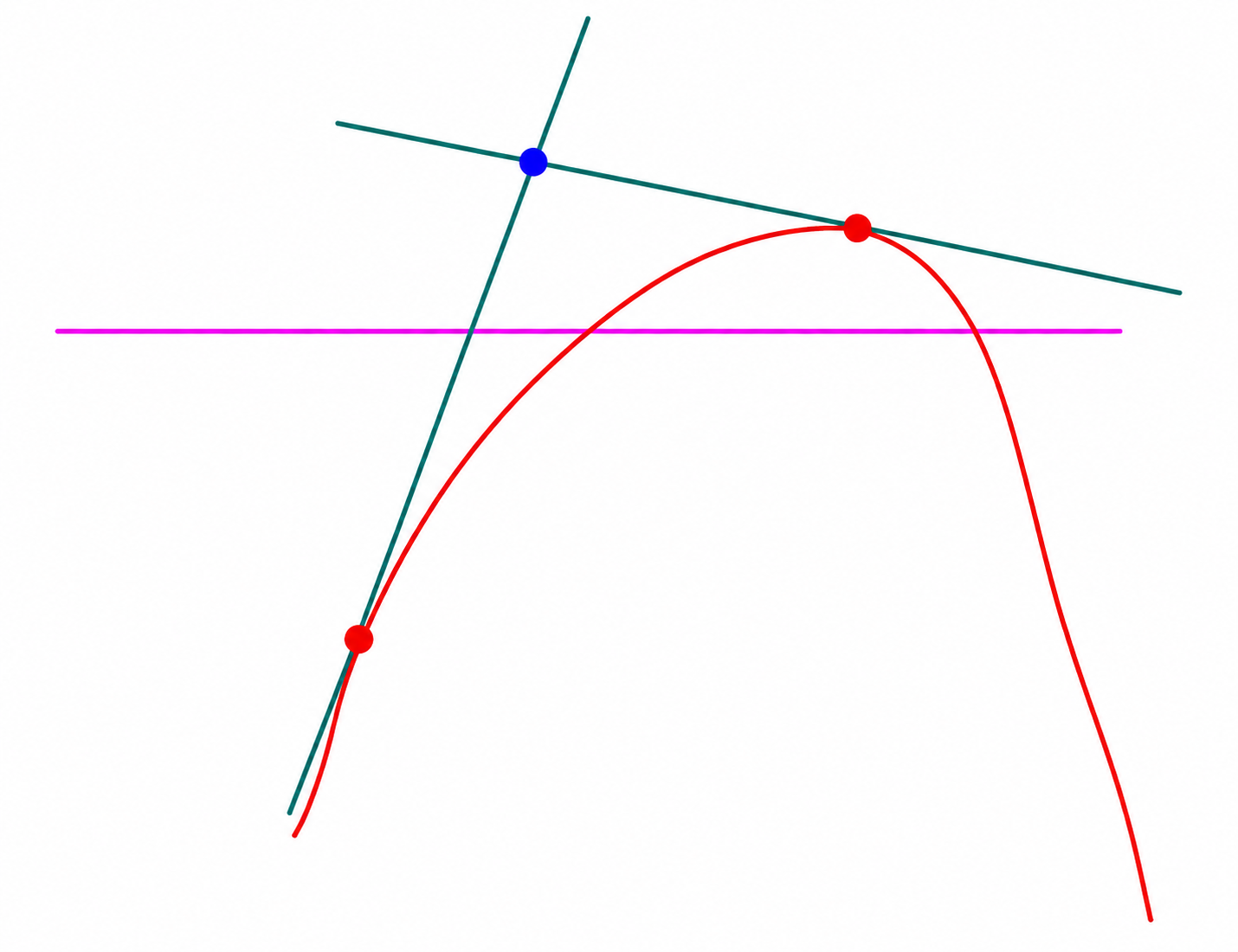
If it is zero, there is exactly one intersection, so the line is tangent to the parabola.
If it is negative, there are no real intersections.
Therefore, the condition for tangency is
Assume y = mx + 2 is tangent to
Find m.
The quadratic formula works for every quadratic equation, but it is not always the most efficient method.
For example,
can immediately be factored as
Therefore,
Using the quadratic formula here would be unnecessary.
Completing the square can be used to find:
• the vertex,
• the axis of symmetry,
• the maximum or minimum,
• the range,
• the sign of a quadratic,
• and useful inequalities.
For competition mathematics, completing the square should be viewed as a general problem-solving technique, not merely as another method for solving quadratic equations.