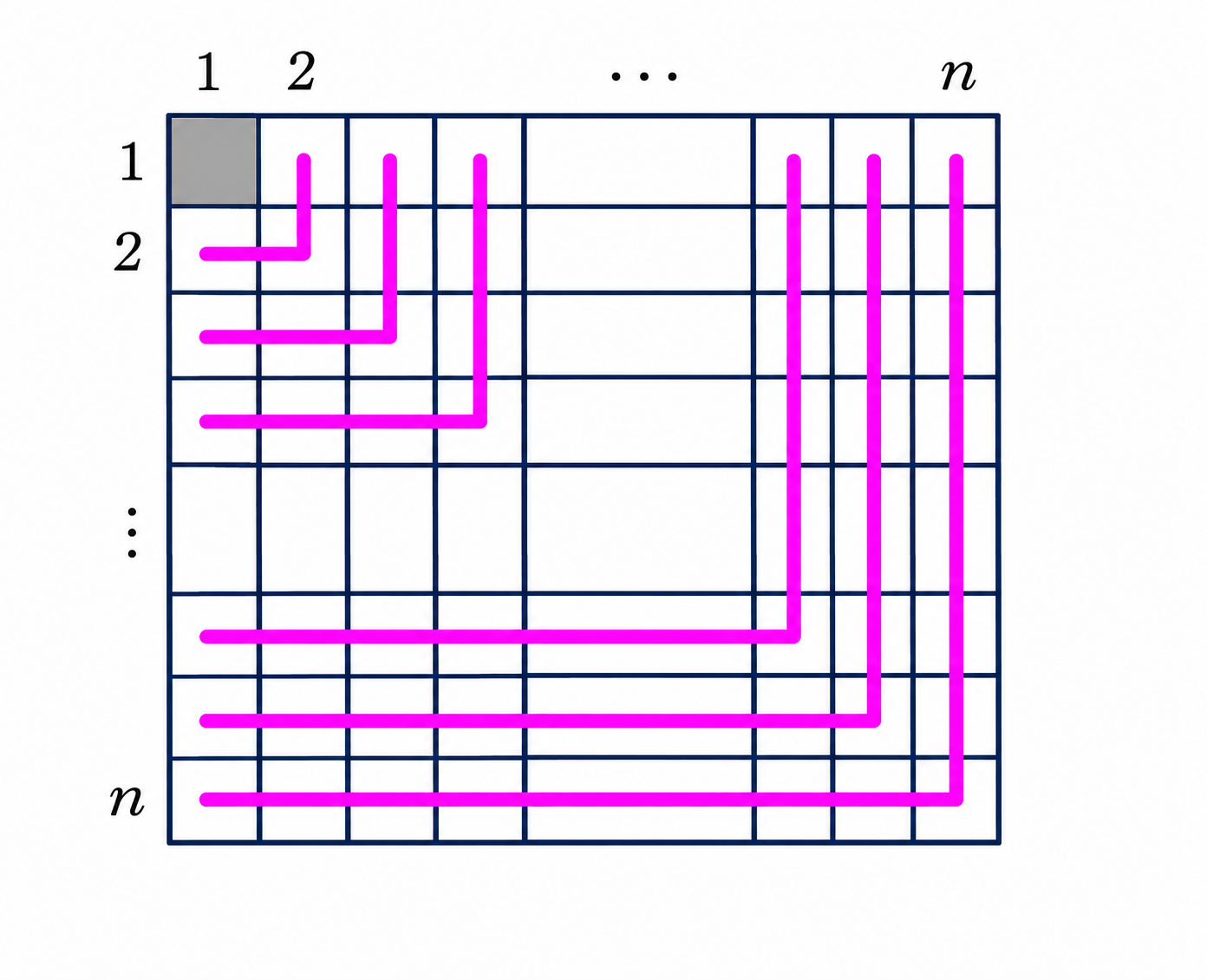
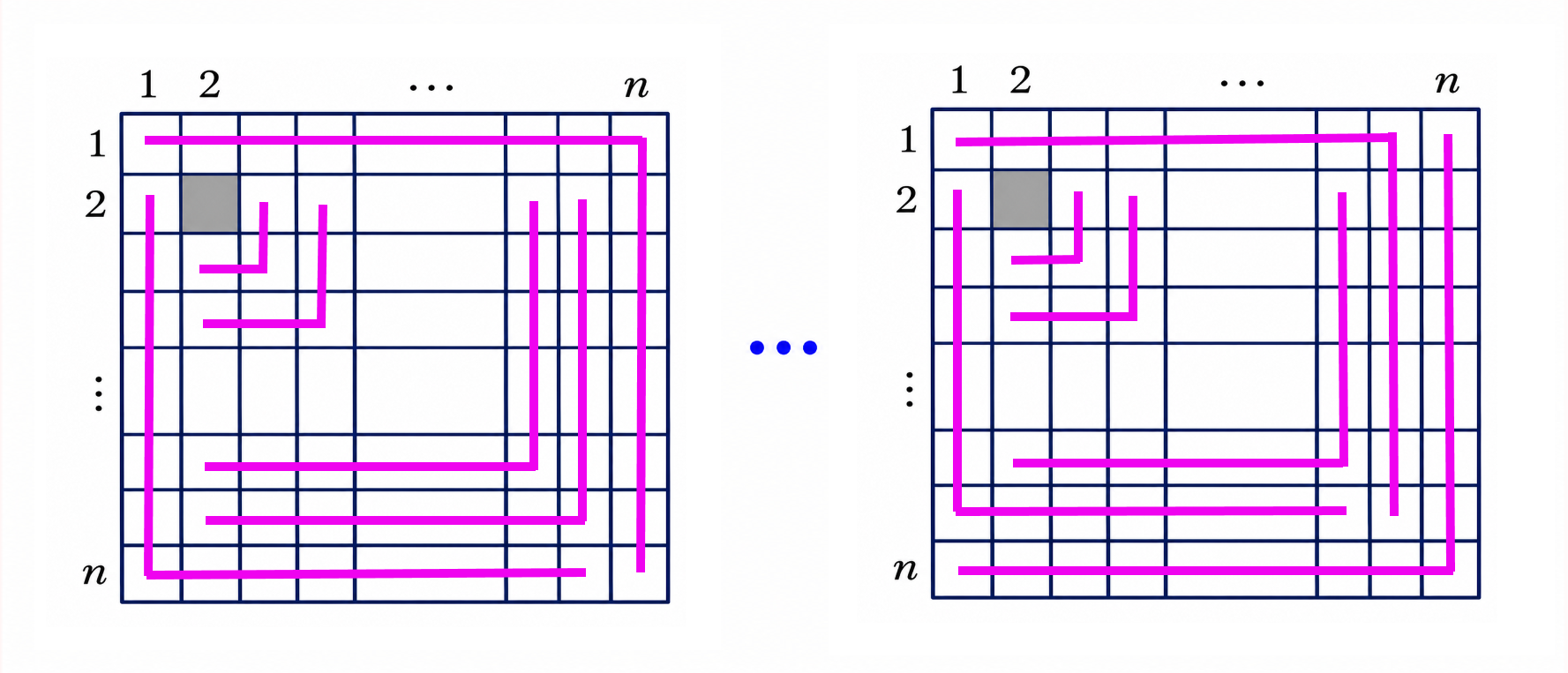
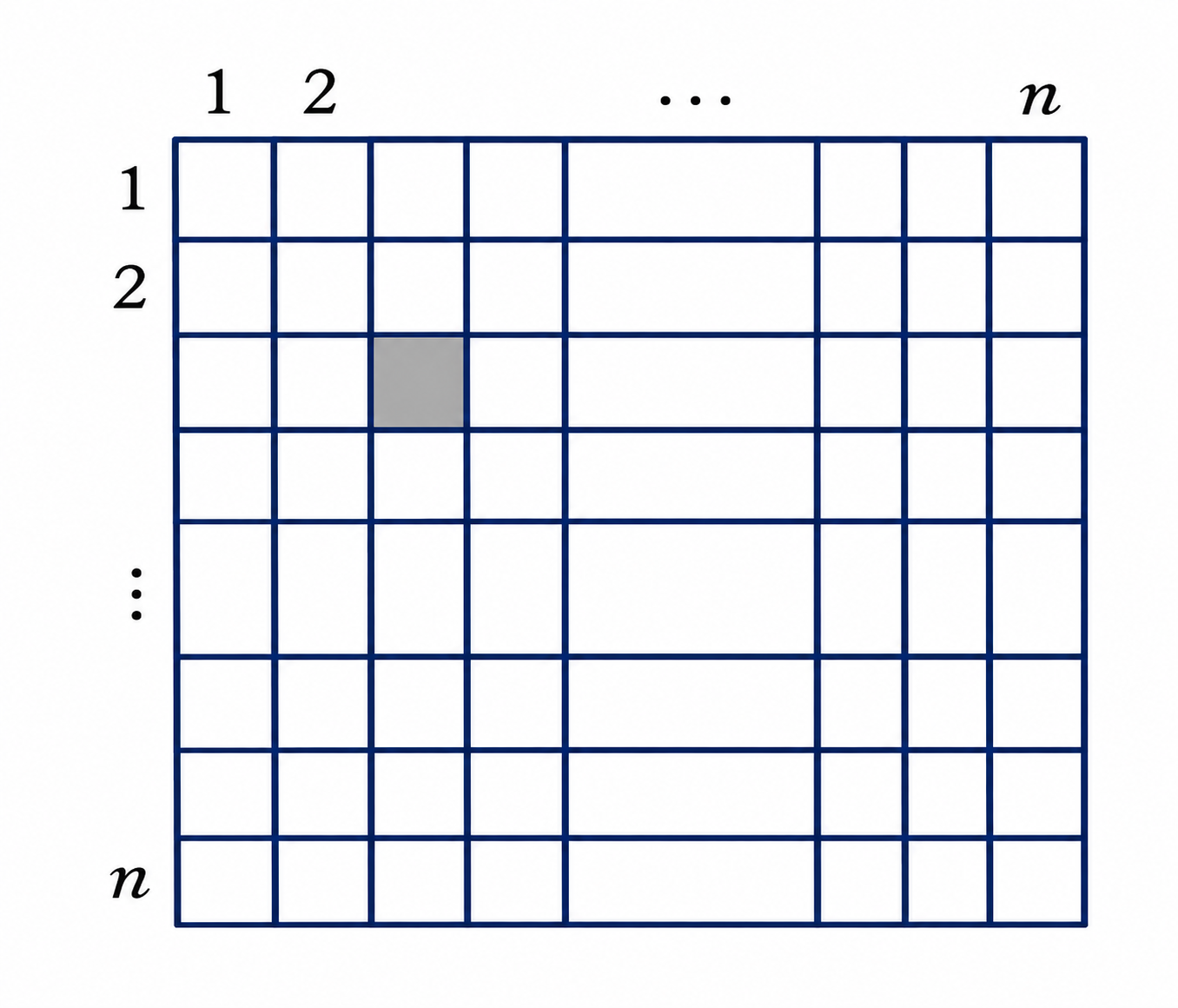
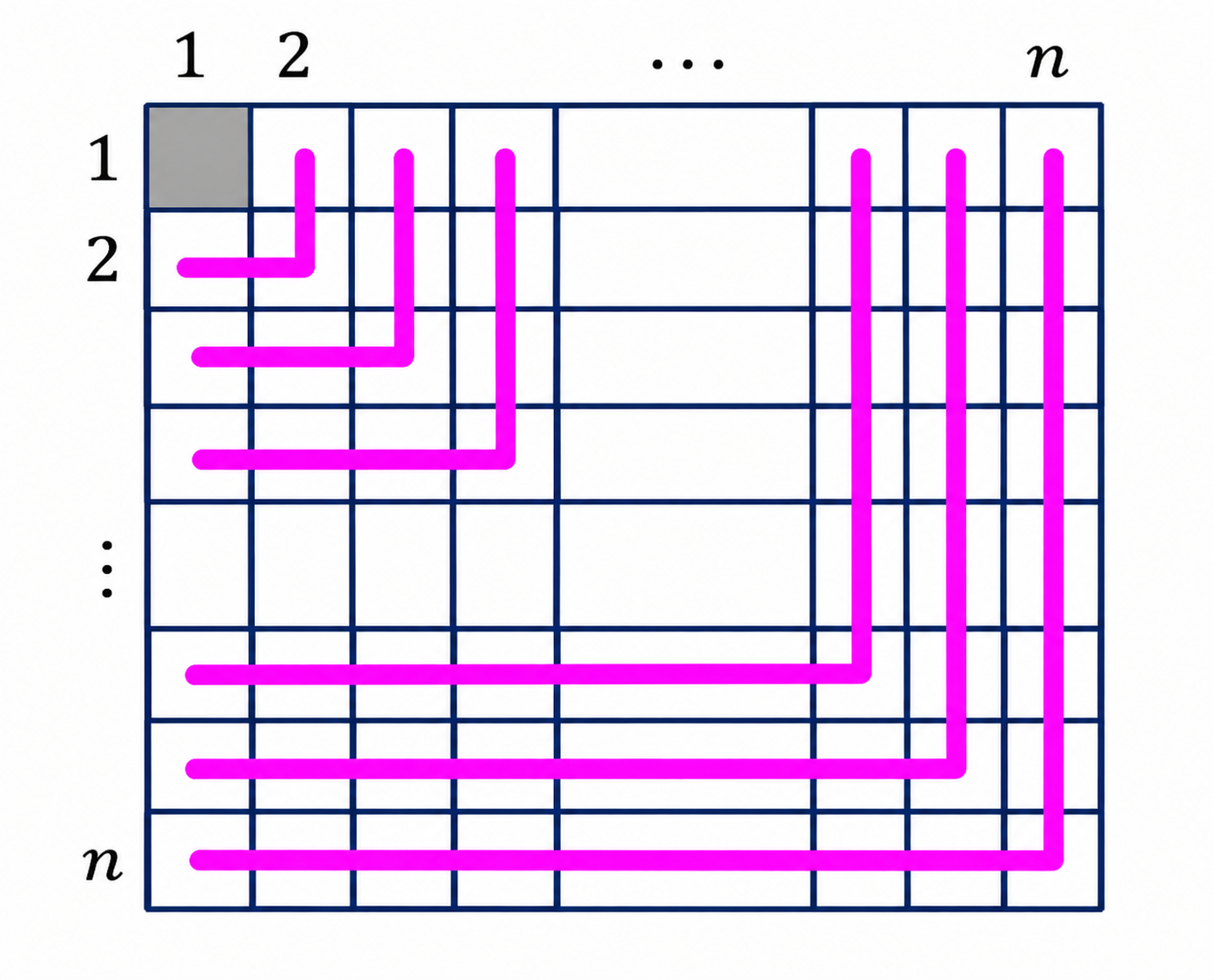
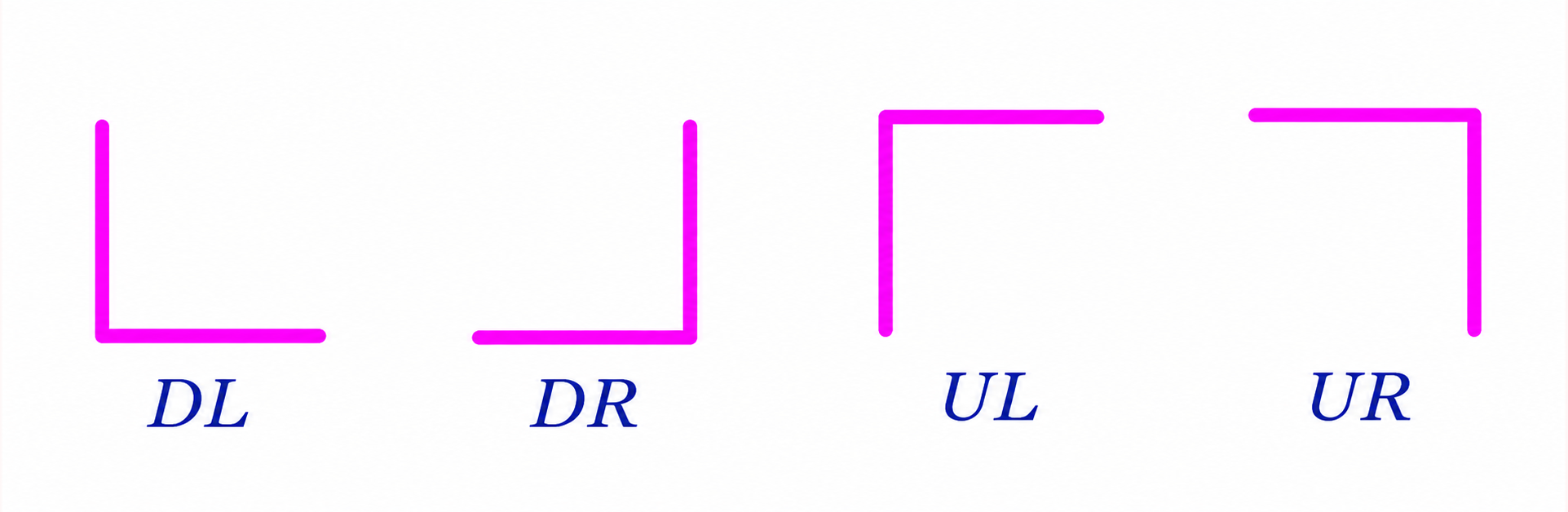
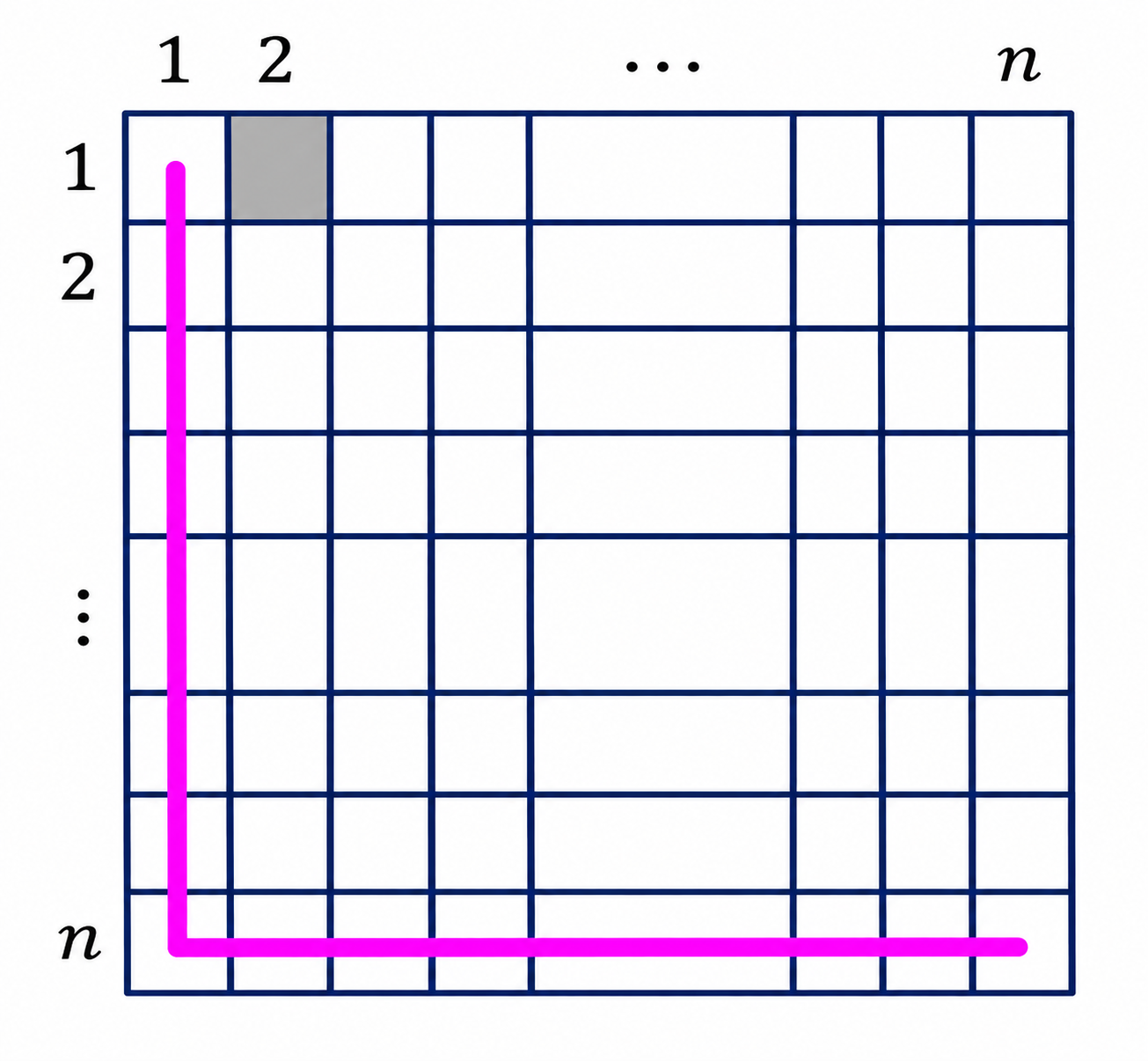
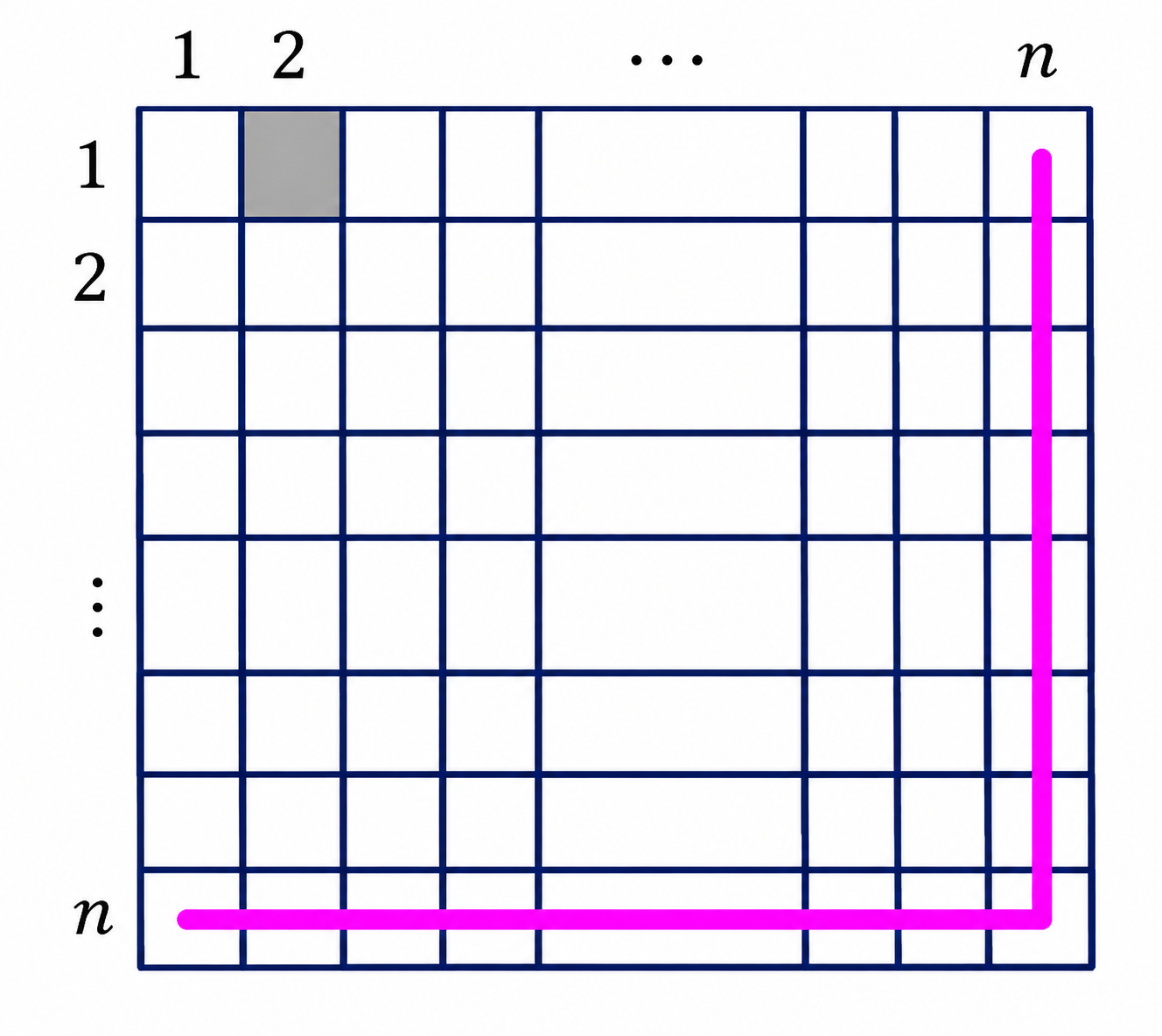
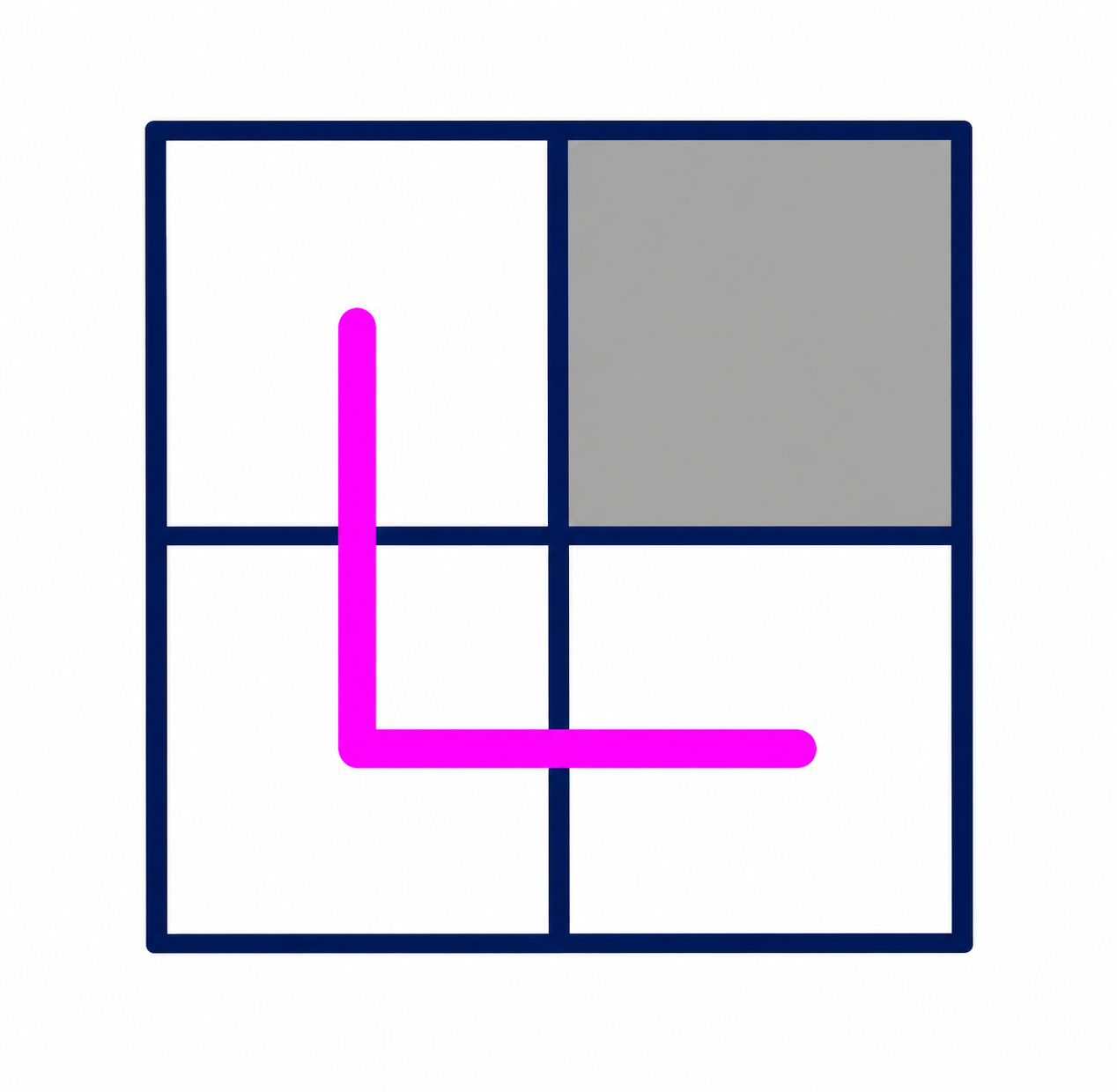
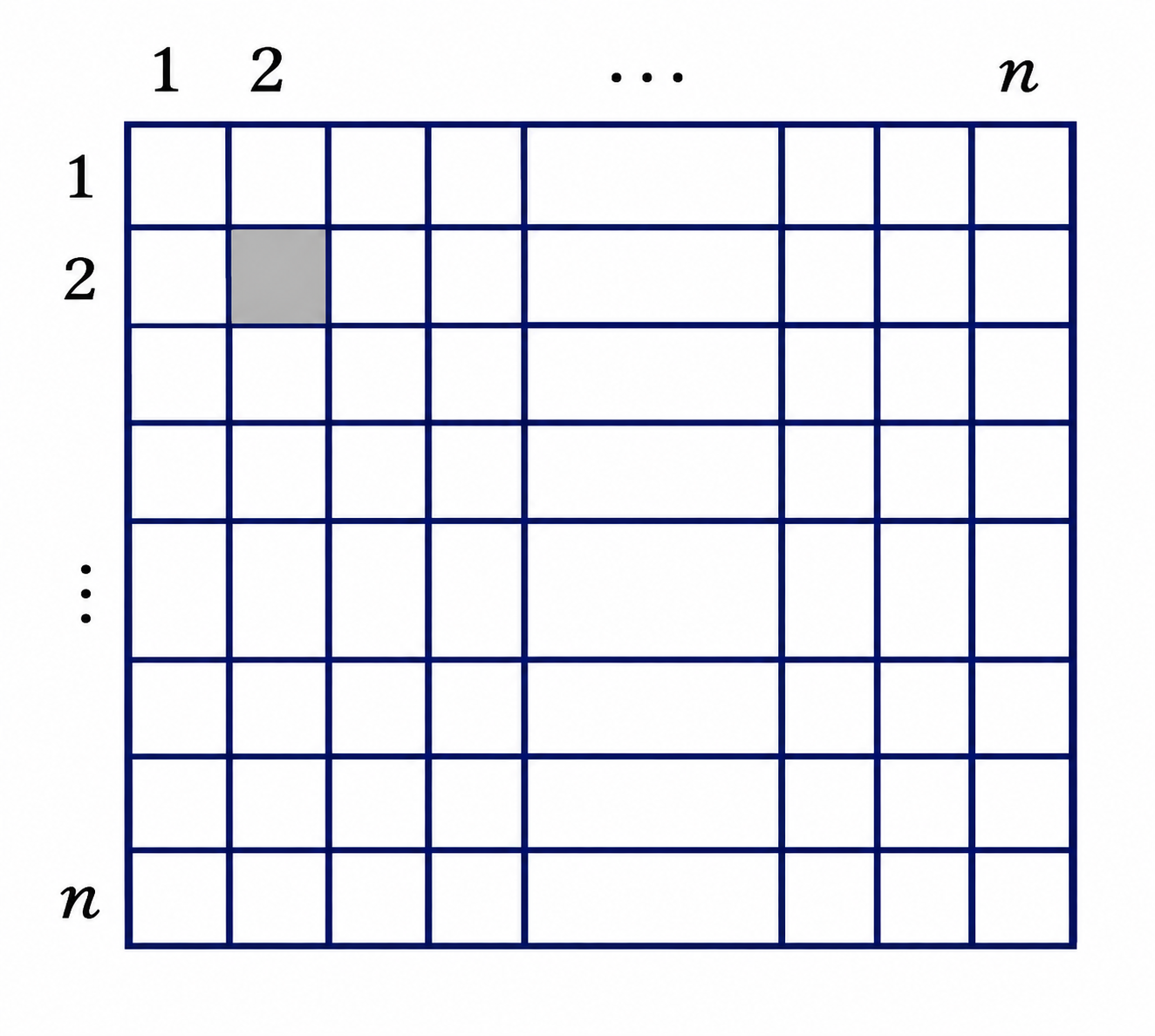
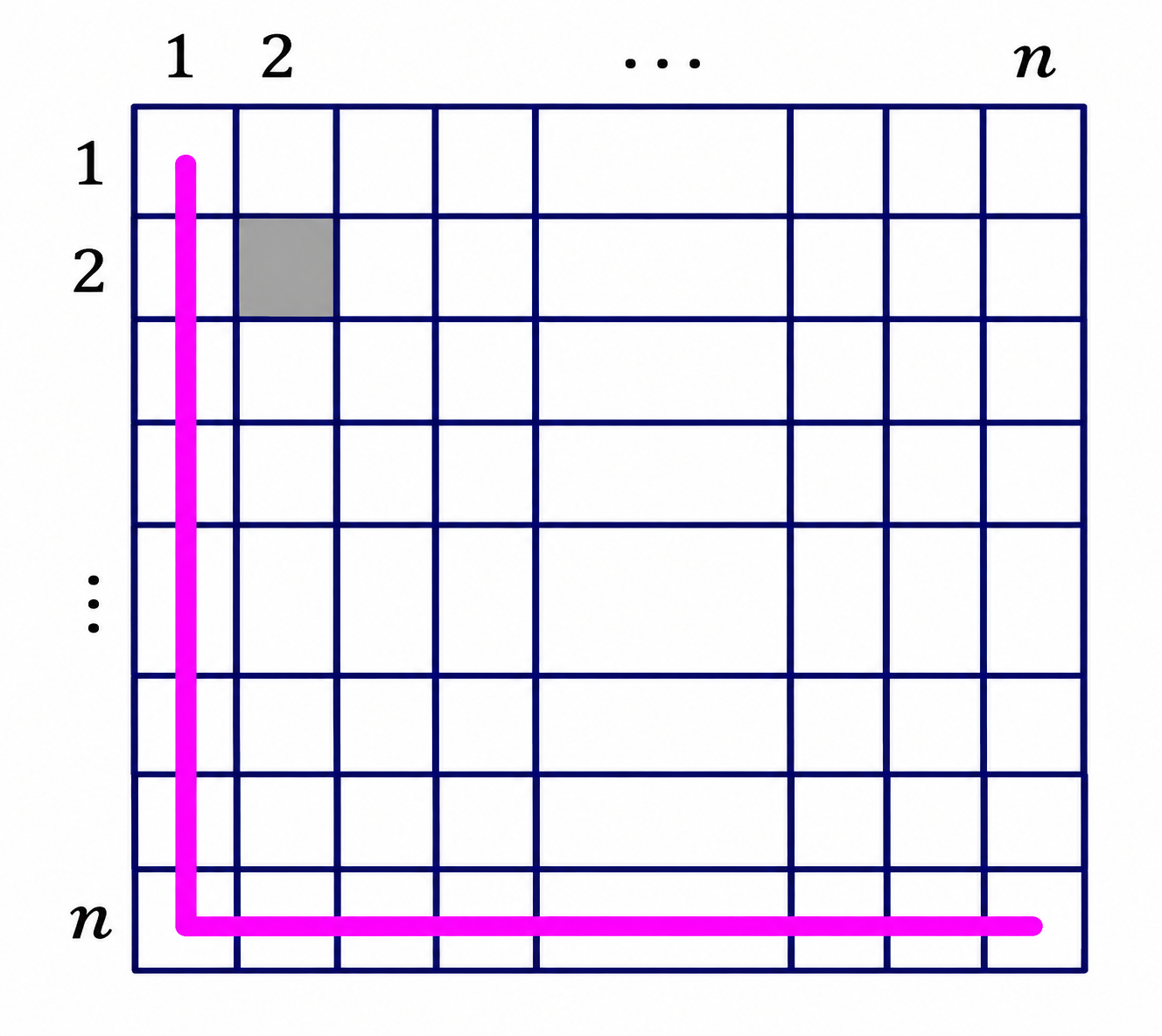
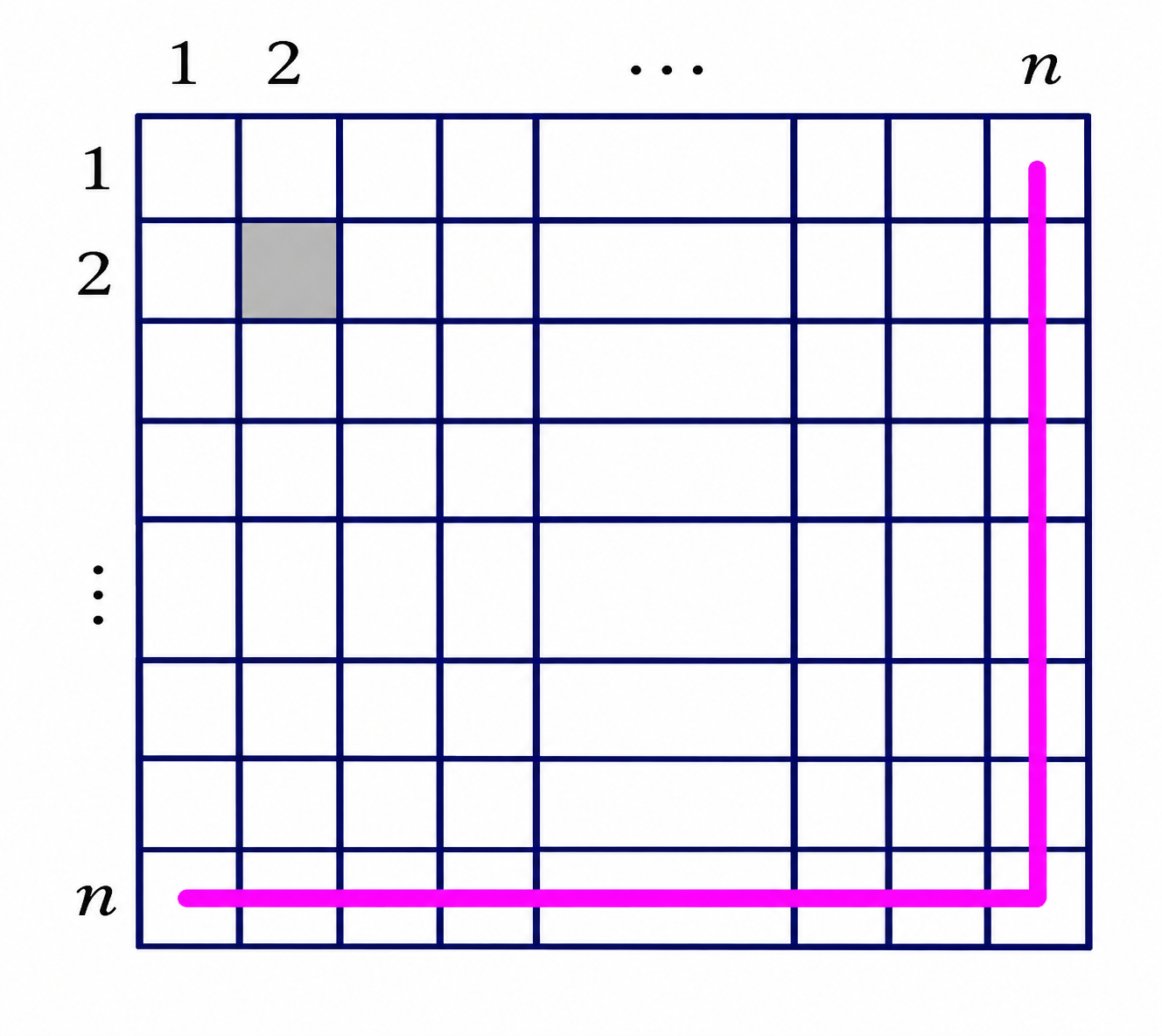
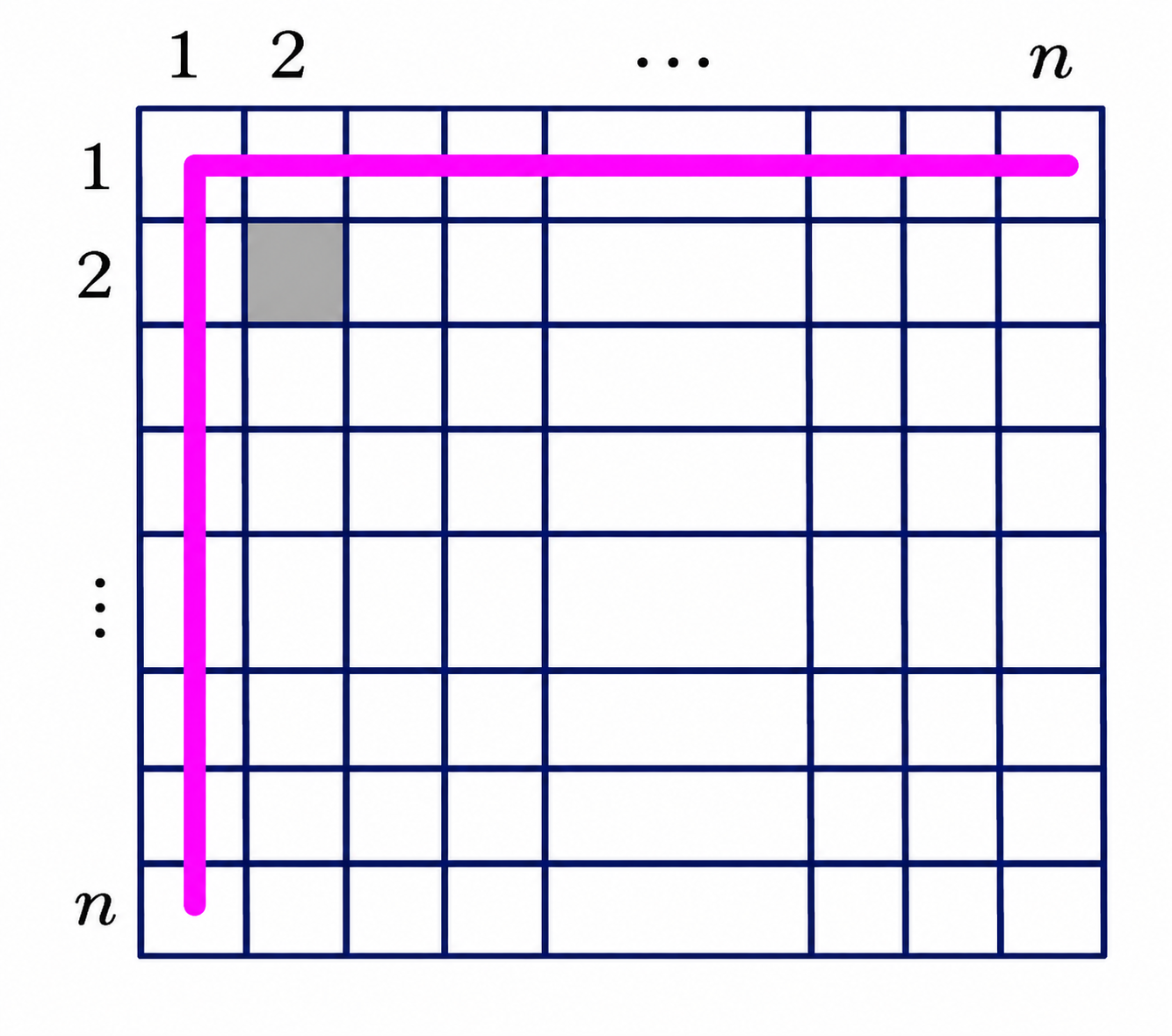
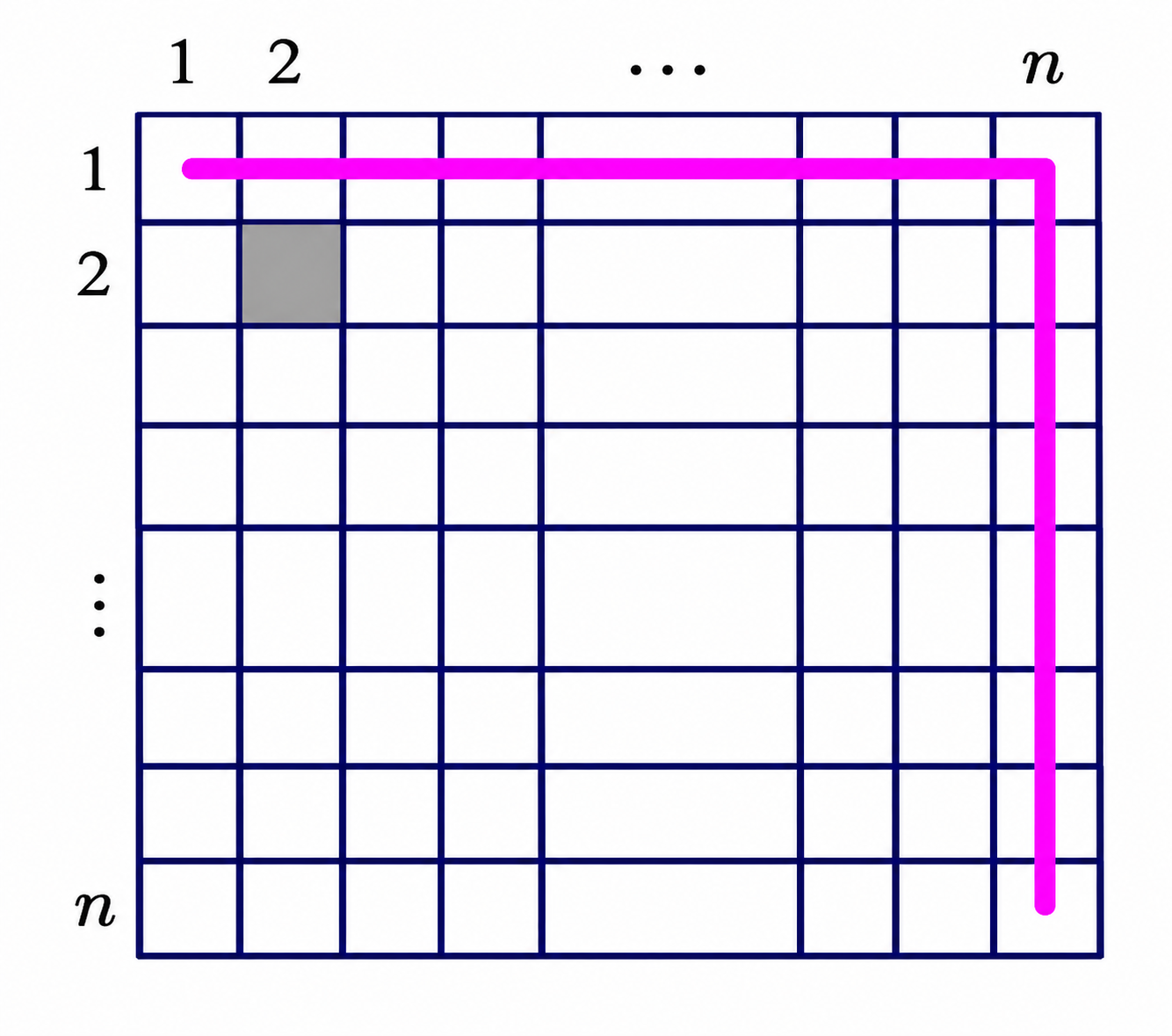
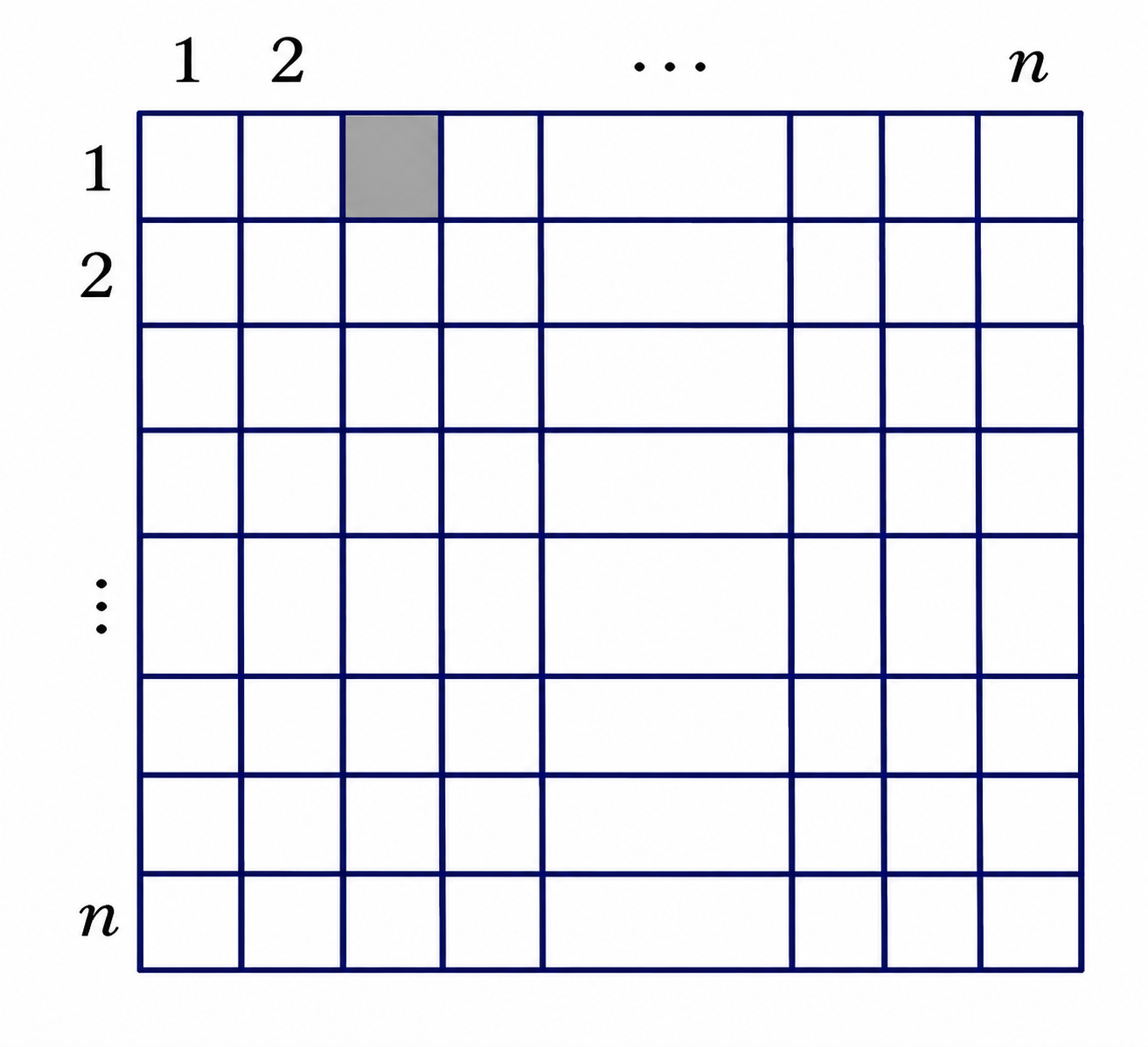
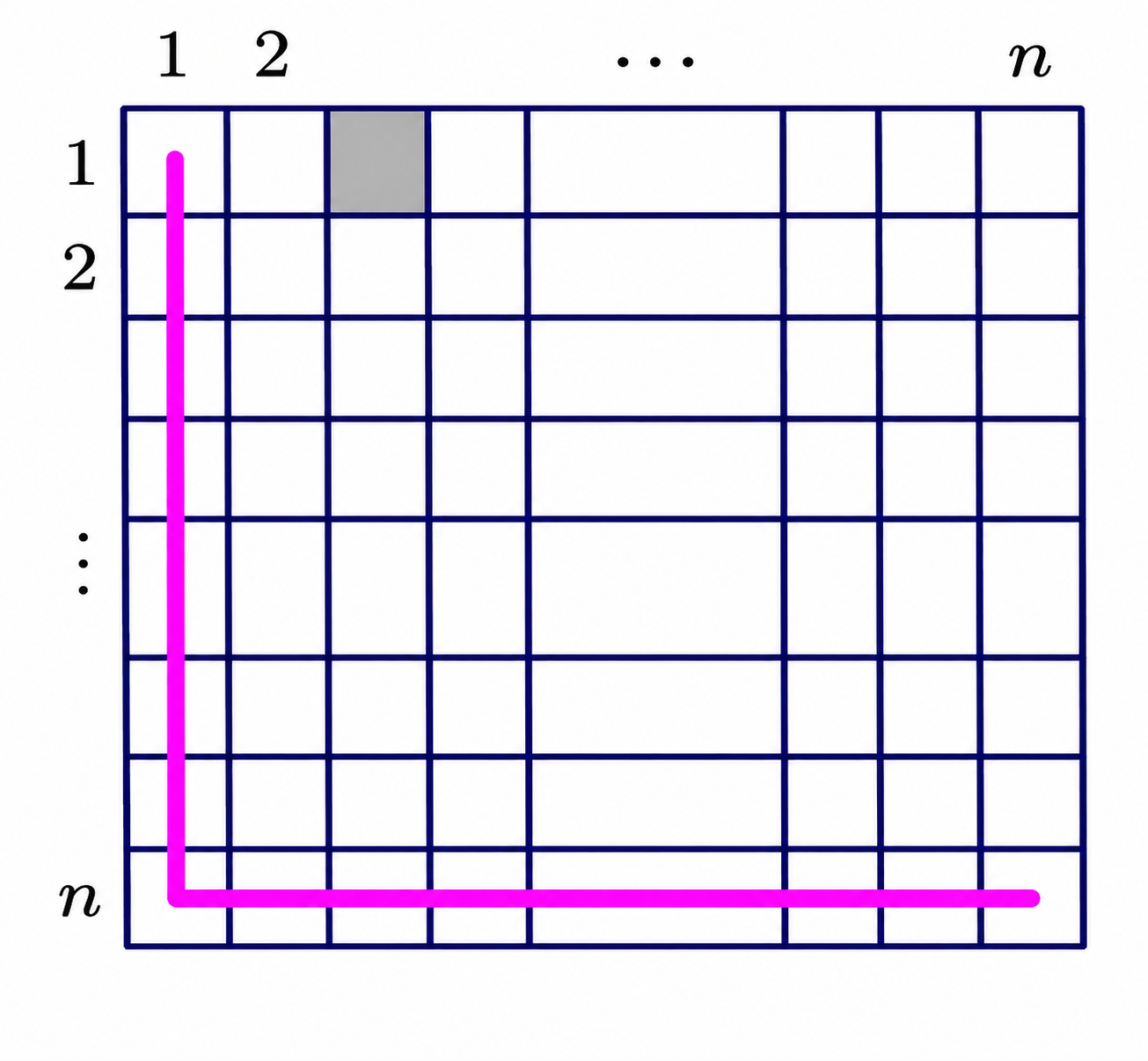
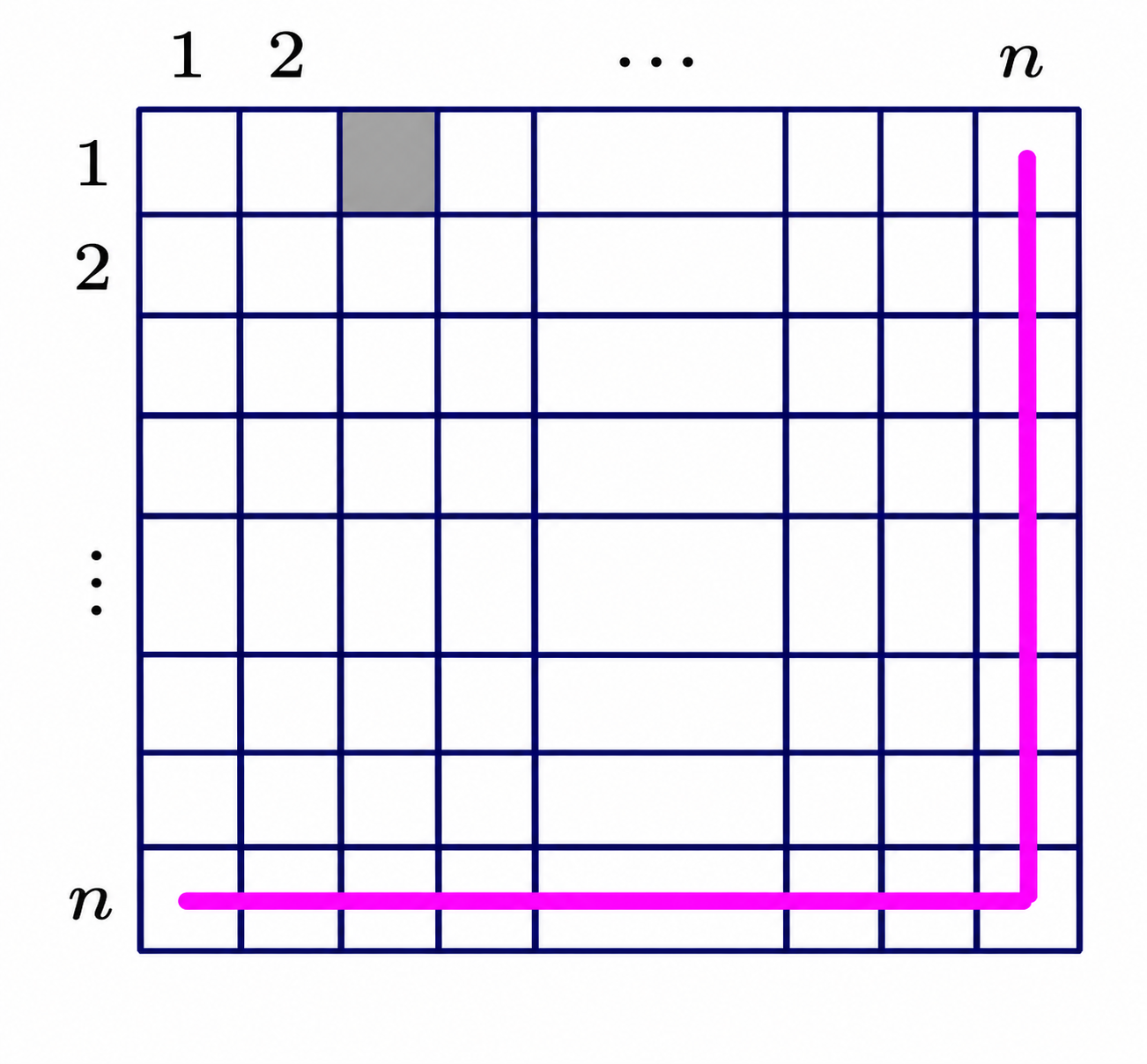
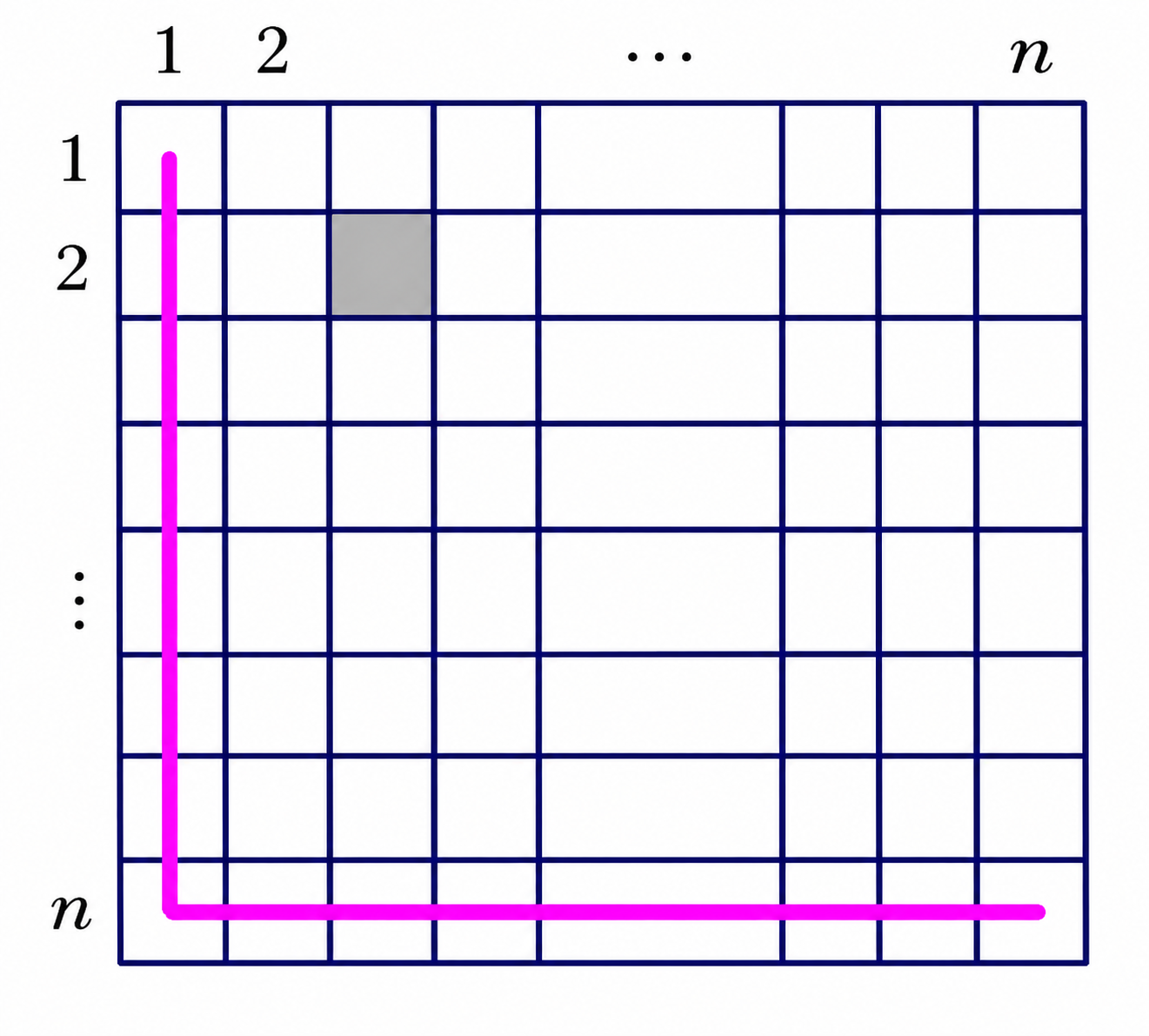
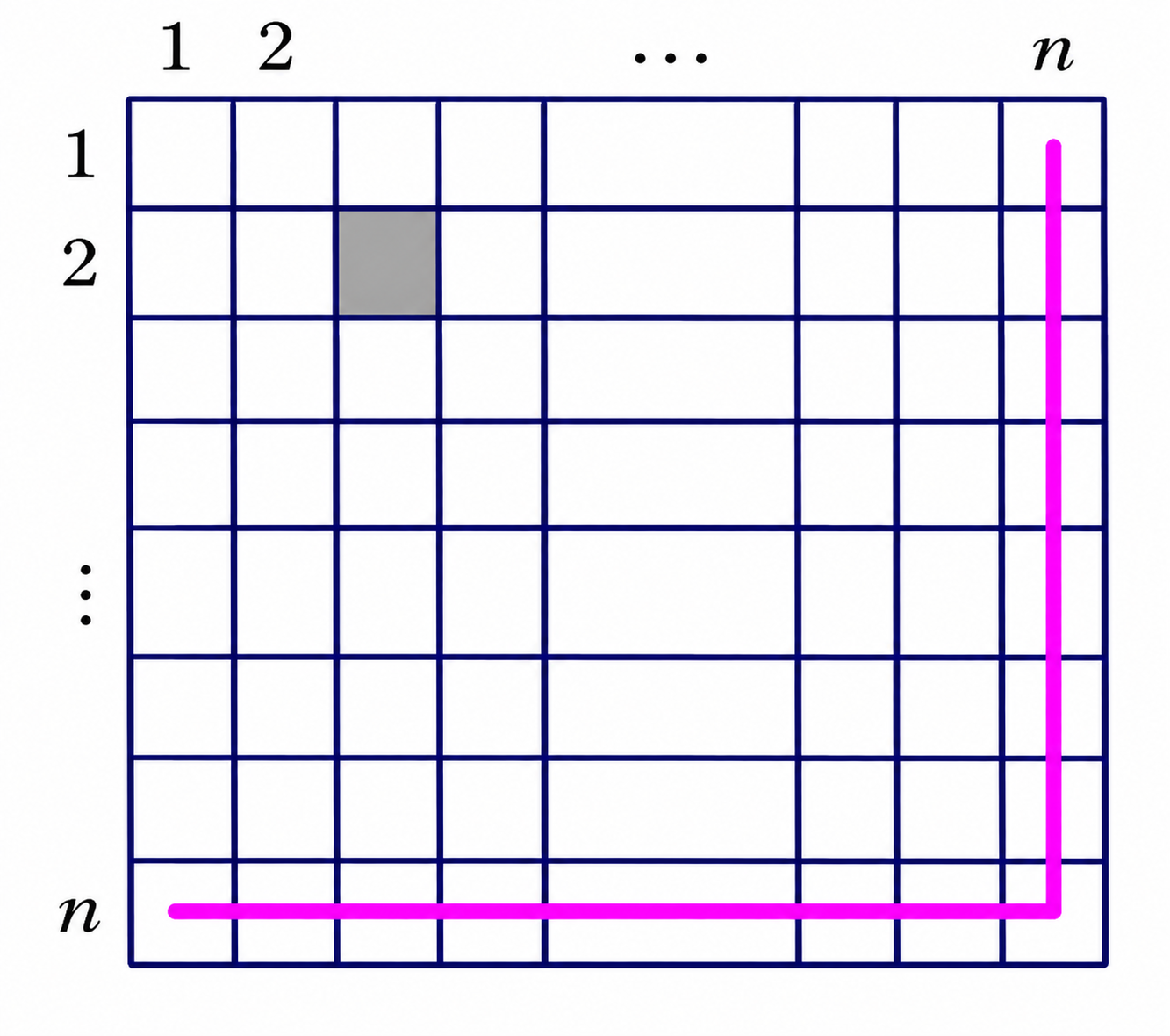
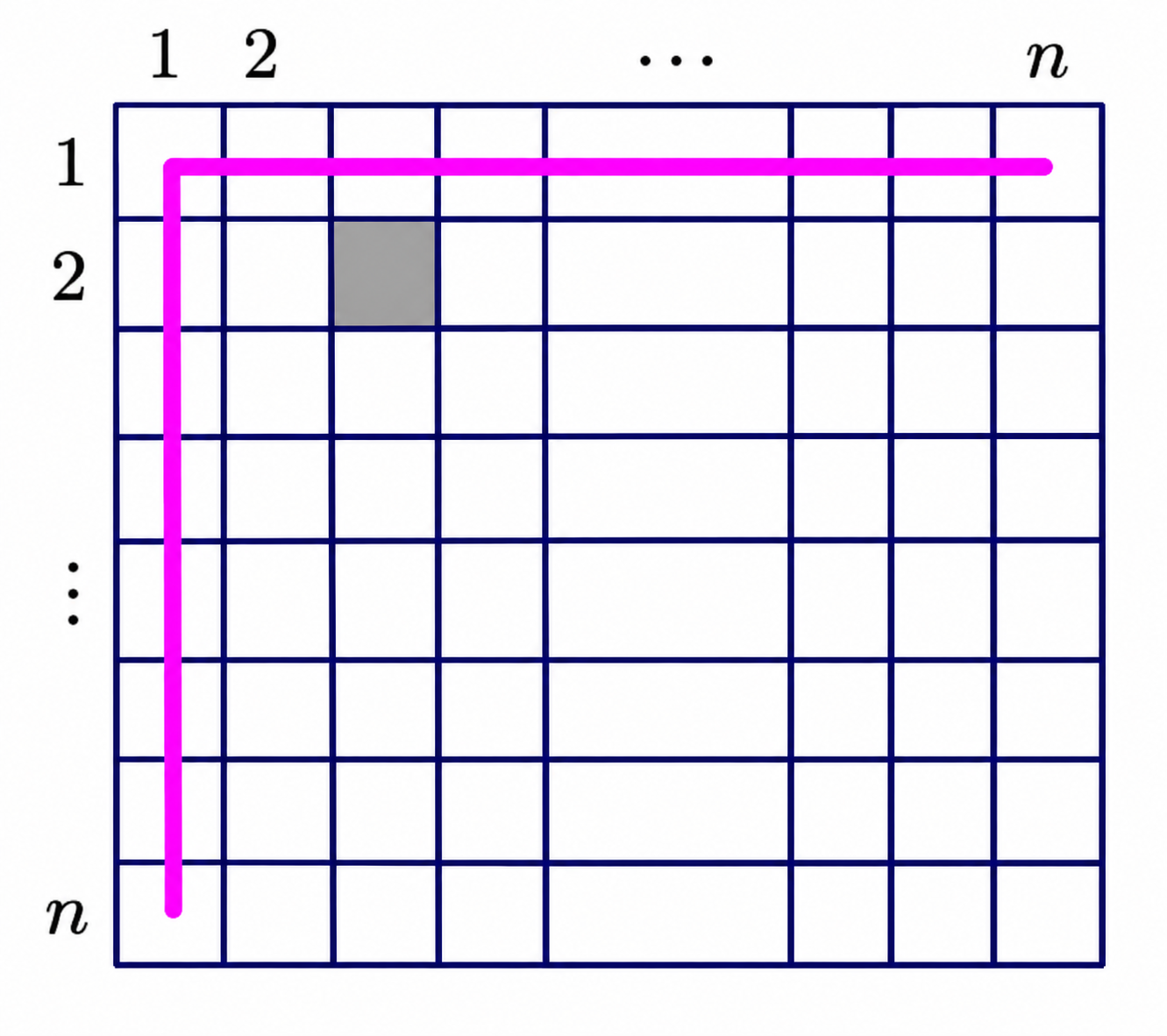
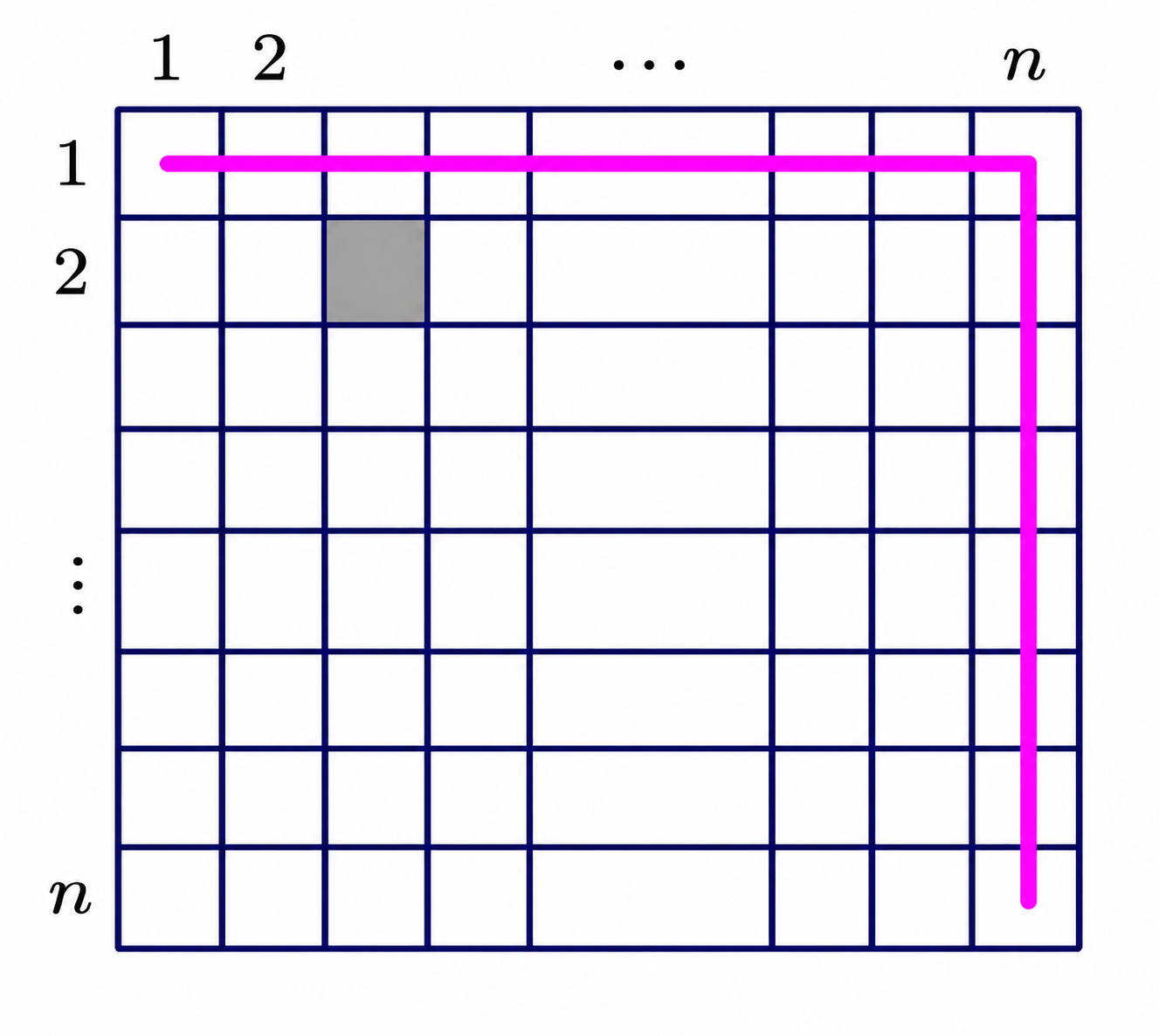
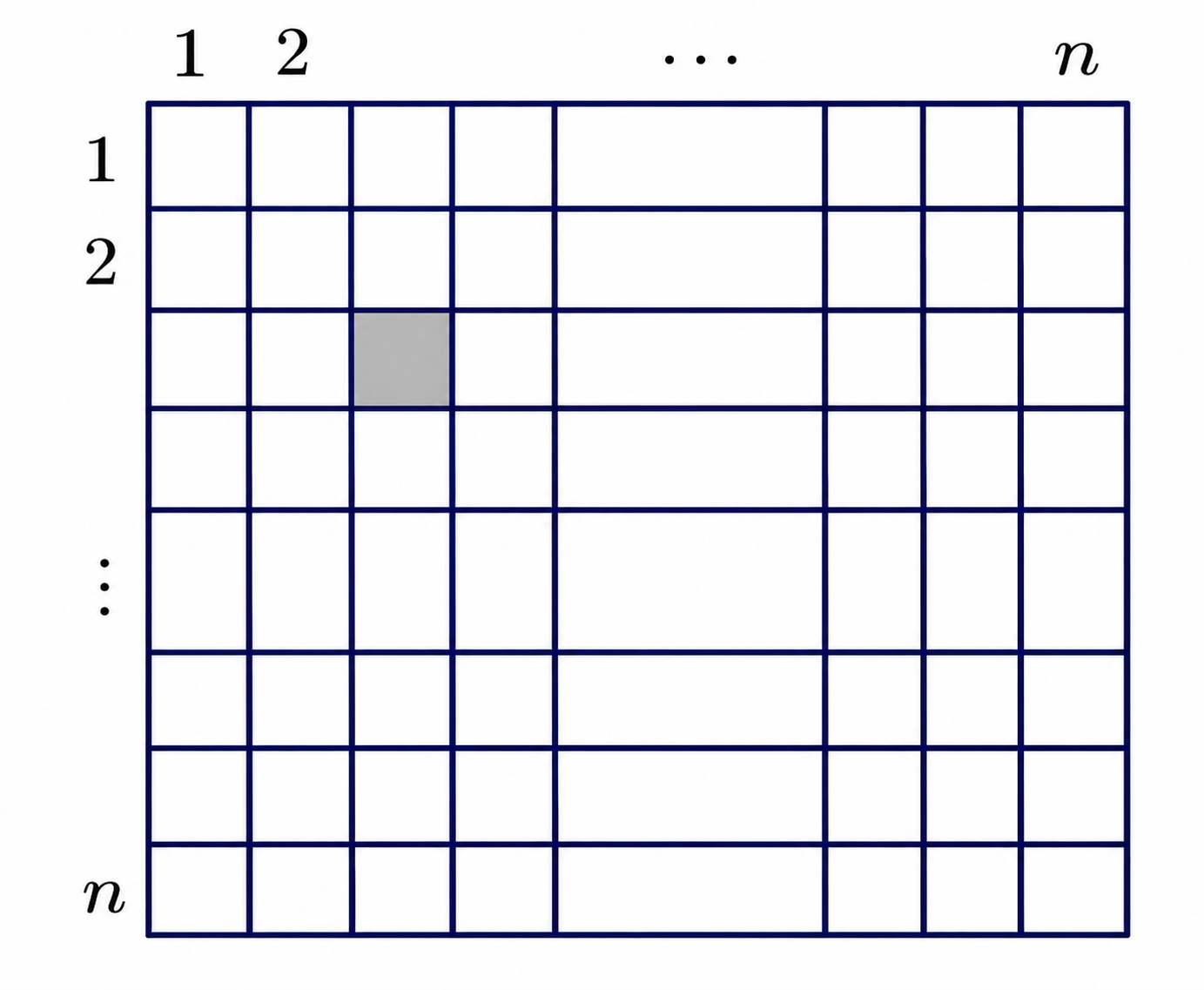
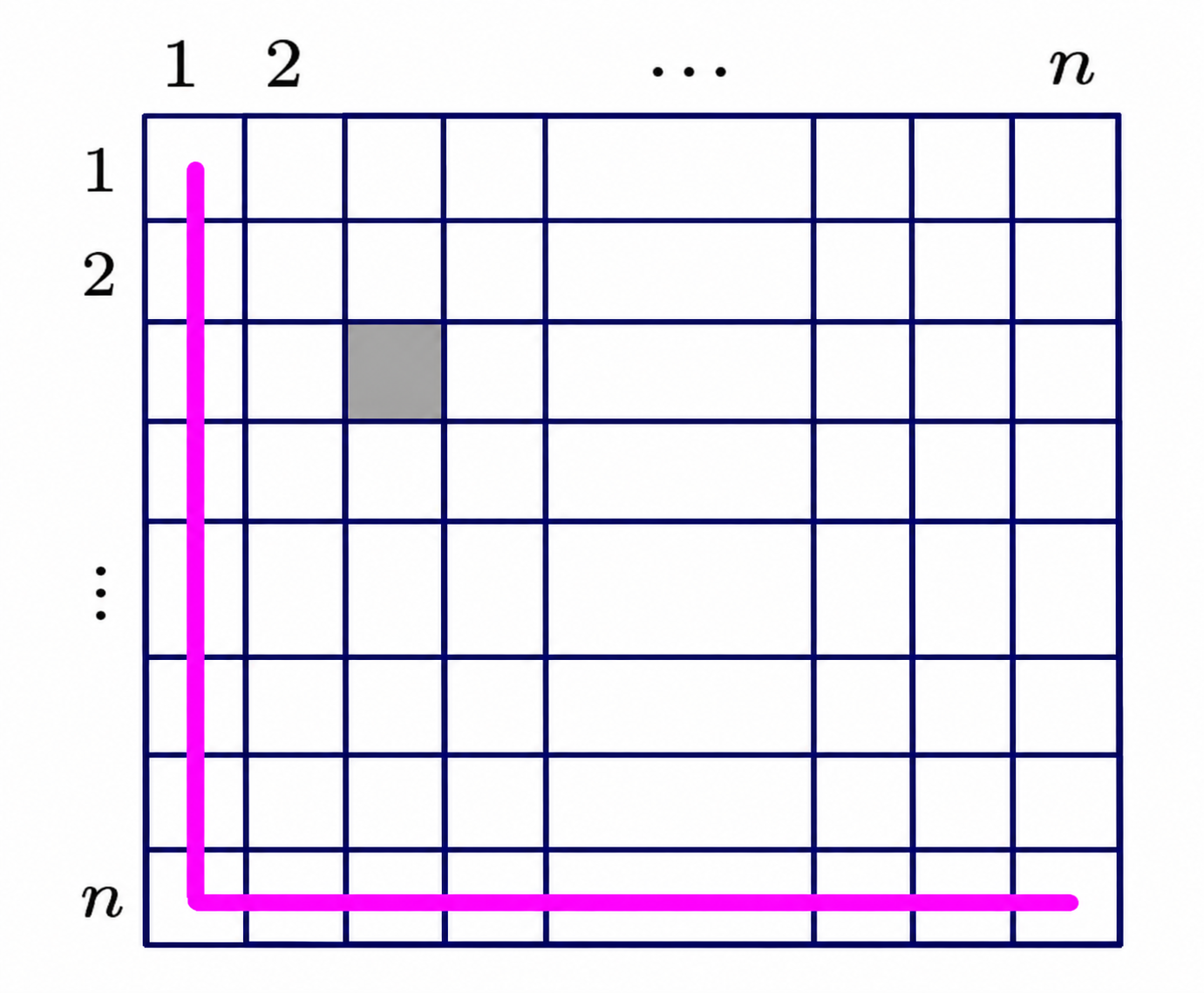
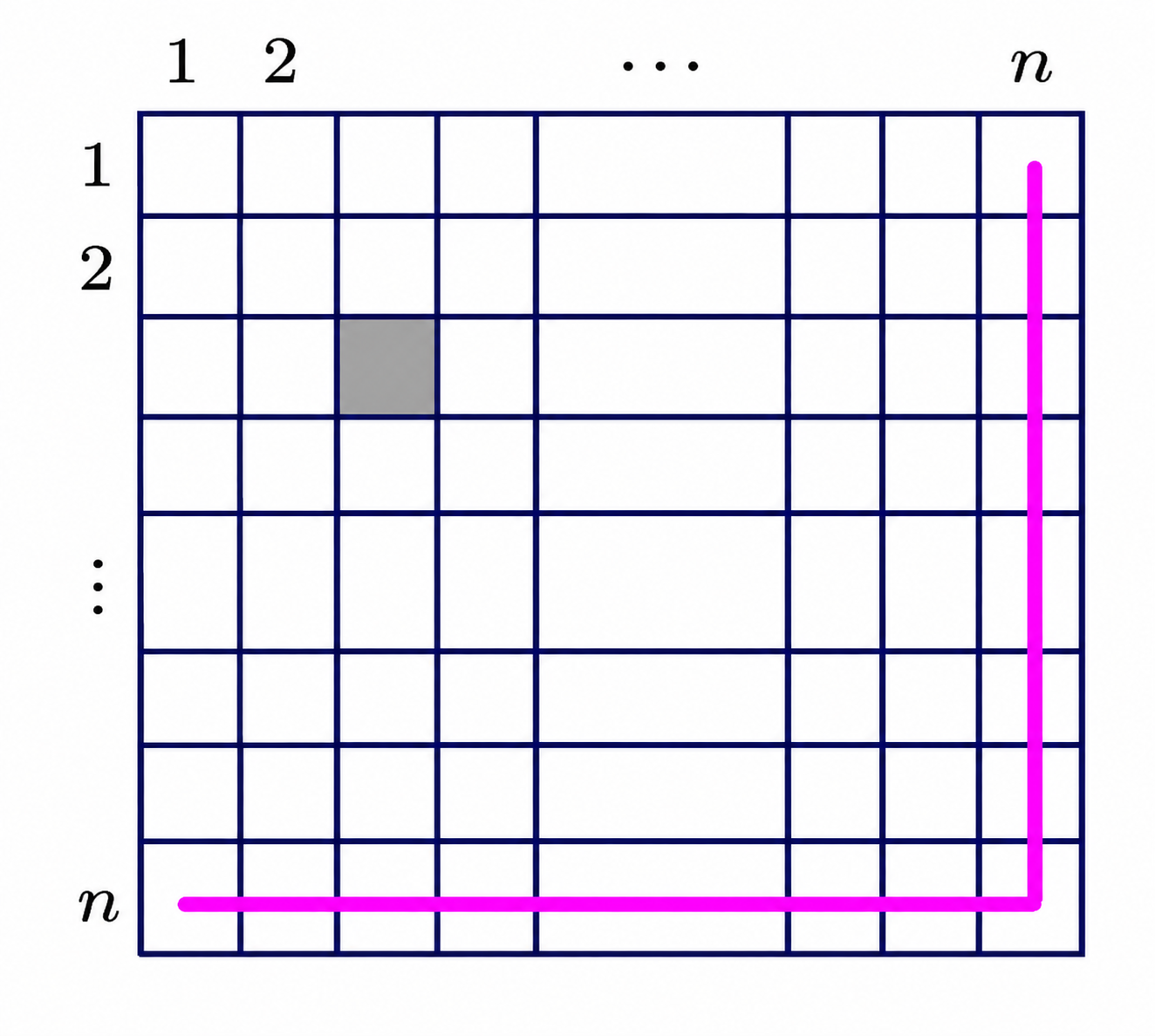
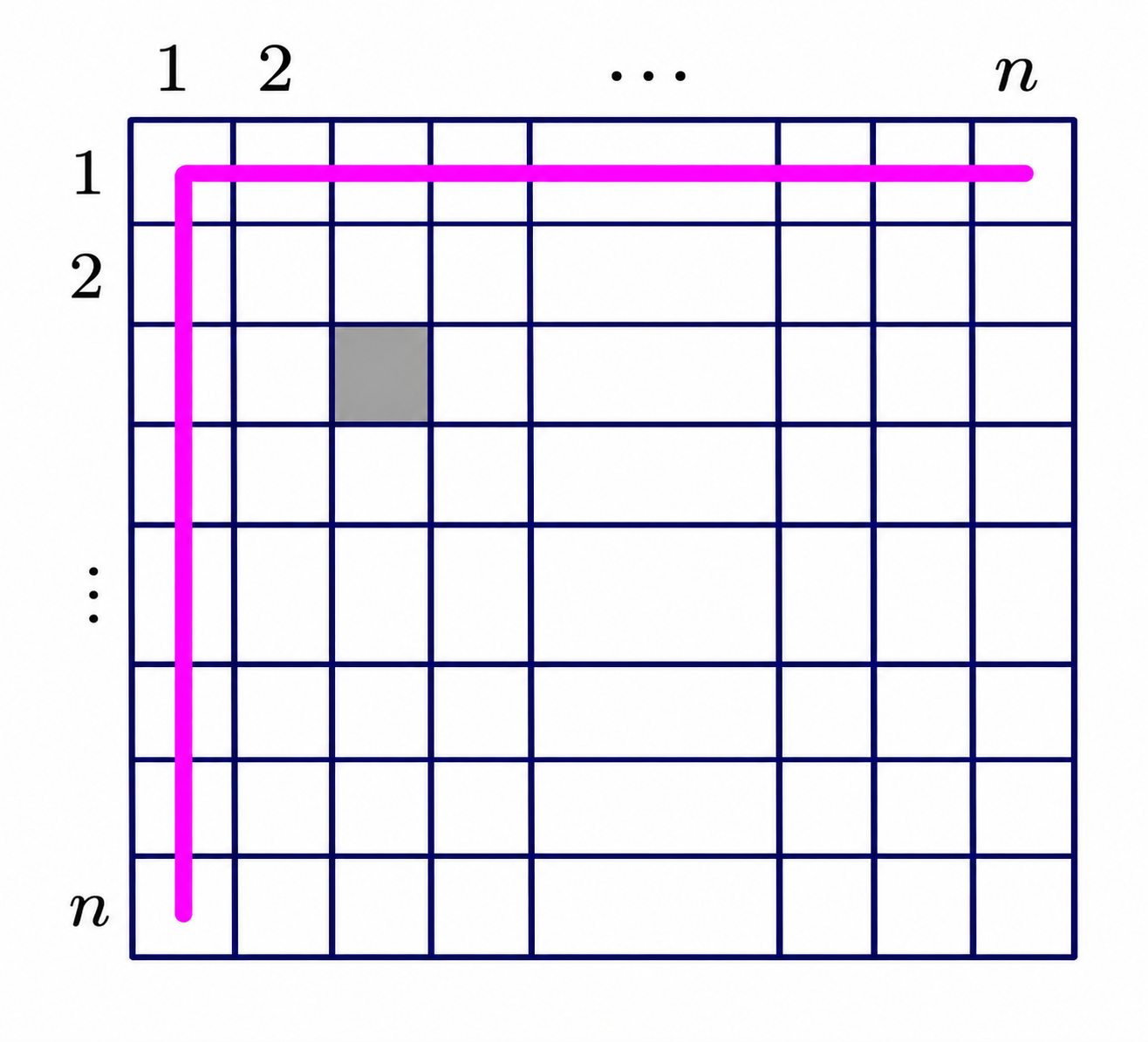
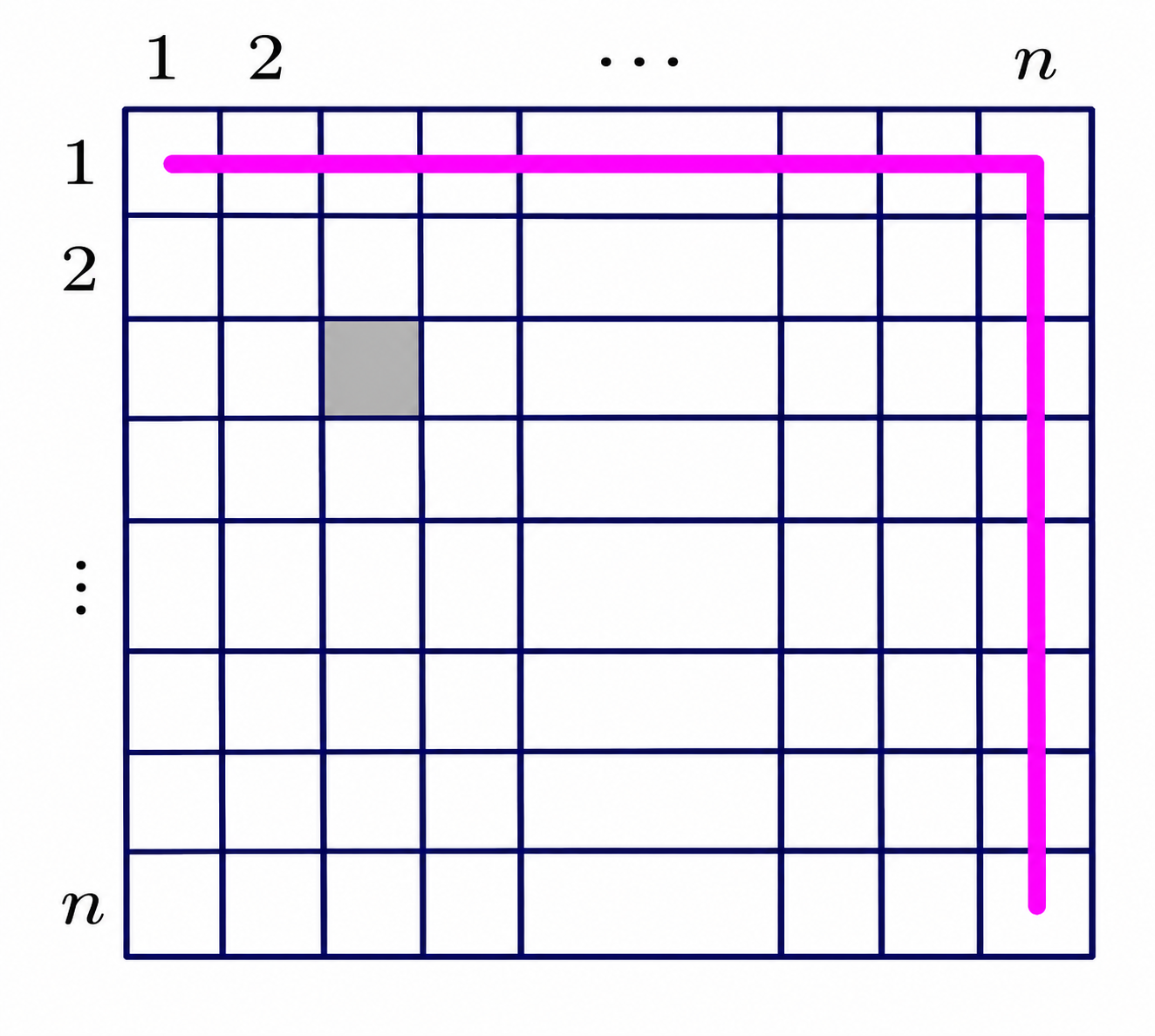
An 11×11 square grid is dissected into 11 pieces as follows. At each step, remove the top row and the leftmost column of the remaining grid as a single piece. Thus, the pieces obtained are L-shaped with sizes 21,19,…,3, together with a single square.
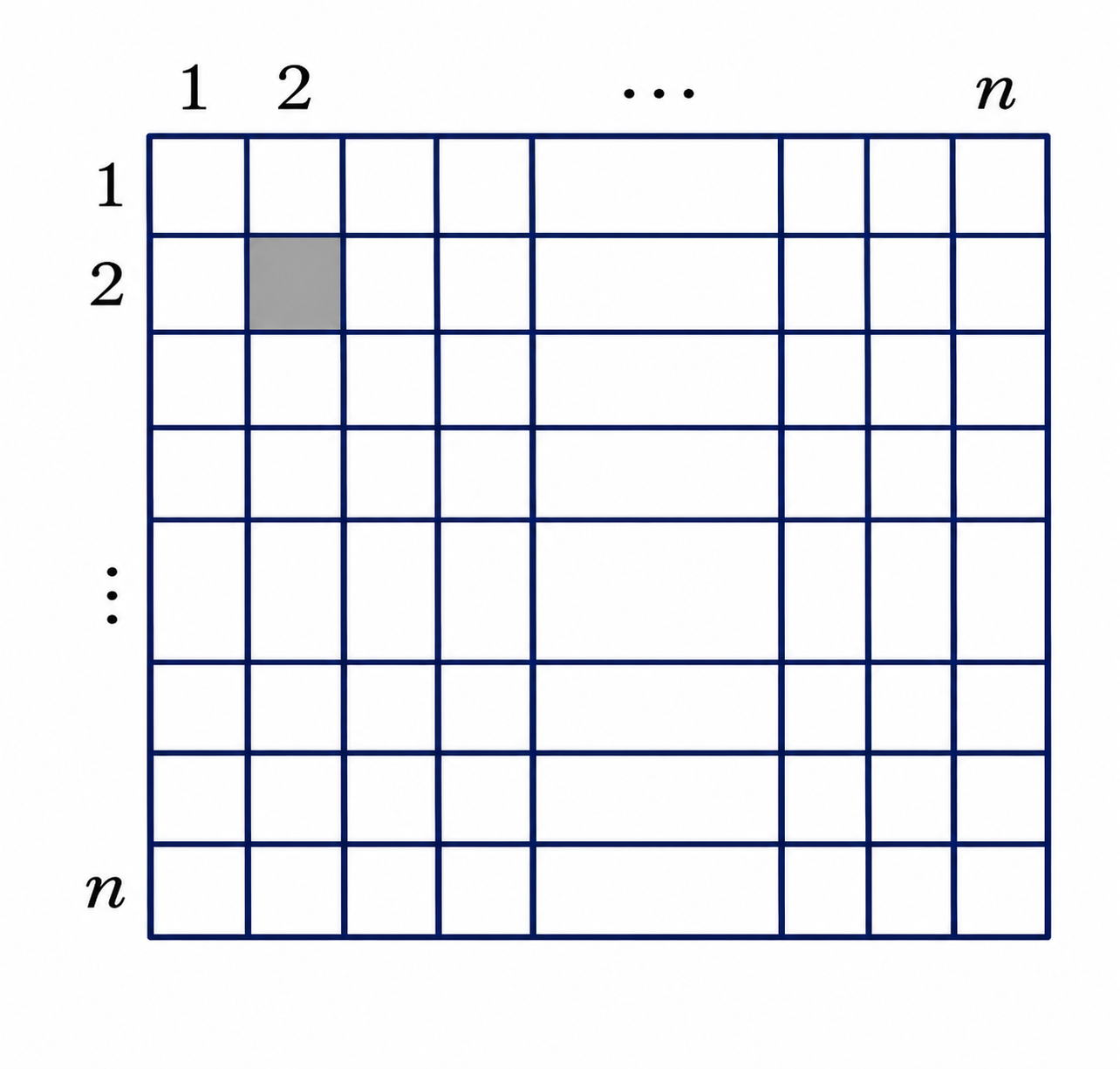
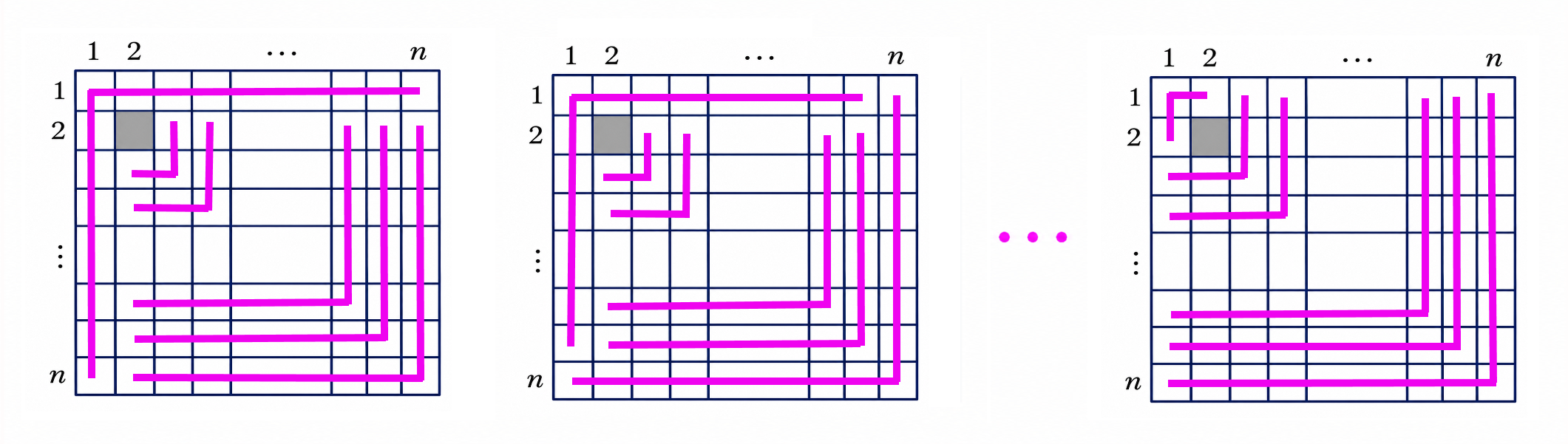
The pieces are rearranged to reassemble an 11×11 grid, with rotations allowed (but the pieces may not be turned over) so that the single square occupies the cell in the third row and third column (counting from the top left).
The single square occupies the cell in the third row and third column. Assume the single square is in the rth row and cth column. Try small examples for (r,c), and we can solve it for general n to be able to check our final answer in the end.
Check (r,c)=(1,1).
For (r,c)=(1,1), there is one way.
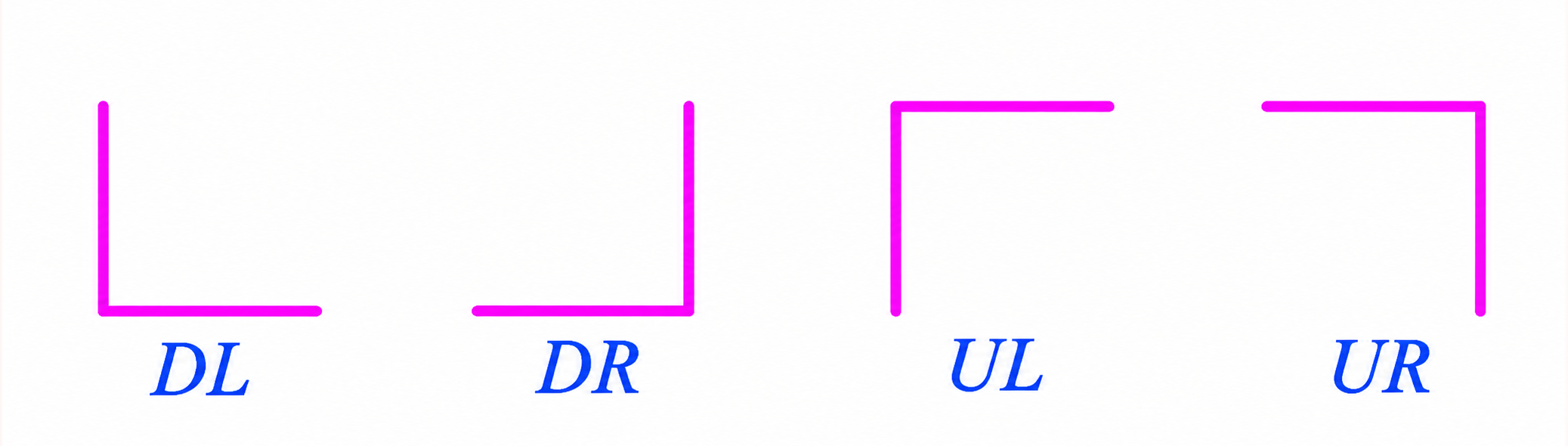
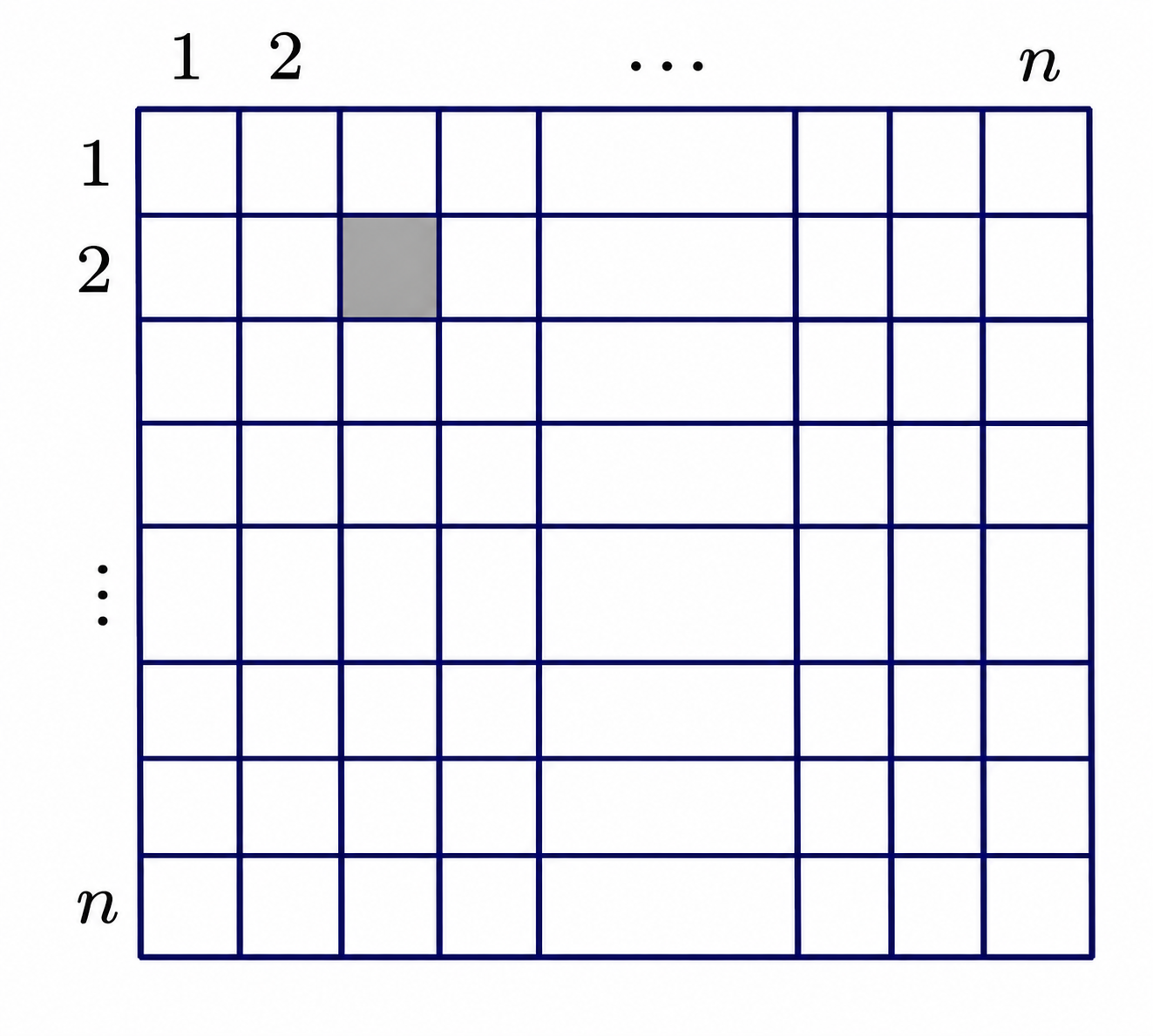
Consider (r,c)=(2,2).LetCase 1:
nUL=1,nUR=0,nDL=0,nDR=n−2
There are
(n−2)!(n−1)!=n−1 ways.
Case 2:
nUL=0,nUR=1,nDL=1,nDR=n−3
There are
(n−3)!1!1!(n−1)!=(n−1)(n−2)
Total=n−1+(n−1)(n−2)=(n−1)2 ways.
Consider (r,c)=(3,3).
Case 1Case 2Case 3nUL210nUR012nDL012nDRn−3n−4n−5Ways2!(n−3)!(n−1)!=2(n−1)(n−2)(n−4)!(n−1)!=(n−1)(n−2)(n−3)2!2!(n−5)!(n−1)!=4(n−1)(n−2)(n−3)(n−4)
The single square occupies the cell in the third row and third column. Assume the single square is in the rth row and cth column. Try small examples for (r,c), and we can solve it for general n to be able to check our final answer in the end.
Check (r,c)=(1,1).
For (r,c)=(1,1), there is one way.
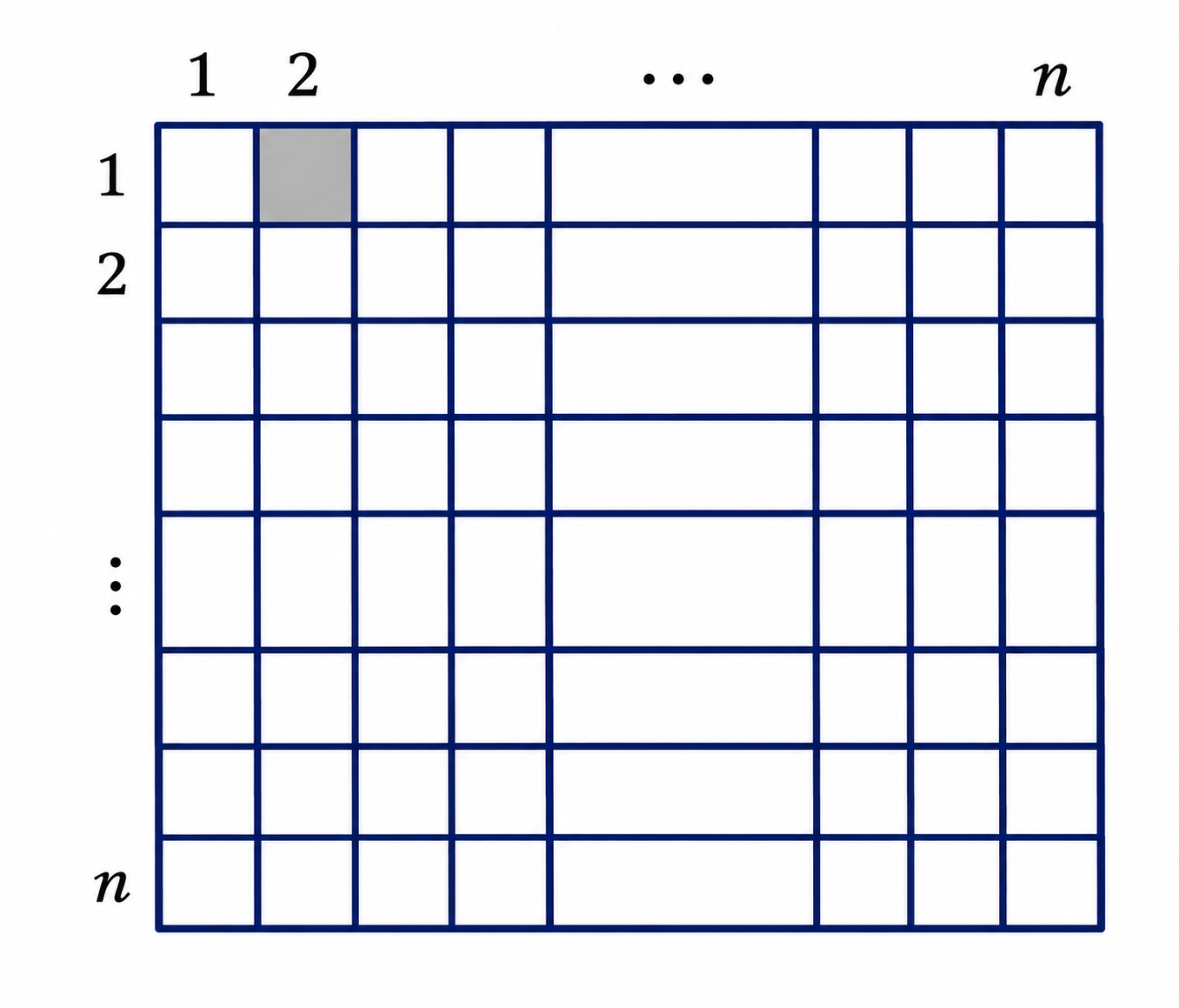
Consider (r,c)=(1,2).Let an be the number of ways in this case.LetUse casework, and base your casework on which orientation the piece of size 2n−1 has.
Case 1: DLBy Hint 4, one way.
Case 2: DRan−1 ways.
So, by Cases 1 and 2:
an=an−1+1,n≥3
a2=1
So,
an=n−1.
Consider (r,c)=(2,2).Let bn be the number of ways in this case.Base your casework on the orientation of the piece of size 2n−1.