Olympiad Toolkit
A growing collection of essential formulas, identities, and techniques for mathematical olympiad problem solving.
- 151.
Addition Principle
For mutually exclusive cases, add the numbers of possibilities.
Multiplication Principle
For successive choices, multiply the numbers of possibilities.
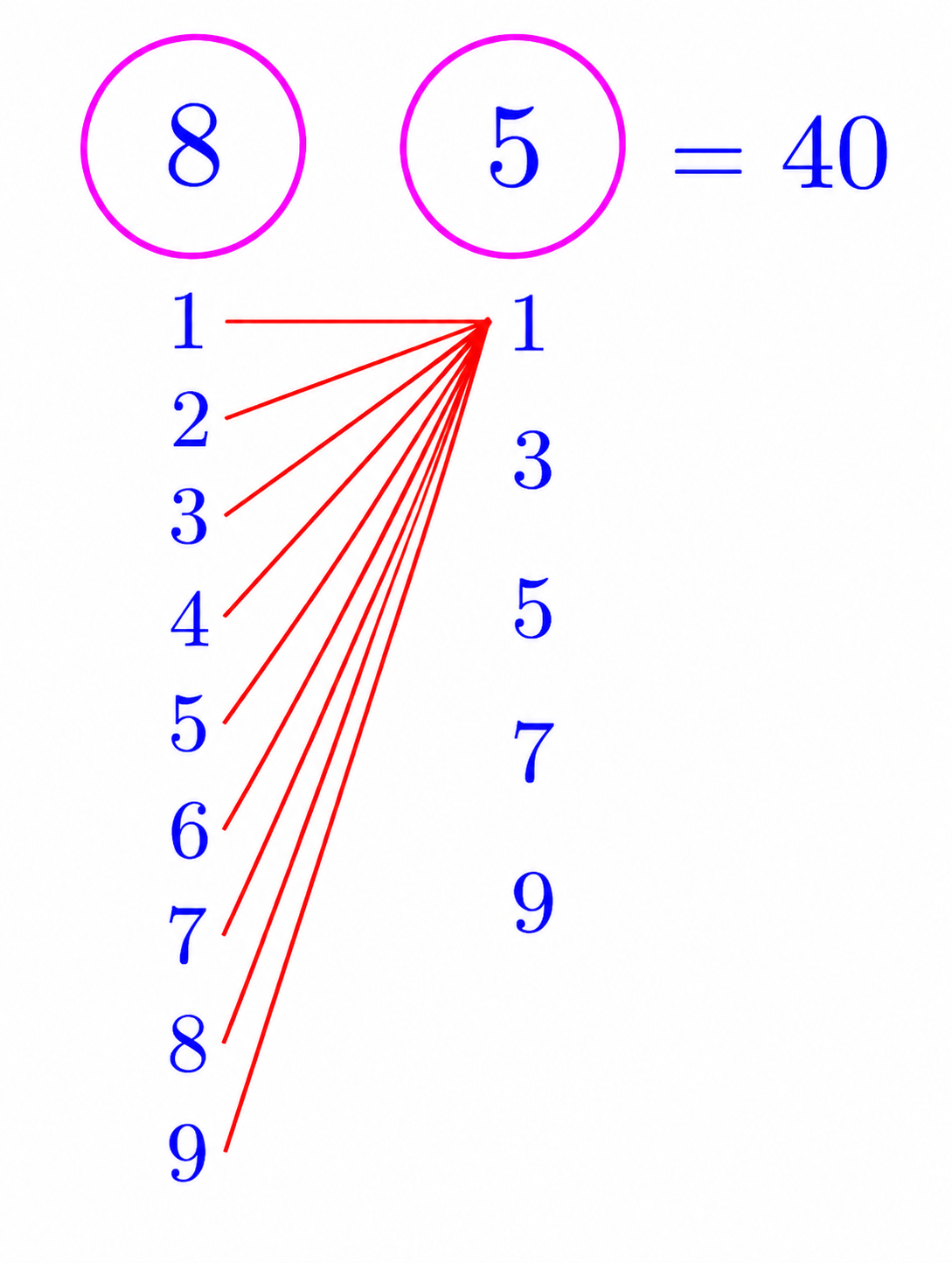
Complement Principle
- 152.
A permutation is an arrangement of objects in which order matters.
Arranging All Objects
Arranging Some of the Objects
Identical Objects
- 153.
A combination is a selection of objects in which order does not matter.
The notation is read as “n choose r”.
Symmetry Identity
Choosing the objects to include is equivalent to choosing the objects to exclude.
Pascal's Identity
Faster Calculation
- 154.
Probability measures how likely an event is to occur.
Sample Space and Events
The sample space is the set of all possible outcomes, and an event is a collection of outcomes from the sample space.
Equally Likely Outcomes
Complement
Probability of A or B
Independent Events
- 155.
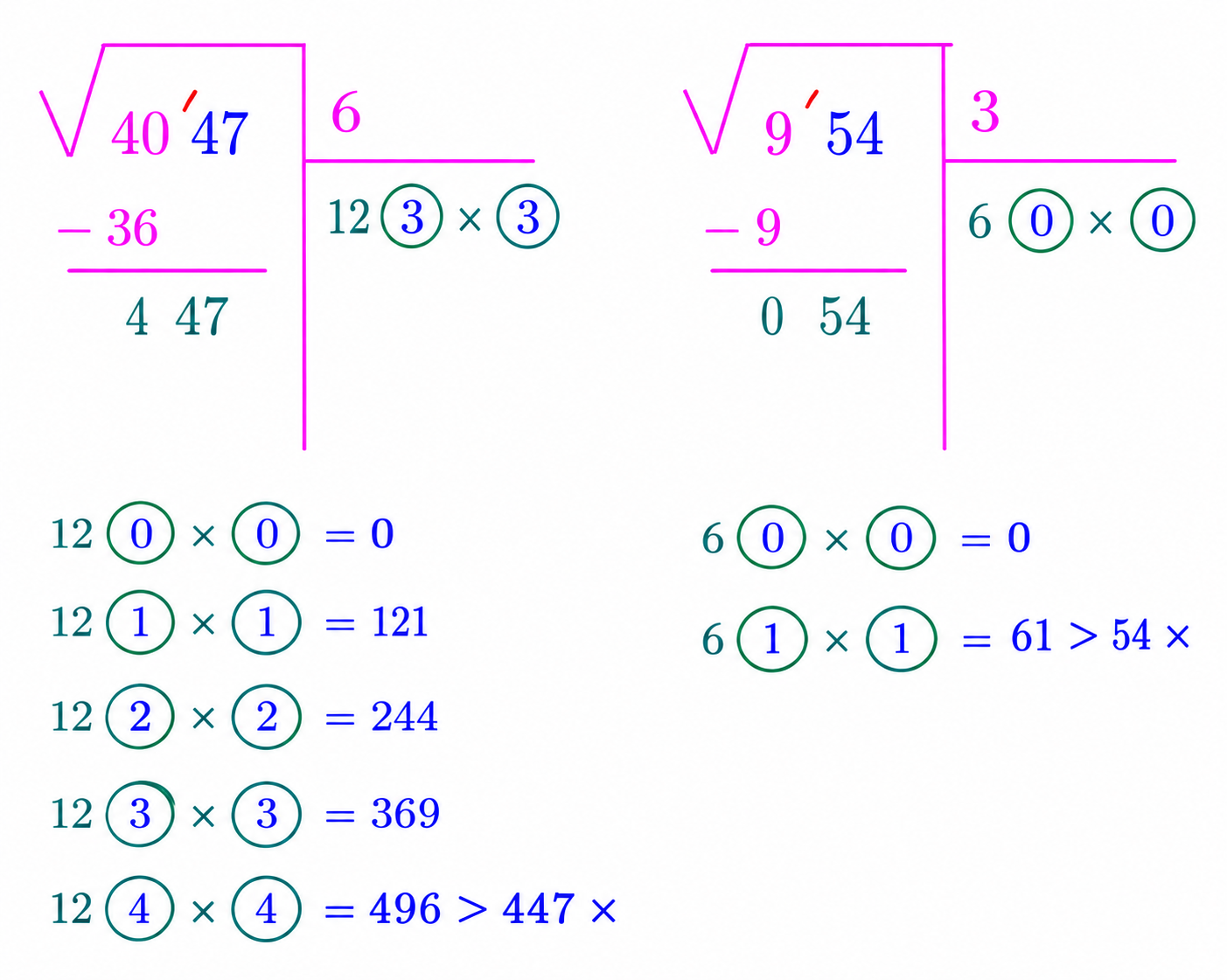
A step-by-step algorithm for finding square roots by grouping digits into pairs, subtracting squares, and determining each successive digit.
- 156.
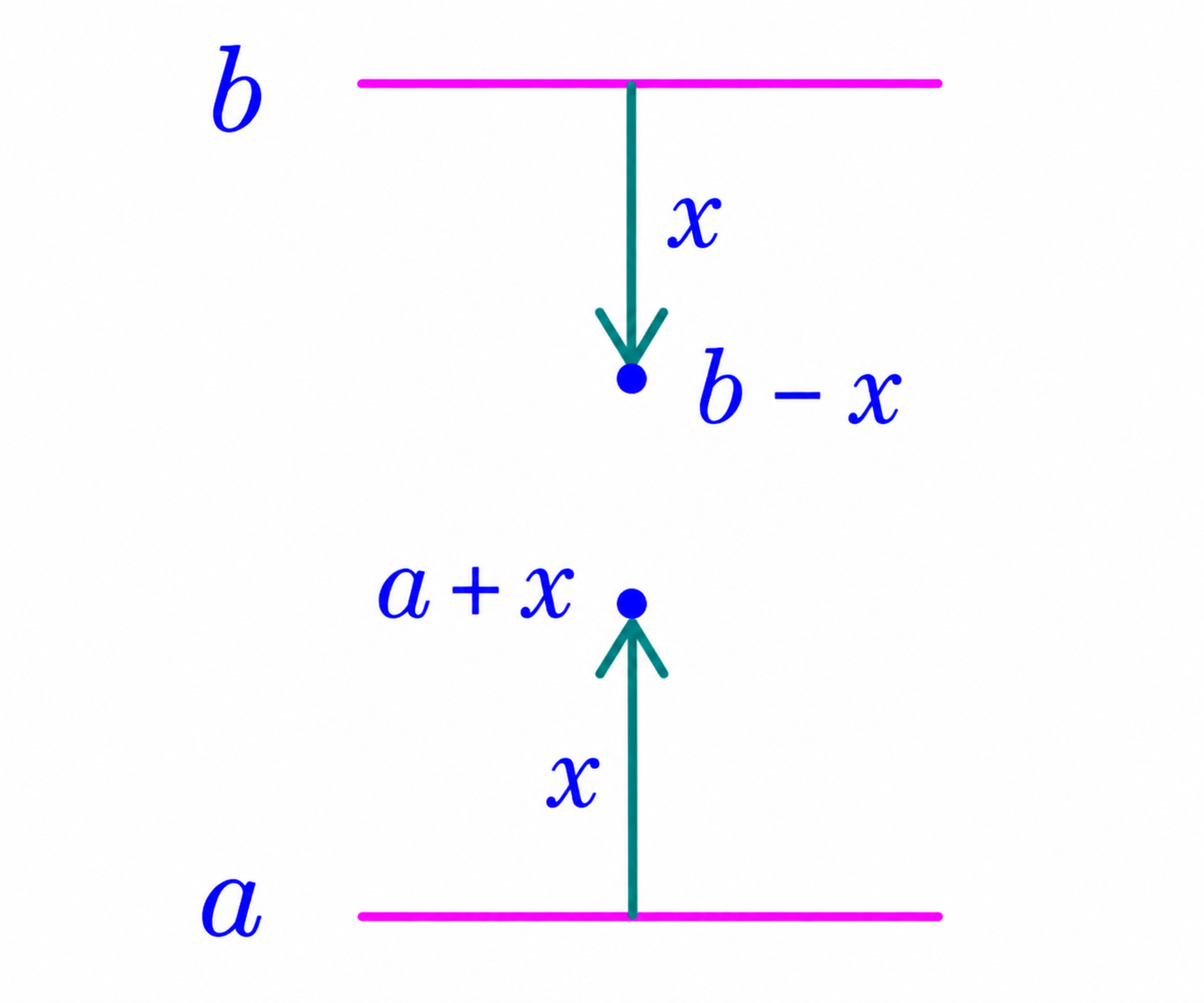
For two nonnegative numbers with a fixed sum, their product increases and the sum of their squares decreases as the numbers become closer together.
- 157.
The maximum size of an antichain of subsets of an n-element set is
- 158.
If x and y are nonnegative integers, d is squarefree, and
then for some nonnegative integers a and b,
- 159.
An invariant is a quantity or property that remains unchanged throughout a process.
If the initial and target configurations have different invariant values, the target is impossible to reach.
- 160.
A rational number can be written as
A real number that cannot be written in this form is irrational.
Rational Rational Rational Rational Rational Irrational Irrational May be either Irrational Irrational May be either May be either - 161.
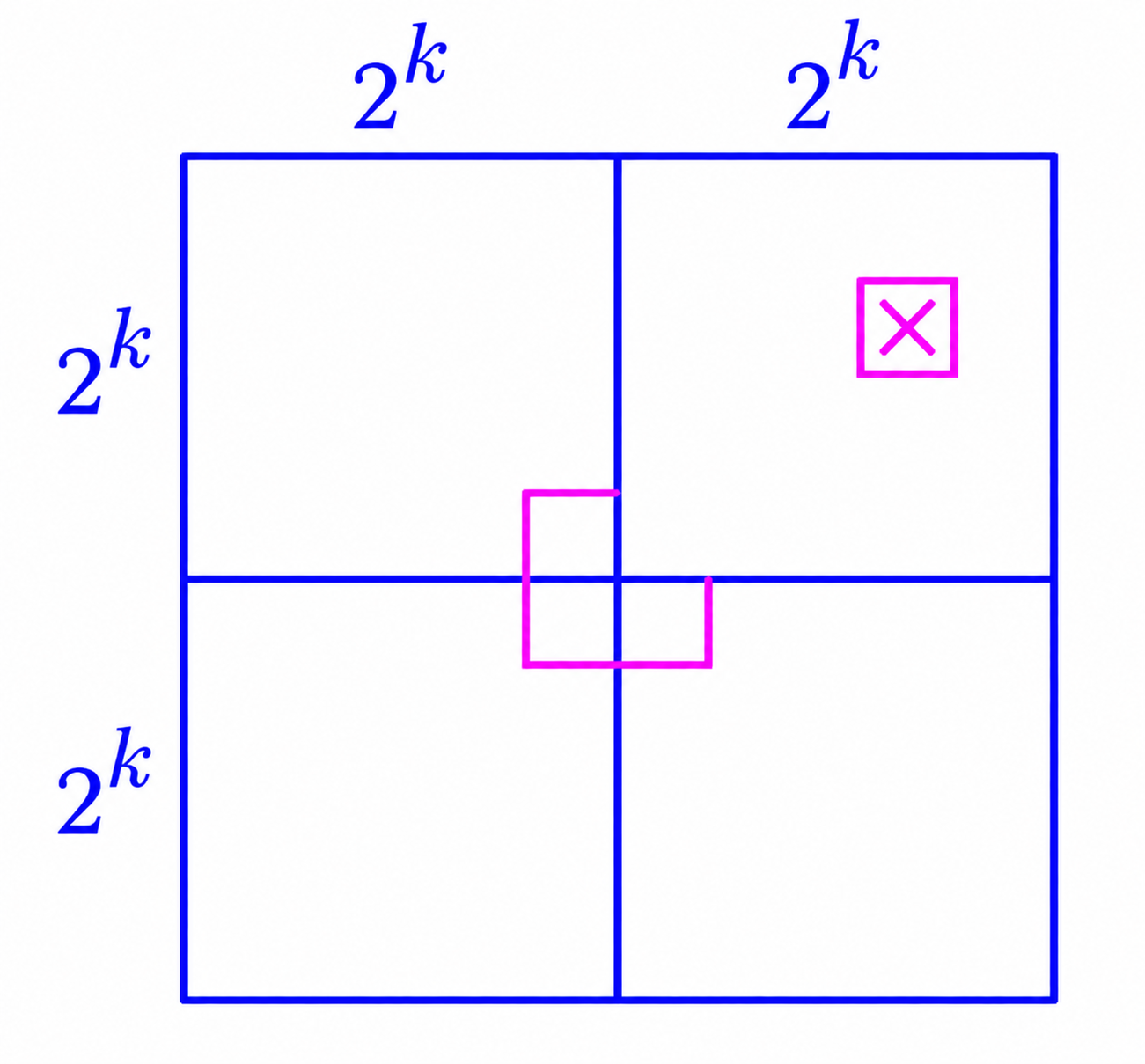
Mathematical induction proves statements for every integer in a specified range using a base case and an inductive step.
Base Case
Inductive Step
Extensions include strong induction, step-size induction, binary induction, and Cauchy induction.
- 162.
The Fibonacci sequence starts with 0 and 1, and each subsequent term is the sum of the previous two.
- 163.
Every real square is nonnegative. This helps prove inequalities and find minimum values.
- 164.
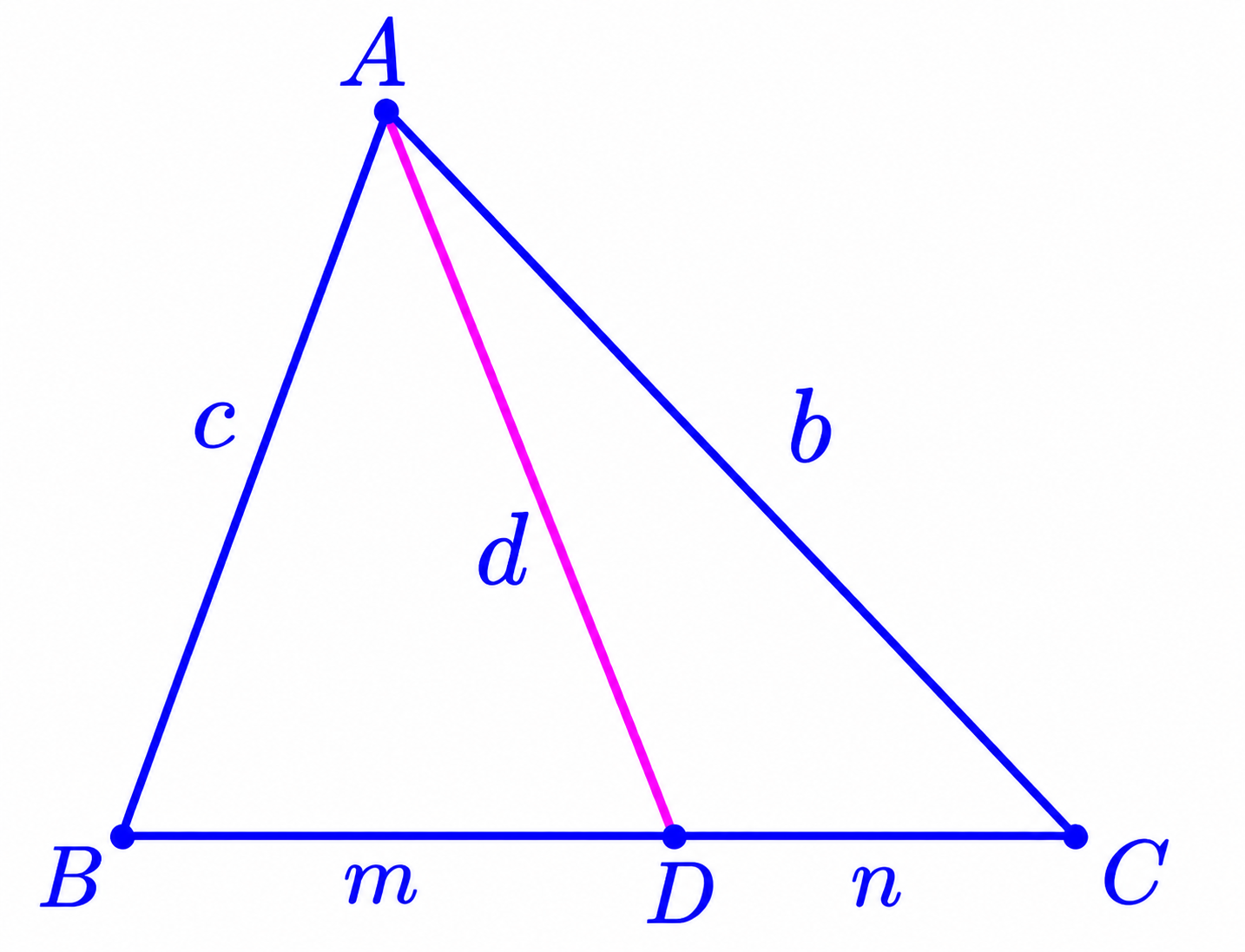
- 165.
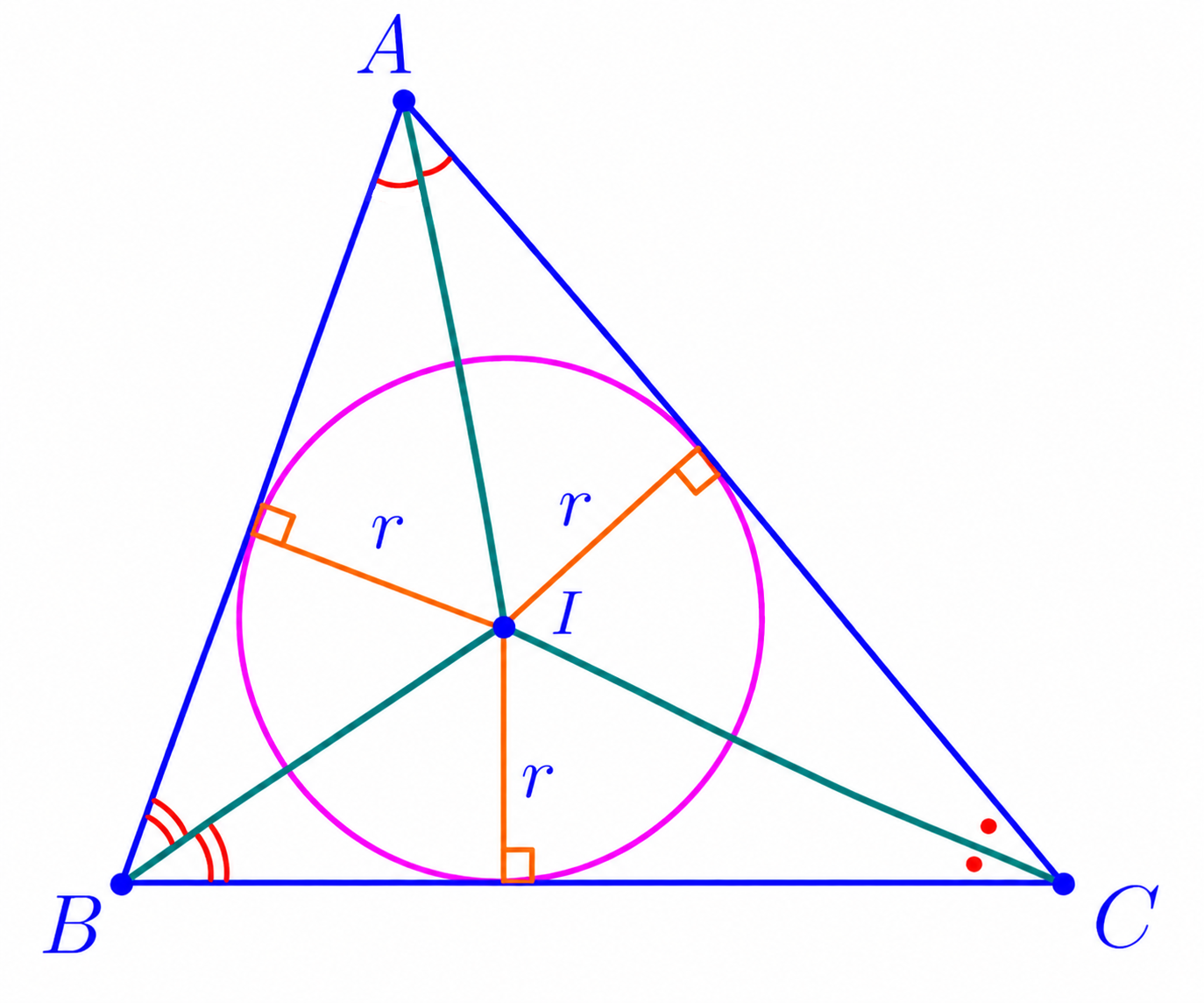
The incenter is the intersection of the three internal angle bisectors of a triangle.
- 166.